

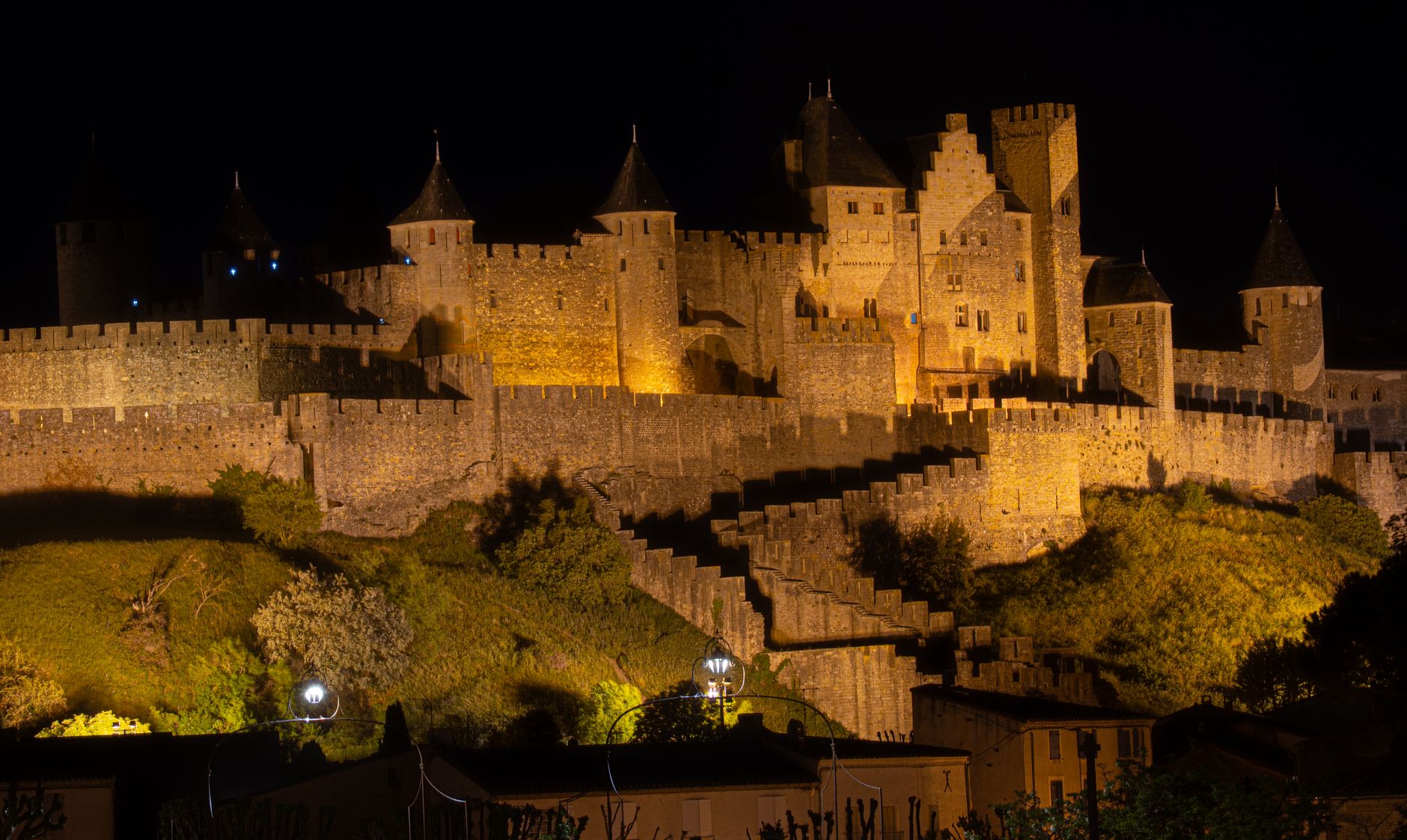

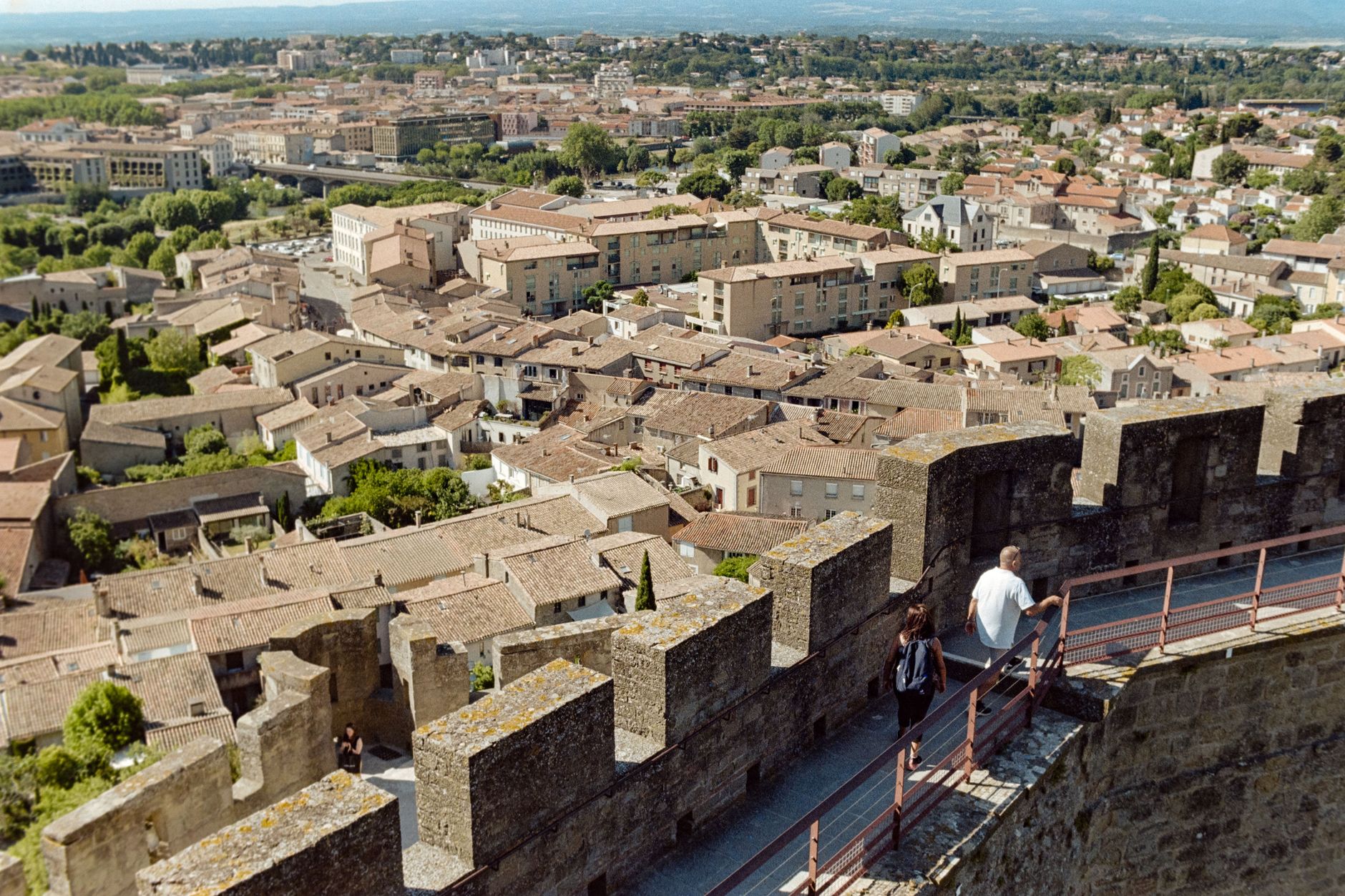

The wind off the Montagne Noire hits you first on the Pont Vieux, cold and direct, before the slate turrets of the Cité Médiévale block it entirely. Cross the Aude and you enter an enormous stone fortress that nineteenth-century architect Viollet-le-Duc rebuilt with theatrical confidence. Below the double curtain walls lies the Bastide Saint-Louis, where locals drink Carignan and argue pleasantly over white beans baked under duck fat. It feels like a stage set until the day-trippers leave at dusk.
Last updated 28 Aug 2026
Build a Carcassonne itinerary.
Choose up to 4 threads that pull you in. Your plan arrives organised around them.
The Bed
Where to stay in Carcassonne
Which part of town to book, and what each one costs you in walking, noise or quiet.
The Comparison
Carcassonne, or somewhere near it
The places you are realistically choosing between, and the honest case for each.
The Local Record
Where to read more about Carcassonne
The blogs, boards, guides and operators worth bookmarking.
What to do in Carcassonne Occitanie France
Carcassonne divides cleanly into two parts across the River Aude: the elevated fifth-century fortress with its fifty-two towers, and the grid-planned fourteenth-century Bastide Saint-Louis below. Mornings belong to the quiet ramparts before tour coaches pull up. Afternoons shift down to the lower town for market stalls and open-air cafés. It suits history lovers, solitary walkers, and anyone willing to eat heavy duck stews in warm weather.
24 hours in Carcassonne Occitanie France
Arrive early at Porte Narbonnaise to explore the Château Comtal ramparts in peace. Cross Pont Vieux for lunch around Place Carnot in the lower town. Finish back up in the Cité after 6 PM, when the crowds thin and a steaming cassoulet at a stone-walled tavern makes total sense. Select 1 Day above to see it.
2 days in Carcassonne Occitanie France
Devote day two to the Bastide Saint-Louis. Browse Tuesday or Saturday market stalls on Place Carnot, walk the towpath beside the Canal du Midi, and take an afternoon drive out to taste spicy reds in Cabardès or Minervois cellars just twenty minutes north. Choose 2 Days to expand the plan.
3 days in Carcassonne Occitanie France
With three days, head into the rugged hills. Climb the rocky footpath between the four ruined Cathar towers at Lastours, visit the cavernous Gouffre de Cabrespine, and dine on slow-cooked wild boar in a quiet village auberge.
Carcassonne Occitanie France itineraries by interest
Medieval Fortifications in Carcassonne Occitanie France
Walk the three kilometres of double ramparts, fifty-two stone towers, and the dry moat around the twelfth-century Château Comtal.
Regional Cooking in Carcassonne Occitanie France
Eat proper cassoulet baked in unglazed terracotta cassoles with Tarbais white beans, confit de canard, and Toulouse pork sausage.
Wine & Vineyards in Carcassonne Occitanie France
Taste earthy Carignan, Grenache, and Syrah from the surrounding Minervois, Cabardès, and Corbières appellations poured in local caves.
Sacred Architecture in Carcassonne Occitanie France
Study the Romanesque nave and Gothic choir windows inside the Basilique Saint-Nazaire, noted for its thirteenth-century stained glass.
Canal Cruising in Carcassonne Occitanie France
Walk the shaded towpaths or board an electric boat on the seventeenth-century Canal du Midi, designed by Pierre-Paul Riquet.
Markets & Produce in Carcassonne Occitanie France
Buy dry-cured saucisson, Lucques green olives, and fresh goat cheeses at Place Carnot every Tuesday, Thursday, and Saturday morning.
Historic Bridges in Carcassonne Occitanie France
Cross the fourteenth-century Pont Vieux on foot for the clearest view of the fortified ridge rising above the gravel banks of the Aude.
City Squares in Carcassonne Occitanie France
Sit under plane trees at Place Carnot around the eighteenth-century Neptune fountain for morning espresso and fresh brioche.
Local Museums in Carcassonne Occitanie France
See seventeenth-century French canvases and regional earthenware inside the Musée des Beaux-Arts in the Bastide Saint-Louis.
Day Trips in Carcassonne Occitanie France
Drive thirty minutes north to the four ruined Cathar towers of Lastours, perched dramatically on a limestone ridge above the Orbiel.
Craft Traditions in Carcassonne Occitanie France
Watch traditional paper makers dip screens in historic pulp vats at the Moulin à Papier de Brousse in the nearby Montagne Noire.
Cave Exploration in Carcassonne Occitanie France
Descend into the vast limestone chambers of the Gouffre Géant de Cabrespine, famous for its red iron oxides and hanging stalactites.