_-_The_Town_of_Collioure_-_1934-001_-_Cartwright_Hall_Art_Gallery.jpg)
.jpg)

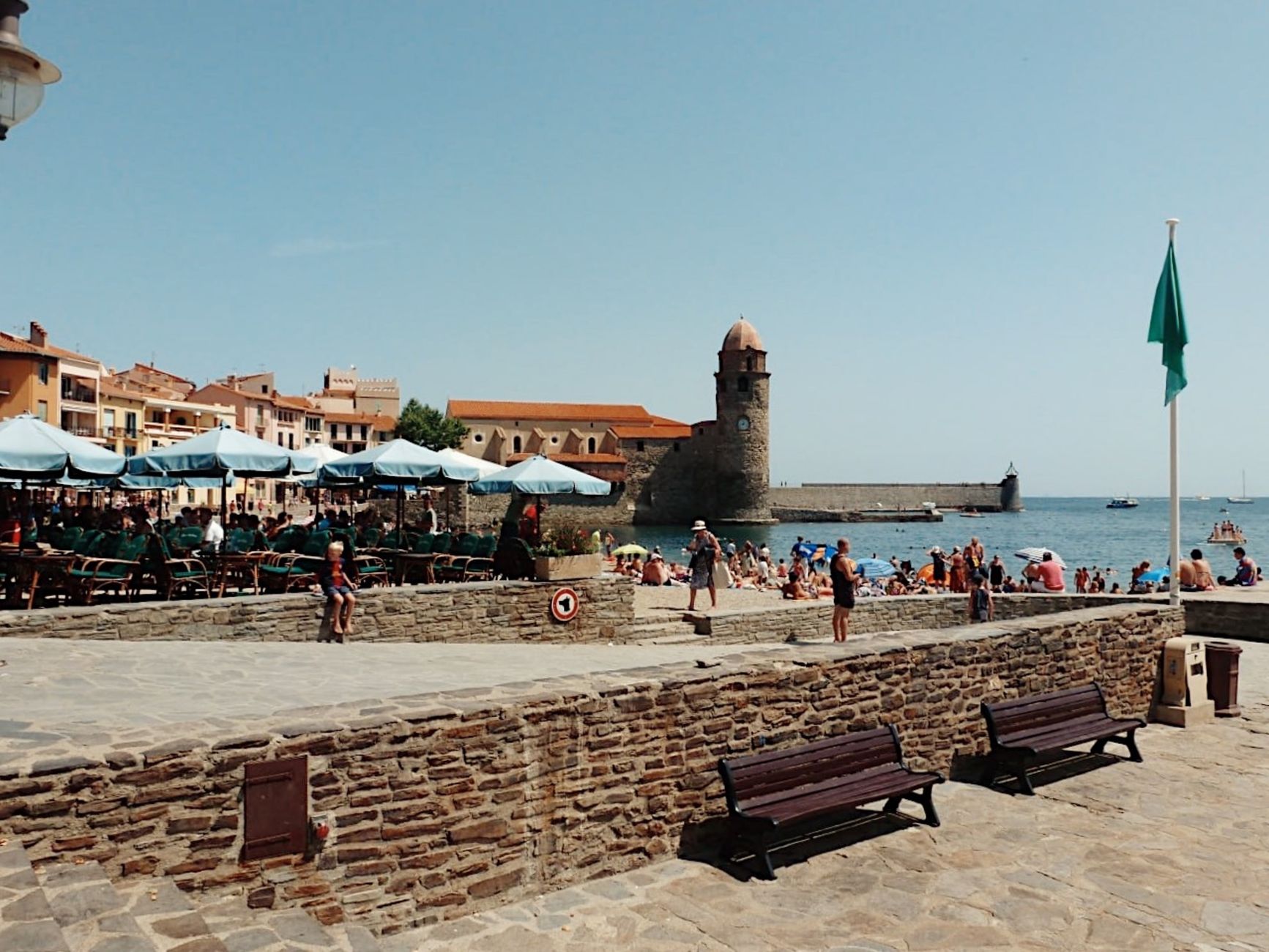


The Mediterranean slaps hard against the stone footings of the fourteenth-century Château Royal, spraying the salt onto cafe tables along the bay. This is where the Pyrenees finally drop into the sea, traded between Catalan kings and French monarchs until the border settled. Fishermen still salt anchovies by hand in backroom barrels, while the pink bell tower of Notre-Dame-des-Anges keeps watch over pebble coves. You come for the blinding coastal light that stopped the painters, and stay for the grilled sardines.
Last updated 28 Aug 2026
Build a Collioure itinerary.
Choose up to 4 threads that pull you in. Your plan arrives organised around them.
The Bed
Where to stay in Collioure
Which part of town to book, and what each one costs you in walking, noise or quiet.
The Comparison
Collioure, or somewhere near it
The places you are realistically choosing between, and the honest case for each.
The Local Record
Where to read more about Collioure
The blogs, boards, guides and operators worth bookmarking.
What to do in Collioure Occitanie France
Collioure gathers in a tight horseshoe around two rocky beaches, anchored by a royal fortress and a bell tower rising straight out of the surf. Days settle into a gentle rhythm: morning walks up Le Mouré's stairways, an afternoon swim off Plage Saint-Vincent, and unhurried aperitifs over salted anchovies. It suits walkers, art buffs, and anyone who appreciates raw Catalan maritime grit tempered by good Southern French wine.
24 hours in Collioure Occitanie France
Start early at the harbour before the day-trippers land. Tour the battlements of the Château Royal, grab lunch of grilled sardines beside Plage Boramar, and spend the afternoon tracing the Matisse plaques through Le Mouré. Finish with a glass of crisp Grenache Gris at a waterside bar as the castle walls light up. Select 1 Day above to see it.
2 days in Collioure Occitanie France
Spend morning two climbing the steep track past the fourteenth-century windmill to Fort Saint-Elme for vast views along the Côte Vermeille. Walk the coastal path down to the working port of Port-Vendres for a lunch of fresh red mullet, then head back to Collioure for cellar tastings of dry Collioure AOC and rich Banyuls. Choose 2 Days to expand the plan.
3 days in Collioure Occitanie France
A third day allows an inland escape to the fortified village of Villefranche-de-Conflent, or a scenic drive south along the winding cliff road to Cerbère at the Spanish frontier. Alternatively, take a lazy boat across to Paulilles cove for a quiet swim and a picnic under the maritime pines.
Collioure Occitanie France itineraries by interest
Local Seafood in Collioure Occitanie France
Cured PGI anchovies from Maison Roque, grilled dorade on Plage Boramar, and Catalan bullinada fish stew ladled over toasted bread.
Modern Art in Collioure Occitanie France
Follow the Chemin du Fauvisme through town to see where Matisse and Derain set up easels in 1905, framed by brass cutouts in the stone.
Wine & Vineyards in Collioure Occitanie France
Steep slate terraces producing mineral AOC Collioure reds and sweet, fortified Banyuls made primarily from sun-baked Grenache Noir.
Coastal Walks in Collioure Occitanie France
The rugged Sentier du Littoral skirts rocky cliffs and secluded coves south past Fort Saint-Elme toward the working docks of Port-Vendres.
Military Fortresses in Collioure Occitanie France
The sprawling Château Royal spans centuries of Templar, Majorcan, and Vauban fortifications standing guard right over the harbour.
Sacred Architecture in Collioure Occitanie France
The seventeenth-century Notre-Dame-des-Anges, built against a medieval watchtower with ornate baroque Catalan altarpieces inside.
Historic Quarters in Collioure Occitanie France
Wander the cobbled ramps of Le Mouré, where pastel fishermen's cottages climb the hillside away from the beachfront cafe crowd.
Markets & Produce in Collioure Occitanie France
The Wednesday and Sunday market at Place du Maréchal Leclerc fills with Roussillon peaches, sheep cheeses, and dry Catalan fuet.
Hilltop Trails in Collioure Occitanie France
Climb through olive groves past the restored fourteenth-century windmill up to Fort Saint-Elme for views across the entire Côte Vermeille.
Beaches in Collioure Occitanie France
Plage Boramar for castle views, small stony Plage Saint-Vincent by the jetty, and the calmer waters around the cove at Plage de la Balette.
Pastries & Sweets in Collioure Occitanie France
Pick up iced rousquille biscuits scented with lemon and anise, plus crisp croquants studded with local almonds from village bakers.
Day Trips in Collioure Occitanie France
Take the yellow train inland toward Villefranche-de-Conflent or ride five minutes south to the unvarnished fish market at Port-Vendres.