


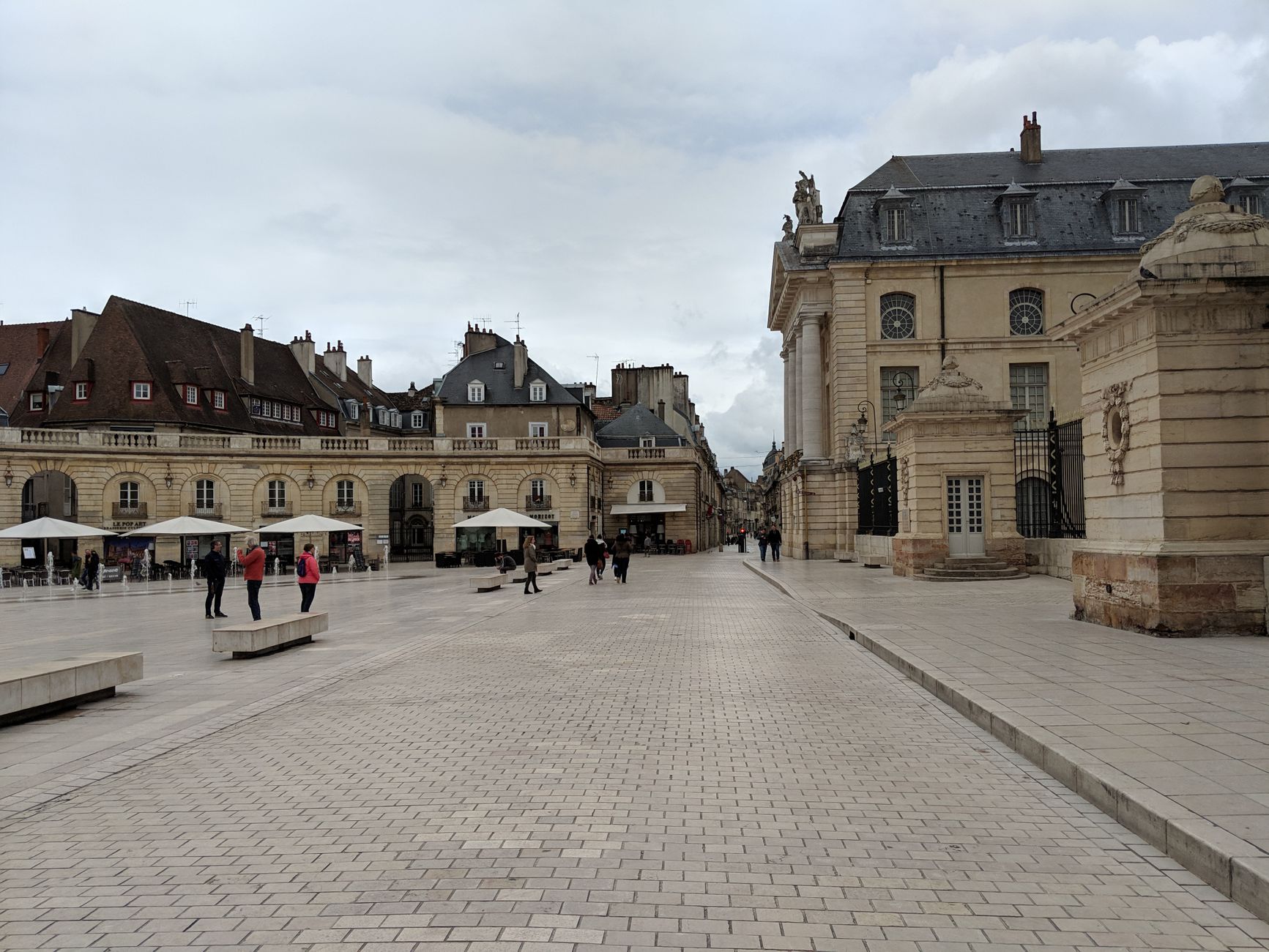


Dijon sits 100 minutes southeast of Paris by direct TGV from Gare de Lyon, anchoring the northern edge of Burgundy's Côte d'Or. As the seat of the Valois dukes, it keeps its late-medieval stone mansions and half-timbered lanes beside a food culture built on pinot noir, cassis, and charolais beef. The centre is pedestrianised, flat, and easily walked. Dijon is worth visiting if you want regional Burgundian cooking and medieval ducal architecture without the tourist congestion of Beaune. Look elsewhere if you want late-night nightlife, vineyards within walking distance of the centre, or blockbuster big-city sights.
Last updated 9 Sept 2026
Build a Dijon itinerary.
Choose up to 4 threads that pull you in. Your plan arrives organised around them.
The Bed
Where to stay in Dijon
Which part of town to book, and what each one costs you in walking, noise or quiet.
The Comparison
Dijon, or somewhere near it
The places you are realistically choosing between, and the honest case for each.
The Local Record
Where to read more about Dijon
The blogs, boards, guides and operators worth bookmarking.
What to do in Dijon Burgundy France
Dijon is structured around its semicircular Place de la Libération, fanning out into stone lanes lined with seventeenth-century courtyards. Days orbit the morning covered market, long bistro lunches over saupiquet and aligoté, and quiet museum afternoons. It suits walkers and independent eaters who appreciate grand civic history paired with exceptional cellars, minus the staged atmosphere found in more commercial wine towns.
24 hours in Dijon Burgundy France
Start early at Les Halles for espresso and gougères, then walk the Owl Trail to the Palais des Ducs and the tombs in the Musée des Beaux-Arts. Have oeufs en meurette at a table along Rue Verrerie. Finish with an evening Kir on Place de la Libération as the limestone facade lights up. Everything sits within a fifteen-minute walk. Select 1 Day above to see it.
2 days in Dijon Burgundy France
A second day lets you explore the antique shops along Rue Vannerie and the Romanesque crypt of Saint-Bénigne. Catch an eight-minute train south to Gevrey-Chambertin to walk the vineyard slopes among grand cru parcels, then return for roast duckling and a bottle of Fixin at a neighbourhood bistro off Place Émile Zola. Choose 2 Days to expand the plan.
3 days in Dijon Burgundy France
With three days, take the local train down to Beaune to inspect the fifteenth-century polychrome roofs of the Hôtel-Dieu and sample older vintages in underground cellars. Spend your final afternoon back in Dijon tracing modern sculpture at Le Consortium, followed by pain d'épices shopping and slow glasses of Marc de Bourgogne.
Dijon Burgundy France itineraries by interest
Markets & Produce in Dijon Burgundy France
Les Halles, designed in 1868, fills Tuesday, Friday, and Saturday mornings with Époisses cheese, jambon persillé, and fresh gougères from local stalls.
Wine & Vineyards in Dijon Burgundy France
The Route des Grands Crus begins just south at Marsannay and Gevrey-Chambertin, pouring structured pinot noir and mineral-driven aligoté.
Historic Architecture in Dijon Burgundy France
Follow the bronze owl plaques past the fifteenth-century Palais des Ducs, Hôtel de Vogüé, and glazed polychrome-tile roofs along Rue des Forges.
Regional Cooking in Dijon Burgundy France
Old bistros serve oeufs en meurette poached in red wine, bœuf bourguignon with lardons, and saupiquet ham sauce thickened with cream and mustard.
Sacred Architecture in Dijon Burgundy France
Visit Saint-Bénigne Cathedral with its eleventh-century Romanesque rotunda crypt and Notre-Dame with its mechanical Jacquemart clock tower.
Fine Arts in Dijon Burgundy France
Musée des Beaux-Arts houses the alabaster tombs of Philip the Bold and John the Fearless inside the grand ducal palace with free permanent entry.
Baking & Sweets in Dijon Burgundy France
Maison Mulot & Petitjean has baked spiced pain d'épices honey loaves and glazed nonnettes filled with orange marmalade on Place Bossuet since 1796.
Local Aperitifs in Dijon Burgundy France
Traditional bars mix local Crémant de Bourgogne with blackcurrant crème de cassis for genuine Kir, invented here by canon Félix Kir in 1951.
Day Trips in Dijon Burgundy France
Beaune sits twenty minutes south by regional train for the medieval Hospices de Beaune and deep cellars beneath the town ramparts.
Parks & Gardens in Dijon Burgundy France
Jardin Darcy offers nineteenth-century fountains and François Pompon’s famous white bear sculpture, stepping down toward Jardin de l'Arquebuse.
Craft Traditions in Dijon Burgundy France
Moutarderie Edmond Fallot grinds brown mustard seeds with stone mills on Rue de la Chouette, offering tastings straight from the cask.
Modern Art in Dijon Burgundy France
Le Consortium exhibits contemporary sculpture and global installations inside an airy 4,000-square-metre warehouse redesigned by Shigeru Ban.