

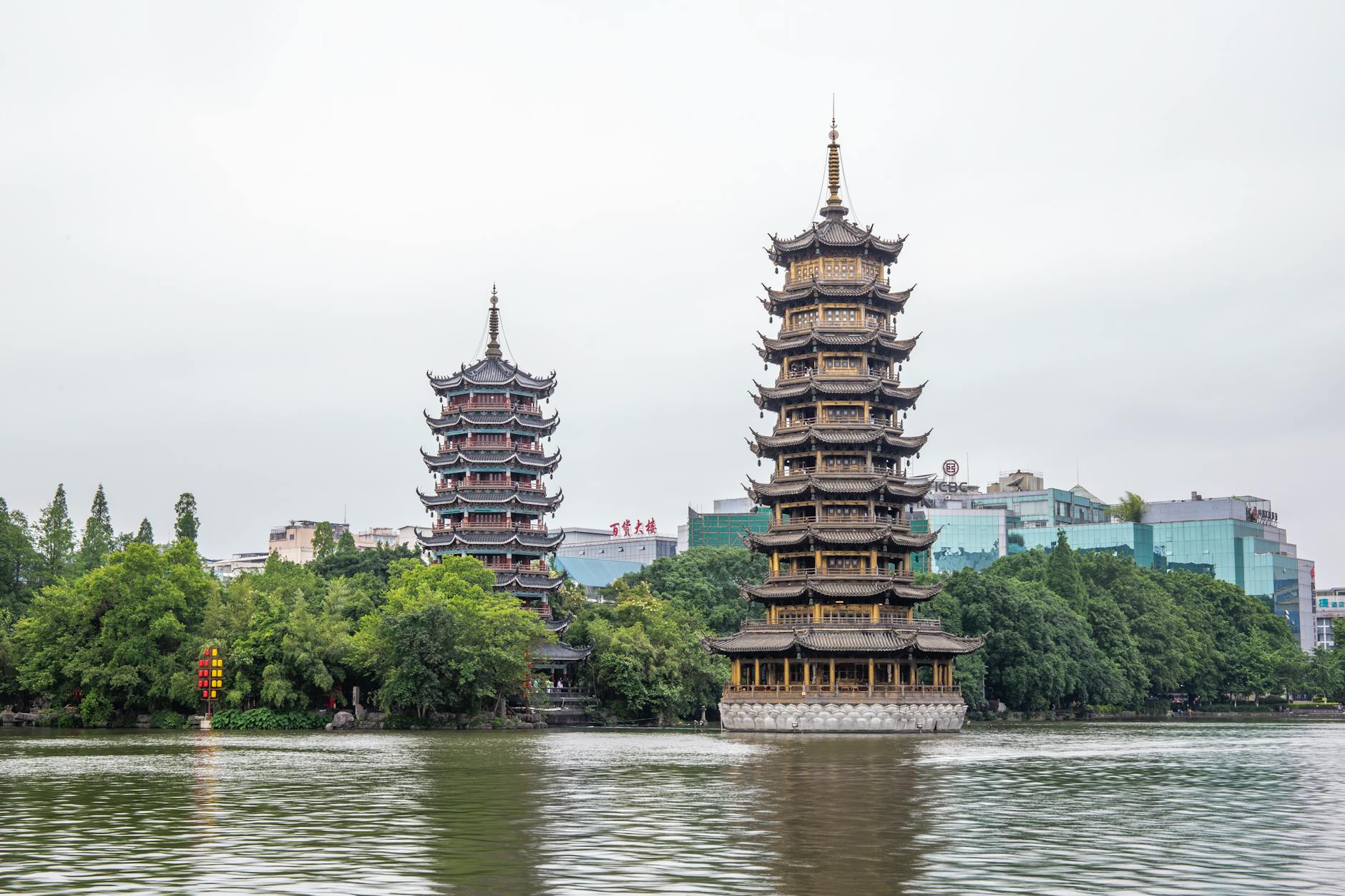


Guilin sits three hours northwest of Guangzhou by high-speed rail in southern China. It is known for its limestone karst towers rising directly from the urban grid and the Li River, which snakes south toward Yangshuo. The town itself is manageable on foot and bike, offering quick access to riverside trails and century-old noodle shops. Guilin is worth visiting if you want to slurp sour-chili rice noodles before dawn and climb limestone towers above the Li River. Look elsewhere if you want vibrant nightlife, world-class indoor museums, well-preserved ancient architecture, or high-end international dining.
Last updated 9 Sept 2026
Build a Guilin itinerary.
Choose up to 4 threads that pull you in. Your plan arrives organised around them.
The Bed
Where to stay in Guilin
Which part of town to book, and what each one costs you in walking, noise or quiet.
The Comparison
Guilin, or somewhere near it
The places you are realistically choosing between, and the honest case for each.
The Local Record
Where to read more about Guilin
The blogs, boards, guides and operators worth bookmarking.
What to do in Guilin Guangxi China
Guilin is shaped by water and vertical stone. Karst peaks jut straight out of the streetscape, framed by the Li and Taohua rivers. Days here move between quick morning ascents for wide skyline views, steaming bowls of mifen at sidewalk stools, and breezy walks around Shanhu Lake. It suits independent walkers, cyclists, and eaters who appreciate unpretentious regional cooking and green spaces.
24 hours in Guilin Guangxi China
Start early with dry-tossed noodles on Jiefang Road, then climb Diecai Hill before the mid-morning heat. Spend the afternoon wandering Jingjiang Princes' City. Finish with beer fish along Binjiang Road and an evening walk around the illuminated Sun and Moon Pagodas. Select 1 Day above to see it.
2 days in Guilin Guangxi China
Day two takes you out of the centre. Catch an early bus to Daxu ancient town for stone alleys and wooden Ming-era storefronts along the river, then head underground at Reed Flute Cave. End with clay-pot chicken and oil tea back near Xicheng Road. Choose 2 Days to expand the plan.
3 days in Guilin Guangxi China
A third day allows an unhurried trip north to the Longji rice terraces in Ping'an. Walk the high ridge paths among Zhuang stilt houses, eat bamboo-tube rice roasted over charcoal embers, and return in time for a quiet late-night broth.
Guilin Guangxi China itineraries by interest
Noodle Culture in Guilin Guangxi China
Slurp Guilin mifen dry with gravy, crispy pork belly, pickled sour yardlong beans, and fiery chili oil at neighbourhood stands along Jiefang Road.
River Journeys in Guilin Guangxi China
Board a morning ferry along the Li River from Mopanshan wharf past limestone peaks down to Xingping and Yangshuo.
Urban Viewpoints in Guilin Guangxi China
Climb the stone stairs of Diecai Hill or Duxiu Peak at dawn for 360-degree panoramas across karst spires and the morning mist.
Karst Geology in Guilin Guangxi China
Walk the damp subterranean trails through Reed Flute Cave and Seven Star Cave, carved into carbonate rock over millions of years.
Local Markets in Guilin Guangxi China
Browse fresh water chestnuts, pomelos, bitter melons, and fermented tofu jars at the sprawling Xicheng Road morning market.
Regional Cooking in Guilin Guangxi China
Eat whole river fish braised in local beer, stuffed river snails with pork and mint, and lipu taro steamed with fatty pork belly.
Imperial History in Guilin Guangxi China
Tour Jingjiang Princes' City, the walled Ming Dynasty palace grounds beneath Solitary Beauty Peak, built in the late 14th century.
Cycling in Guilin Guangxi China
Rent a shared bike along Binjiang Road to trace the two rivers and four lakes system past ancient city gates and weeping willows.
Tea Culture in Guilin Guangxi China
Drink oil tea in small wooden bowls with puffed rice, crispy noodles, and scallions, a staple breakfast from the northern hills.
Night Walks in Guilin Guangxi China
Stroll the lit wooden promenades around Ronghu and Shanhu lakes to see the Sun and Moon Pagodas glowing gold and silver over the water.
Terraced Agriculture in Guilin Guangxi China
Ride ninety minutes north to Longji to hike the stepped Yao and Zhuang rice paddies carved across mountain ridges since the Yuan dynasty.
Cave Temples in Guilin Guangxi China
Inspect Tang and Song Dynasty Buddhist stone carvings and inscriptions tucked into natural grottos around Fubo Hill.