


Traffic roars along the concrete seafront, but step beneath the Venetian ramparts and Crete's capital finds its real stride. The city does not fawn over visitors; it gets on with life. Old men argue over backgammon near the Morosini Fountain, while plates of grilled octopus and wild greens land on paper tablecloths down side alleys. Come for the staggering Minoan art and the ruins at Knossos, but stay for the raki and the stubborn, generous rhythm of the place.
Last updated 28 Aug 2026
Build a Heraklion itinerary.
Choose up to 4 threads that pull you in. Your plan arrives organised around them.
The Bed
Where to stay in Heraklion
Which part of town to book, and what each one costs you in walking, noise or quiet.
The Comparison
Heraklion, or somewhere near it
The places you are realistically choosing between, and the honest case for each.
The Local Record
Where to read more about Heraklion
The blogs, boards, guides and operators worth bookmarking.
What to do in Heraklion Crete Greece
Heraklion operates as a bustling working port rather than a manicured resort. The city centre clusters inside vast Venetian ramparts, easily walked between Lions Square and the harbour. Days revolve around ancient history, leisurely tavern lunches of wild greens and grilled meats, and evening strolls along 25th of August Street. It suits curious travellers who appreciate authentic urban energy alongside staggering Bronze Age relics.
24 hours in Heraklion Crete Greece
Catch the early morning bus to the palace of Knossos before the heat settles. Return to town for lunch at the central market on 1866 Street, ordering grilled sardines and local salad. Spend the afternoon in the air-conditioned Archaeological Museum, then stroll to Koules fortress before dining on braised goat in the bohemian Lakkos district. Select 1 Day above to see it.
2 days in Heraklion Crete Greece
Dedicate your second day to the hills south of the city. Rent a car to explore the stone-built village of Archanes, tasting Vidiano wines and peppery olive oil at local estates. Return for an afternoon exploring the Venetian fortifications, finishing with a carafe of chilled tsikoudia and meze plates along pedestrianised Korai Street. Choose 2 Days to expand the plan.
3 days in Heraklion Crete Greece
A third day lets you cross the island south toward the Minoan palace of Phaistos and the quiet shores of the Libyan Sea near Matala. You avoid the rush, stopping in traditional Mesara plain villages for bakery rusks and mountain herbs, returning to Heraklion just in time for an unhurried fish dinner beside the illuminated port walls.
Heraklion Crete Greece itineraries by interest
Ancient Ruins in Heraklion Crete Greece
Skip the midday tour buses at Knossos by arriving at eight, then trace the red-pillared Minoan palace before the heat builds.
Archaeology in Heraklion Crete Greece
Spend two hours at the Archaeological Museum admiring the snake goddesses, Phaistos Disc, and the vibrant Minoan frescoes in hall two.
Local Seafood in Heraklion Crete Greece
Head to the harbour for grilled barbouni, octopus in vinegar, and fried calamari served with lemon at the no-nonsense portside psarotavernas.
Fortifications in Heraklion Crete Greece
Walk the massive sixteenth-century Venetian walls up to the quiet tomb of Nikos Kazantzakis for sweeping views across the harbour.
Wine & Vineyards in Heraklion Crete Greece
Drive south into the Peza region to taste bone-dry Vidiano and rustic Kotsifali reds poured straight from cellar casks.
Markets & Produce in Heraklion Crete Greece
Wander 1866 Street in the morning for wheels of aged graviera cheese, mountain oregano, cured olives, and thyme honey by the kilo.
Street Food in Heraklion Crete Greece
Grab flaky bougatsa dusted with cinnamon at Kirkor on Lions Square, or order gyros wrapped in warm pita along Dikeosinis Avenue.
Taverna Dining in Heraklion Crete Greece
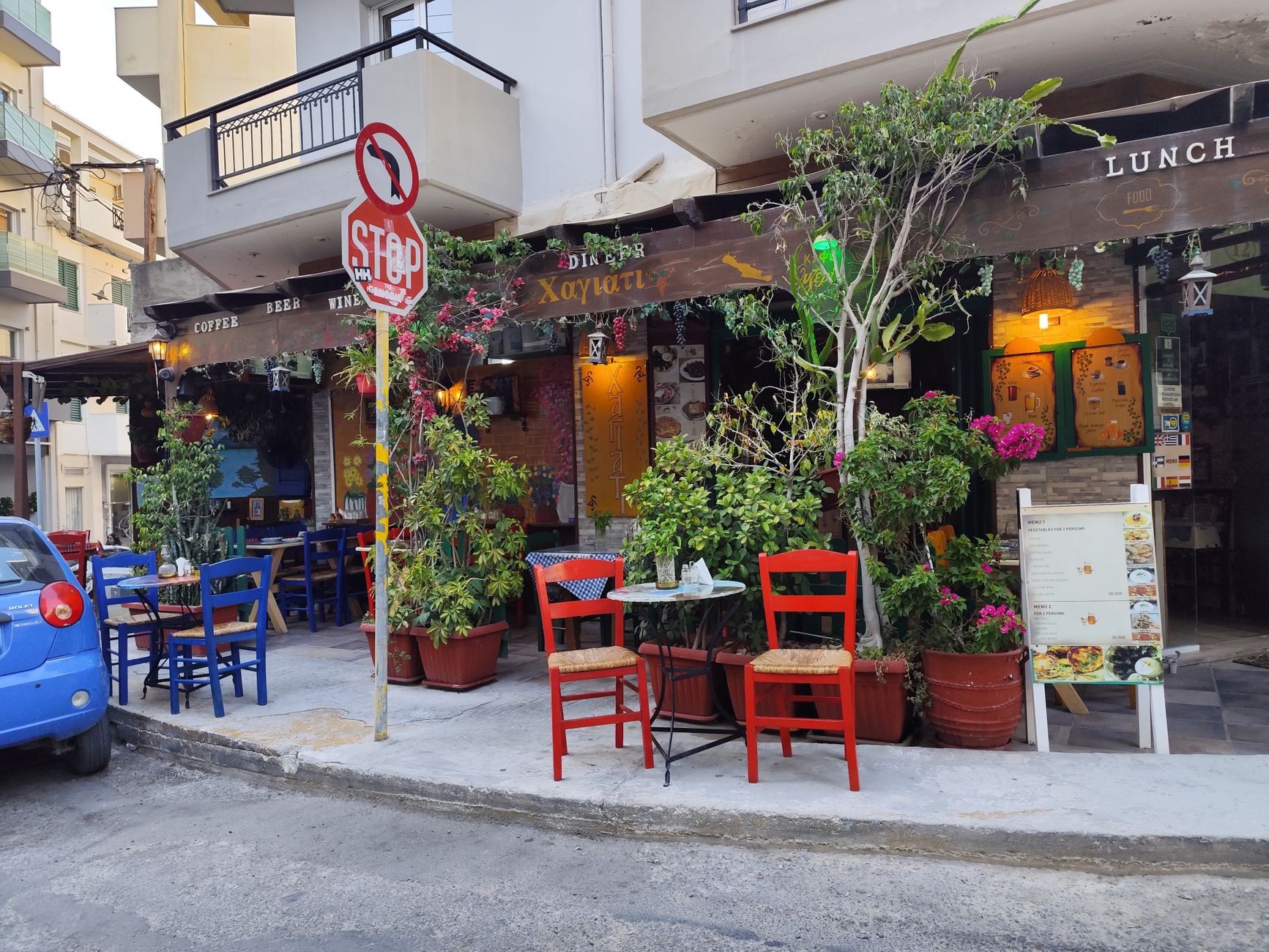
Sit outside in the Lakkos neighbourhood for slow-cooked goat with stamnagathi, snails cooked in rosemary, and carafes of chilled raki.
Day Trips in Heraklion Crete Greece
Take the morning bus south to Archanes for painted neoclassical lanes and shade-dappled platano trees away from coastal traffic.
Sacred Architecture in Heraklion Crete Greece
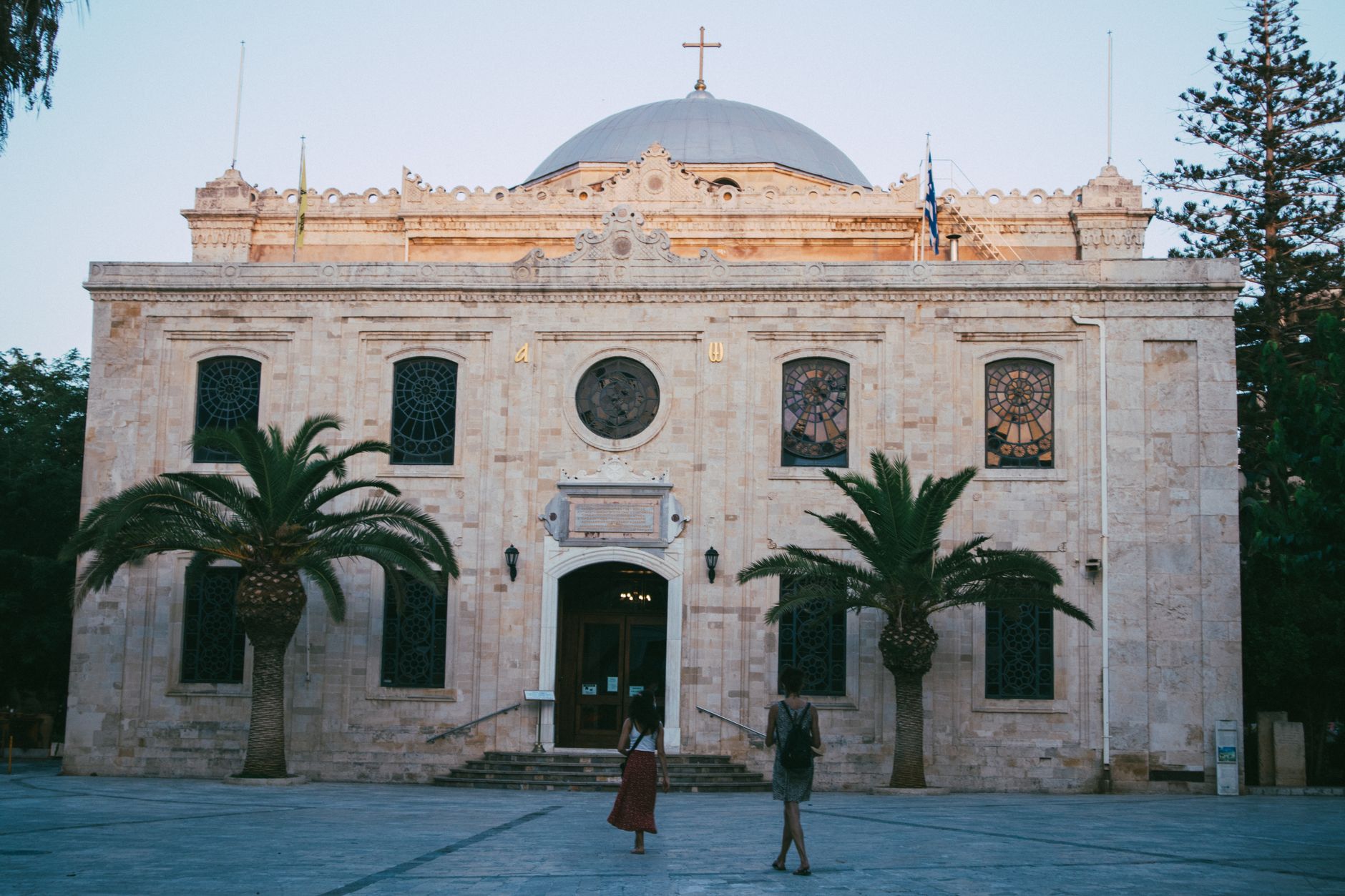
Step into the quiet nave of Agios Titos to see the saint's relic and examine Byzantine icons away from the midday heat.
Coastal Walks in Heraklion Crete Greece
Stroll out along the long stone breakwater to the Venetian fortress of Koules as fishing boats return with the evening catch.
Village Life in Heraklion Crete Greece
Venture to Thrapsano to watch potters spin massive terracotta pithoi jars using techniques unchanged since Bronze Age Crete.