.jpg)
_Vedute_vicentine_(serietitel),_RP-P-2018-1249.jpg)
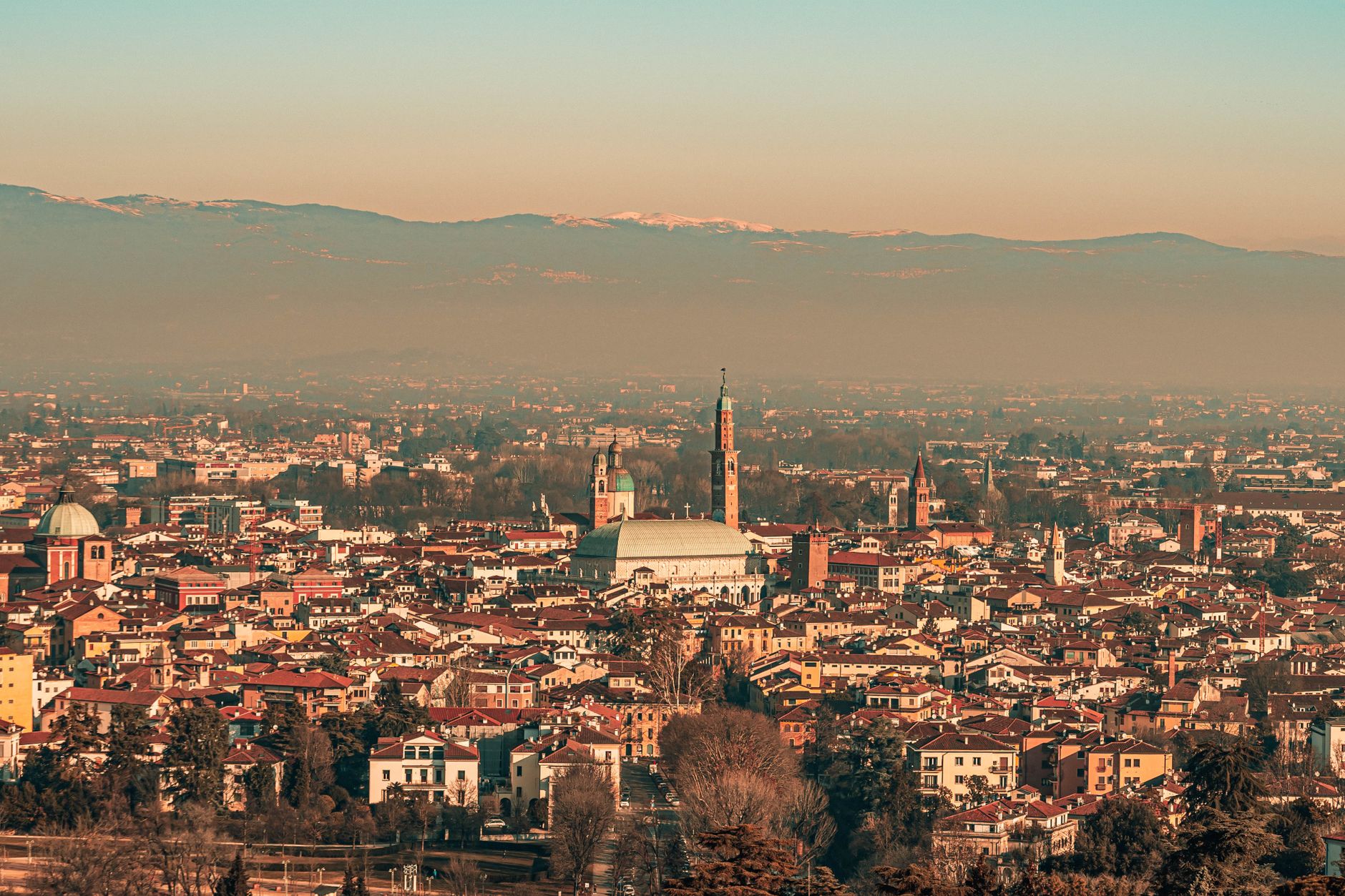


Morning light hits the pale Istrian stone of the Basilica Palladiana, turning the whole piazza into an outdoor drawing room. Andrea Palladio reshaped this compact Veneto city in the sixteenth century, dropping classical Roman orders onto Gothic streets with supreme confidence. You can cross the historic centre on foot in fifteen minutes, pausing for dried stockfish braised in milk with yellow polenta, before climbing Monte Berico for an unhurried look across the rooftops.
Last updated 28 Aug 2026
Build a Vicenza itinerary.
Choose up to 4 threads that pull you in. Your plan arrives organised around them.
The Bed
Where to stay in Vicenza
Which part of town to book, and what each one costs you in walking, noise or quiet.
The Comparison
Vicenza, or somewhere near it
The places you are realistically choosing between, and the honest case for each.
The Local Record
Where to read more about Vicenza
The blogs, boards, guides and operators worth bookmarking.
What to do in Vicenza Veneto Italy
Vicenza is an impeccably proportioned city that moves at an unhurried northern Italian pace. Daily life orbits Piazza dei Signori and Corso Andrea Palladio, where locals balance architectural appreciation with serious afternoon wine drinking. It rewards travellers who prefer strolling over sprinting, offering world-class sixteenth-century monuments without the crushing tour bus queues found in nearby Venice.
24 hours in Vicenza Veneto Italy
Spend the morning at Teatro Olimpico and Palazzo Chiericati, then cross Corso Andrea Palladio for a plate of slow-braised baccalà alla vicentina near Piazza dei Signori. In the afternoon, climb the covered porticoes of Monte Berico before heading down for an Aperol spritz as the shadows lengthen over the Basilica. Select 1 Day above to see it.
2 days in Vicenza Veneto Italy
A second day lets you walk out of the city centre toward Villa La Rotonda and Villa Valmarana ai Nani, taking in Giambattista Tiepolo’s vivid frescoes. Dedicate lunch to bigoli pasta tossed with duck ragù at a quiet osteria along the Bacchiglione river, then spend the evening sampling Tai Rosso wine in the Colli Berici foothills. Choose 2 Days to expand the plan.
3 days in Vicenza Veneto Italy
With three days, take a short regional train north to Bassano del Grappa to cross its covered wooden bridge and taste local grappa. Alternatively, head west to the walled town of Marostica or spend a slow afternoon browsing antique stalls and artisan gold workshops tucked behind the ancient Gothic chapels of Contrà Porti.
Vicenza Veneto Italy itineraries by interest
Renaissance Architecture in Vicenza Veneto Italy
Track Andrea Palladio’s loggias at Basilica Palladiana and Palazzo Chiericati, where classical Roman proportions meet sixteenth-century civic ambition.
Local Cooking in Vicenza Veneto Italy
Order baccalà alla vicentina, dried stockfish slowly simmered with milk, onions, and anchovies, served hot beside a block of firm yellow polenta.
Historic Theatres in Vicenza Veneto Italy
Step inside Teatro Olimpico to see Palladio’s trompe-l’œil wooden scenery depicting the streets of Thebes, preserved intact since its opening in 1585.
Wine & Vineyards in Vicenza Veneto Italy
Taste ruby Tai Rosso and crisp Garganega poured across the chalky limestone ridges of the nearby Colli Berici, just south of the city gates.
Country Villas in Vicenza Veneto Italy
Walk twenty minutes south along Via San Bastian to Villa La Rotonda and the Tiepolo-frescoed salons of Villa Valmarana ai Nani.
Markets & Produce in Vicenza Veneto Italy
Browse the Tuesday and Thursday morning stalls in Piazza dei Signori for Soprèssa Vicentina salami, Marostica cherries, and Bassano white asparagus.
Sacred Art in Vicenza Veneto Italy
Visit the Church of Santa Corona to study Giovanni Bellini’s Baptism of Christ and Paolo Veronese’s Adoration of the Magi in the quiet side chapels.
Aperitivo Culture in Vicenza Veneto Italy
Join the evening crowd around Piazza delle Erbe with a bitter Spritz or a glass of dry Gambellara, flanked by small plates of warm cicchetti.
Craft Traditions in Vicenza Veneto Italy
Discover centuries of goldsmithing heritage along Contrà Porti, where master artisans continue working fine precious metals in discreet workshops.
Scenic Viewpoints in Vicenza Veneto Italy
Walk the sheltered portico of the Scalette up to the Sanctuary of Monte Berico for panoramic views across the city toward the pre-Alps.
Day Trips in Vicenza Veneto Italy
Take a thirty-minute train north to Bassano del Grappa for the wooden bridge designed by Palladio and a sharp sip of traditional pomace brandy.
Urban Walks in Vicenza Veneto Italy
Wander the cobbled length of Corso Andrea Palladio, ducking into quiet side alleys to find Gothic brick portals and shaded marble courtyards.