

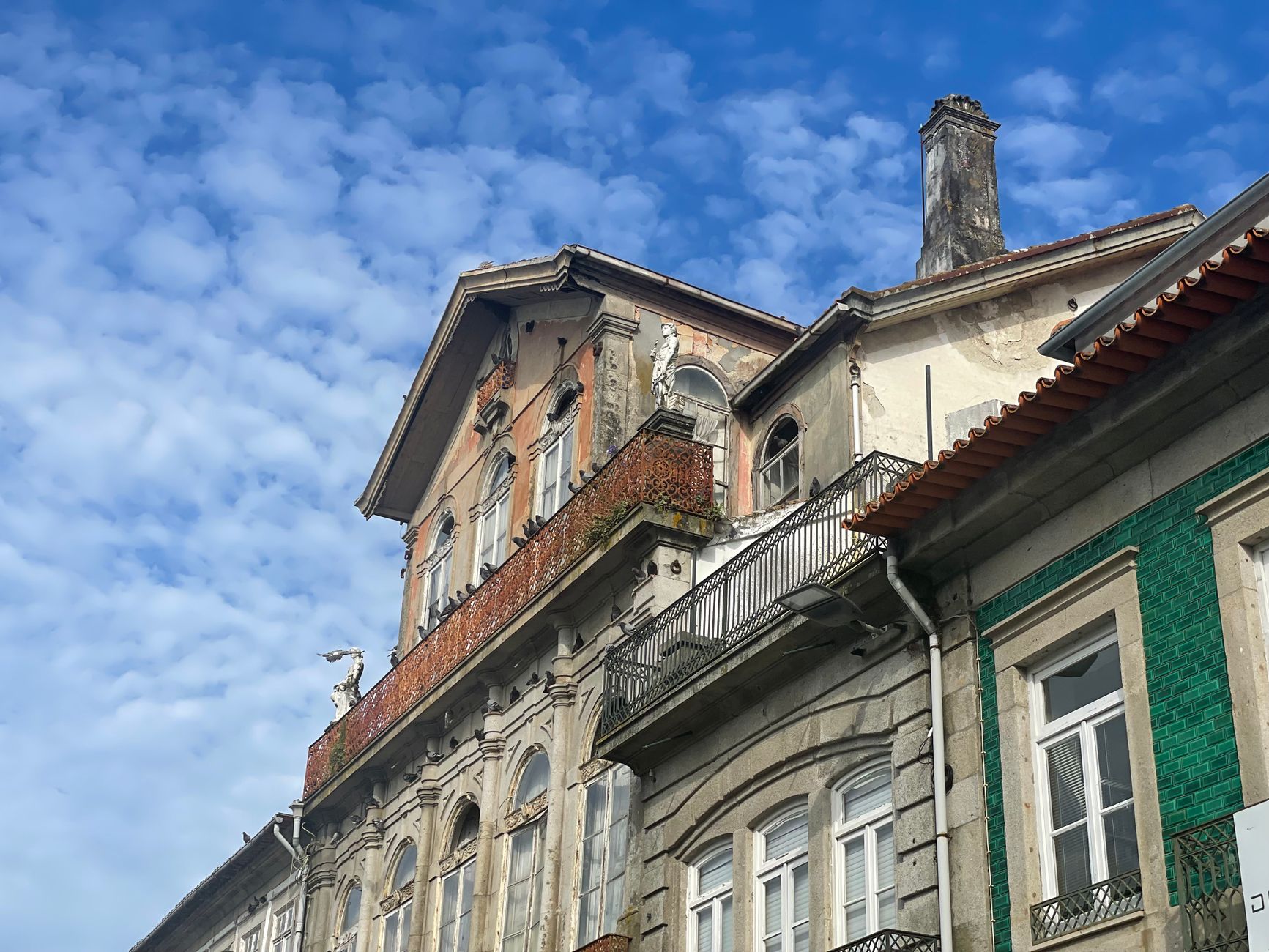

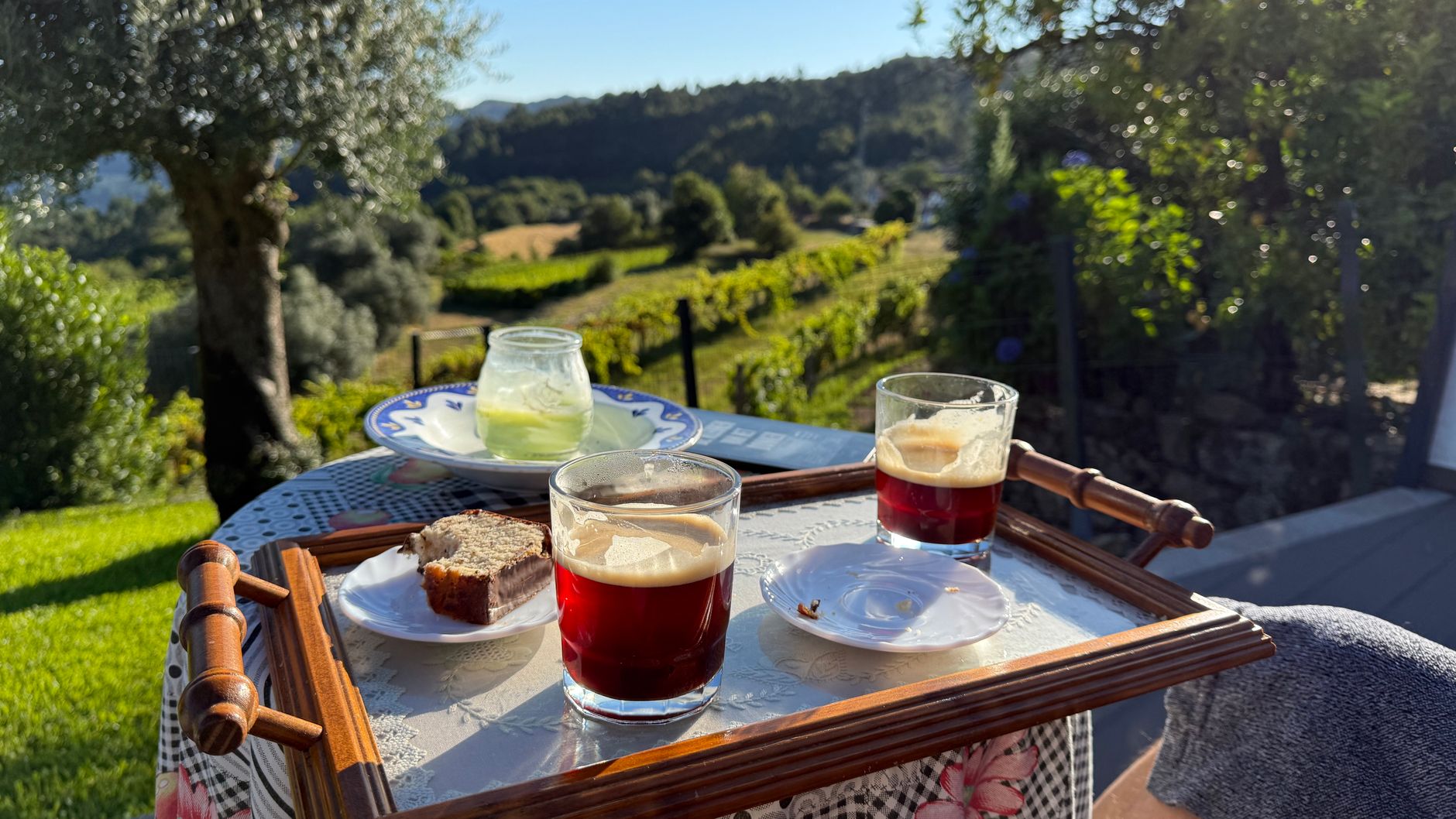
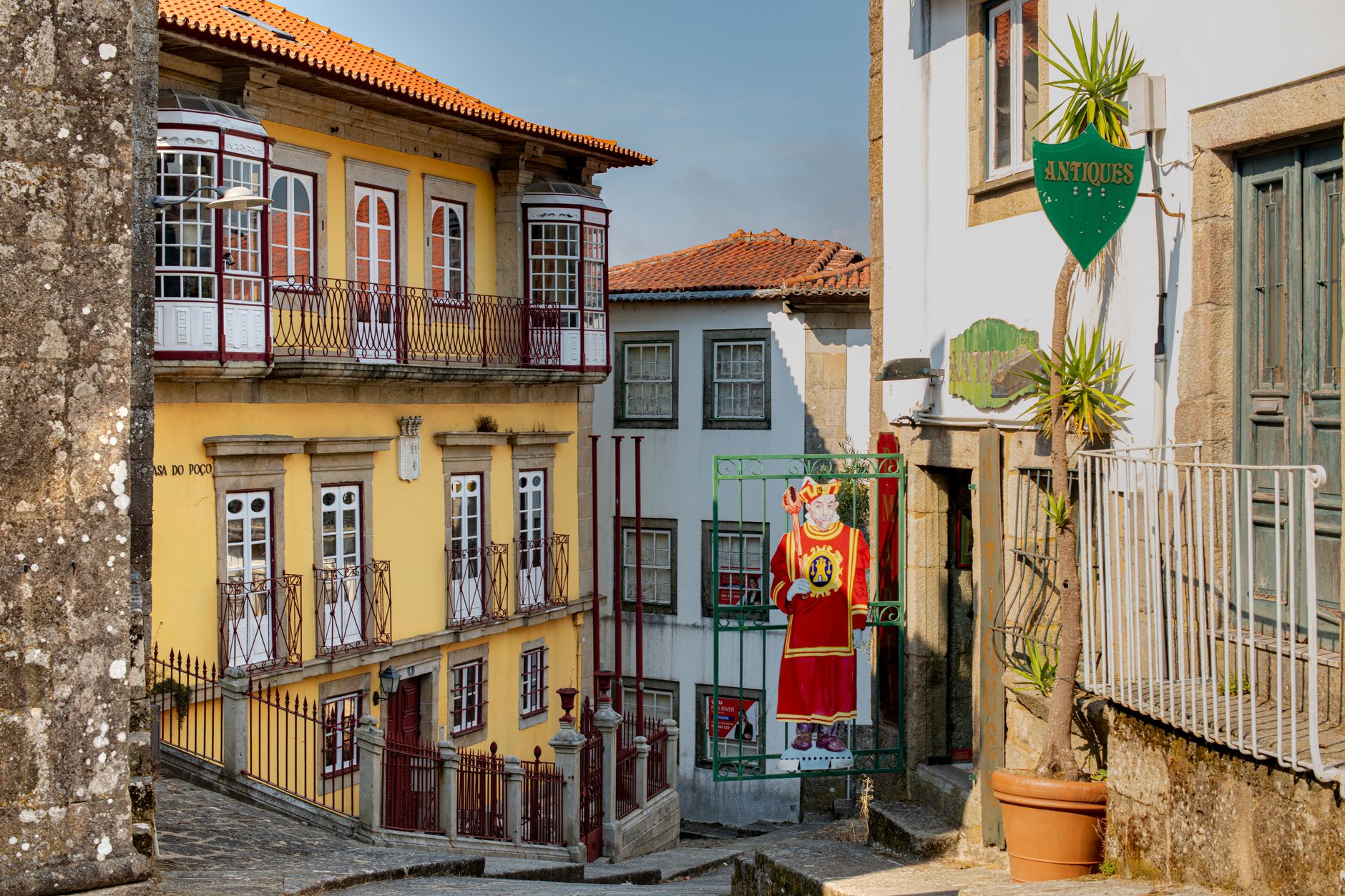
Viana do Castelo sits where the Lima River empties into a cold, restless Atlantic. Granite Manueline mansions line the Praça da República, while salt air mingles with the smell of grilled sardines and fried dough from neighbourhood pastelerias. You feel the working port immediately in the shipyards and the fishing docks of Ribeira. Above it all stands the basilica on Mount Santa Luzia, watching over a town shaped by cod fleets and silver wire.
Last updated 22 Aug 2026
Build a Viana do Castelo itinerary.
Choose up to 4 threads that pull you in. Your plan arrives organised around them.
We'll craft a 3-lens plan for Viana do Castelo, one collapsible strand per lens.
Wine & Vineyards
Taste bone-dry Loureiro and Alvarinho wines from nearby Lima valley quintas, known for sharp minerality, bright acidity, and slight effervescence.
Wine & Vineyards
Taste bone-dry Loureiro and Alvarinho wines from nearby Lima valley quintas, known for sharp minerality, bright acidity, and slight effervescence.
Morning Loureiro and Conserve Tasting
Tasquinha da Praça
Take a granite-framed outdoor table and order a chilled glass of Lima valley Loureiro with local sheep cheese and spiced sardines. Budget twelve euros.
Editor TipThe Lima valley is the ancestral territory of Loureiro, a crisp white grape prized for bay leaf aromas and mineral acidity. Ask for the house carafe rather than an expensive bottle; it is cold, unpretentious, and built for salty snacks.
Charcoal Robalo and Chilled Loureiro
Taberna do Valentim
Arrive by 8:00 PM to claim an outdoor table by the docks without reservations. Order the grilled sea bass with boiled potatoes and a cold carafe of house white.
Editor TipThe Lima River valley is the heartland of the Loureiro grape, producing a bone-dry, aromatic Vinho Verde made precisely to cut through salty, charred Atlantic fish. Ignore any urge to decipher an expensive bottle list. The house draft white is icy, local, and perfect.
Dockside Shellfish and Loureiro
Tasquinha da Linda
Book a table by noon. Point at the daily chalk slate for goose barnacles and grilled sea bass alongside a crisp bottle of local Loureiro; budget forty euros.
Editor TipHoused in an old net-mending shed by the commercial fishing dock, the room honours the Lima river valley's mineral white wines alongside honest local catch. Skip the formal menu and let the staff pour whatever small-producer Vinho Verde they opened that evening.
Walking the Windward Dunes
Praia de Afife
Follow the wooden boardwalks out to the break. Free access, parking is straightforward at the southern lot before ten, and you only need forty minutes to clear your head.
Editor TipThis wild Atlantic shelf takes the full force of northern swells, fringed by ancient dune systems that protect the coastal farmland of the Minho from maritime salt spray. The Atlantic wind here does not negotiate. Pack a windbreaker even if the morning sun looks convincing from your car.
Tasting Granite-Grown Loureiro
Quinta do Ameal
Book the basic estate tasting online ahead of time for twenty euros. You will walk the riverbank vines and taste two dry Loureiro expressions across an hour.
Editor TipThe Lima sub-region is the historic heartland of Loureiro, a native grape that trades the usual Vinho Verde spritz for serious stone-fruit acidity and mineral backbone. Do not ask for red Vinho Verde here unless you want a polite lesson in local pride and palate discipline.
Charcoal-Grilled Turbot by the Sea
Restaurante Pedra Alta
Head ten miles south to Castelo do Neiva. Walk in before eight for a table overlooking the rocky shore; order the grilled sea bass or turbot priced by weight, split easily between two.
Editor TipLocal wooden boats still launch off the ramp here into heavy Atlantic surf, supplying the coast with sea bass and goose barnacles pulled directly from cold granite reefs. Portions are frankly absurd. Order half-doses unless you brought an entourage or skipped lunch entirely.
Riverfront & Port
Stroll the Lima estuary promenade past active dry docks and iron cranes, crossing the two-tier 1878 metal bridge designed by Gustave Eiffel's firm.
Riverfront & Port
Stroll the Lima estuary promenade past active dry docks and iron cranes, crossing the two-tier 1878 metal bridge designed by Gustave Eiffel's firm.
Boarding the Arctic Cod Flagship
Navio Hospital Gil Eannes
Buy your ticket at the dockside gangway for five euros. Allow one hour to wander through the teak bridge, engine room, and immaculate vintage ward.
Editor TipConstructed at Viana shipyards in 1955, this hospital vessel once sustained thousands of Portuguese dory fishermen across the stormy North Atlantic. Head down to the engine room first before tour groups arrive; the steep iron staircases are narrow.
Beaches
Catch the cross-river ferry to Praia do Cabedelo for expansive sands and steady northerly winds popular with board-riders and long-distance walkers.
Beaches
Catch the cross-river ferry to Praia do Cabedelo for expansive sands and steady northerly winds popular with board-riders and long-distance walkers.
Ferry Ride to Dune Boardwalks
Praia do Cabedelo
Catch the small municipal ferry from Cais da Alfândega across the Lima river for two euros. Spend two hours walking the wooden trails behind the surf.
Editor TipFramed by coastal pine forests and open Atlantic surf, Cabedelo has protected the Lima estuary since merchant caravels sailed here in the sixteenth century. The ocean breeze is entirely indifferent to your hairstyle. Bring a proper windbreaker, even in high summer.
Inspecting the Atlantic Haul
Mercado Municipal de Viana do Castelo
Walk the ground-floor fish hall early while the silver scabbardfish and sardines are fresh off the boats. Grab a strong espresso at the corner counter for under a euro. Spend forty-five minutes.
Editor TipViana's coastal identity revolves around the cod fleets and daily Atlantic inshore catch, sustaining generations of dockside families who still gather here before the morning fog clears. Step carefully around the wet tiled floor; local grandmothers with market baskets have absolute right of way.
Note from the Editor
“Viana wakes up slowly along the river. Arrive at the docks before ten to have the waterfront gangways to yourself, and leave the hilltop sanctuary for when the morning sea fog burns off.”
The Bed
Where to stay in Viana do Castelo
Which part of town to book, and what each one costs you in walking, noise or quiet.
The Comparison
Viana do Castelo, or somewhere near it
The places you are realistically choosing between, and the honest case for each.
The Local Record
Where to read more about Viana do Castelo
The blogs, boards, guides and operators worth bookmarking.
What to do in Viana do Castelo Minho Portugal
Viana do Castelo is compact and walkable, bounded by the Lima River to the south and Mount Santa Luzia to the north. A day here moves comfortably between granite plazas, working maritime quarters, and Atlantic lookouts. It suits travellers who appreciate honest regional cooking, seafaring heritage, and windswept coastlines without heavy resort clutter. Everything in the historical core is reachable on foot, though climbing the hill requires strong legs or the funicular.
24 hours in Viana do Castelo Minho Portugal
Start on Praça da República with an espresso and a warm torta de Viana, then take the funicular up to Santa Luzia before the midday haze rolls in. Head down to the Ribeira neighbourhood for grilled robalo at a fishermen tasca, and spend your afternoon touring the hospital ship Gil Eannes along the docks. Select 1 Day above to see it.
2 days in Viana do Castelo Minho Portugal
A second day lets you cross the river to Praia do Cabedelo for a dune walk along the Atlantic boardwalks. Afterwards, explore the folk costumes and filigree at Museu do Traje on Praça da Erva, then settle in for a dinner of rojões and a carafe of crisp Loureiro in an old town tavern. Choose 2 Days to expand the plan.
3 days in Viana do Castelo Minho Portugal
Three days allow a detour inland along the Lima River valley to Ponte de Lima, famous for its Roman bridge and Monday market. Alternatively, head north to Caminha along the rugged Minho coast, stopping at roadside adegas to sample green wines poured straight from stainless tanks.
Viana do Castelo Minho Portugal itineraries by interest
Local Seafood in Viana do Castelo Minho Portugal
Grilled robalo, percebes from the rocks, and bacalhau à Viana served in tavern dining rooms along Rua dos Pescadores with jugs of cold white wine.
Maritime History in Viana do Castelo Minho Portugal
Tour the hospital ship Gil Eannes docked in the commercial harbour, then trace cod fishing fleets and sixteenth-century navigators at the fort.
Pastries & Sweets in Viana do Castelo Minho Portugal
Order warm tortas de Viana filled with egg cream and dusted with cinnamon at pastelarias around Praça da República, paired with a short bica.
Sacred Architecture in Viana do Castelo Minho Portugal
Climb to the twentieth-century Santuário de Santa Luzia for sweeping coastal views, or inspect the Romanesque carved portal of the Sé Cathedral.
Craft Traditions in Viana do Castelo Minho Portugal
Examine intricate heart-shaped gold filigree and hand-embroidered red costume linens at the Museu do Traje in the centre of the old quarter.
Wine & Vineyards in Viana do Castelo Minho Portugal
Taste bone-dry Loureiro and Alvarinho wines from nearby Lima valley quintas, known for sharp minerality, bright acidity, and slight effervescence.
Coastal Walks in Viana do Castelo Minho Portugal
Follow the Atlantic wooden boardwalks at Praia do Cabedelo, moving through pine groves and wind-sculpted sand dunes facing strong ocean surf.
Markets & Produce in Viana do Castelo Minho Portugal
Browse Mercado Municipal on Friday mornings for Lima valley cabbages, fresh broa de milho, salt cod, and goat cheeses from the Minho hills.
Military Heritage in Viana do Castelo Minho Portugal
Walk the polygonal stone bastions of the sixteenth-century Forte de Santiago da Barra, built to defend the rivermouth against Atlantic privateer raids.
Riverfront & Port in Viana do Castelo Minho Portugal
Stroll the Lima estuary promenade past active dry docks and iron cranes, crossing the two-tier 1878 metal bridge designed by Gustave Eiffel's firm.
Beaches in Viana do Castelo Minho Portugal
Catch the cross-river ferry to Praia do Cabedelo for expansive sands and steady northerly winds popular with board-riders and long-distance walkers.
Traditional Dining in Viana do Castelo Minho Portugal
Tuck into hearty arroz de sarrabulho, rojões pork, and caldo verde at unpretentious tascas where shipyard workers gather for the midday prato do dia.