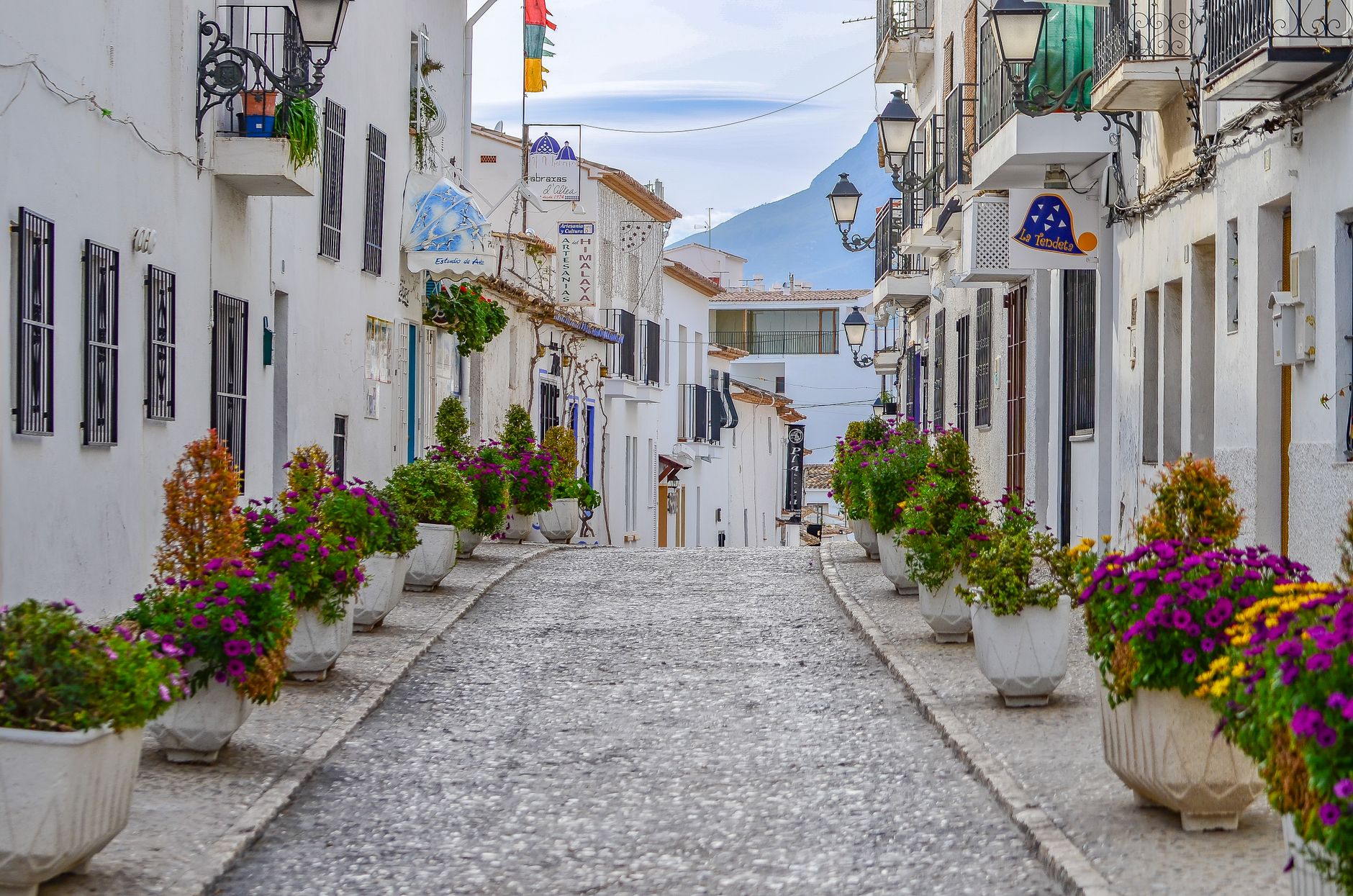


Whitewashed walls reflect blinding noon glare on the steep climb up Carrer Mayor. Cobblestones rounded smooth by centuries of sea boots give way to the blue-tiled dome of Nuestra Señora del Consuelo, watching over the bay of Altea below. Down at the fishing port, diesel skiffs unload red prawns and monkfish by four in the afternoon. The town splits neatly between this salty, working shoreline and the quiet stone labyrinth above, mercifully resistant to the high-rise concrete sprawl flanking both sides of the coast.
Last updated 26 Aug 2026
Build a Altea itinerary.
Choose up to 4 threads that pull you in. Your plan arrives organised around them.
We'll craft a 3-lens plan for Altea, one collapsible strand per lens.
Food Markets
Visit the Tuesday morning market on Camí de l'Algar for local citrus, olives, almonds, and salted mojama alongside coastal produce.
Food Markets
Visit the Tuesday morning market on Camí de l'Algar for local citrus, olives, almonds, and salted mojama alongside coastal produce.
Morning Cocas and Market Stalls
Mercado Municipal de Altea
Order a cortado and a warm coca de mullador at the counter. Budget five euros and half an hour to watch the fishmongers unpack their morning ice.
Editor TipMarina Baixa cooks have baked these thin, savoury flatbreads topped with sweet peppers, salted tuna, and olive oil since the sixteenth century. Carry small euro coins for the fruit stalls, which move faster when you skip the card terminal.
Sampling Salted Roe and Tostada
Mercat Municipal de la Vila Joiosa
Hop off at Creueta station and head inside. Grab a stool at the market bar for grated tomato on toasted bread with sliced mojama, which will run you around four euros.
Editor TipSince Roman times, this coastline has cured tuna and mullet roe in sea salt, creating intensely savoury salazones that coastal market traders still slice paper-thin by hand. Ask for a slice of hueva de maruca alongside your coffee; it is firmer and saltier than standard tuna roe.
Sampling Local Red Prawns
Restaurante Hogar del Pescador
Book a terrace table facing the fishing dock. Expect around 45 euros per head. Order the grilled red prawns and the classic arroz a banda, paired with dry local Merseguera.
Editor TipVillajoyosa’s fleet still docks daily with gamba roja, a deep-water prawn prized for intense brininess that local cooks flash-sear on rock salt with zero intervention. Skip the heavy starters. Let the prawn heads and a spoonful of alioli do the heavy lifting.
Historic Quarters
Navigate the steep, stepped alleys of the Casco Antiguo, following Carrer Major and Carrer Santa Bárbara past whitewashed facades and iron balconies.
Historic Quarters
Navigate the steep, stepped alleys of the Casco Antiguo, following Carrer Major and Carrer Santa Bárbara past whitewashed facades and iron balconies.
Hilltop Climb to Church Square
Casco Antiguo de Altea
Follow the stepped Calle Mayor uphill to Plaza de la Iglesia. The walk takes thirty gentle minutes; entry to the parish church is free.
Editor TipThe twin blue-and-white tiled domes of Nuestra Señora del Consuelo have served as coastal navigational beacons since seventeenth-century rebuilds. Worn limestone turns slippery quickly, so skip leather soles in favour of ribbed sneakers.
Dusk on the Mirador
Mirador de los Cronistas de España
Walk up the whitewashed Calle Mayor to the overlook behind the church. Free entry, completely open, and best enjoyed over forty quiet minutes before dinner.
Editor TipThe blue-glazed tile domes of the seventeenth-century church of Nuestra Señora del Consuelo anchored this hilltop bastion against Barbary pirate raids along the coast. The polished cobblestones get slick underfoot as the evening dew rolls in. Watch your footing.
Rambling Bellaguarda's Whitewashed Alleys
Barrio de Bellaguarda
Climb up from the lower coast toward Plaça de la Cantereria. Take ninety unhurried minutes to weave through the pedestrian steps away from seafront crowds.
Editor TipPredating the hilltop church square, Bellaguarda is Altea's oldest quarter, founded as a fortified redoubt where fishermen, farmers, and potters lived. Wear rubber-soled shoes; the rounded river-pebble paving can be treacherous when freshly washed.
Fishermen Houses and Coastal Path
Casco Antiguo de la Vila Joiosa
Walk down through the fortified sixteenth-century walls toward the shoreline path. Wear sturdy shoes for the cobblestones and give yourself ninety leisurely minutes.
Editor TipLocal sailors painted their seafront cottages in bright ochre, lime, and cobalt so they could spot their own homes across the water before clearing the harbour breakwater. Take the shaded staircase off Carrer Pou for a quiet stone terrace looking straight down the Amadorio riverbed.
Coastal Walking
Stroll the stone promenade from Playa de la Roda past Playa de l'Albir toward the Punta Bombarda lighthouse along the Serra Gelada cliffs.
Coastal Walking
Stroll the stone promenade from Playa de la Roda past Playa de l'Albir toward the Punta Bombarda lighthouse along the Serra Gelada cliffs.
Rice Along the Waterfront
Restaurante Juan Abril
Reserve a terrace table overlooking the pebble shore. Order the arroz del senyoret paired with a chilled glass of local Merseguera. Expect an easy two-hour sitting.
Editor TipCoastal Alicante rice making requires broad, shallow pans to develop the savoury socarrat crust, refined over generations by local fishermen using the daily catch. Skip dessert here and save room for an evening gelato as you wander the promenade.
Watching the Daily Catch
Lonja Pesquera de Altea
Walk along the harbour wall as trawlers unload red prawns and cuttlefish. The auction floor is free to observe from the public upper gallery on weekday afternoons.
Editor TipAltea's fishing fleet still sets out before dawn across the bay, supplying the Marina Baixa with red prawns and mullet using generational net techniques. Stand by the rear quayside doors around quarter to five to watch the crates get iced down.
Creative Tapas and Local Wine
Xef Pirata
Take a stool in this narrow stone room for market-driven dishes like seared cuttlefish and goat cheese toast. Dinner runs around thirty-five euros per person.
Editor TipMarina Baixa dining bridges the Mediterranean with mountain orchards, best matched here with dry Moscatel and crisp white wines from the Alicante interior. Stools fill right at opening; book a day ahead or arrive promptly at half past eight.
Walking the Albir Lighthouse Path
Parc Natural de la Serra Gelada
Park at the Albir entrance. The paved 5-kilometer round trip takes about 90 minutes. Entry is free, with sweeping bay views and shaded resting points along the route.
Editor TipThese limestone cliffs drop 300 vertical metres into the Mediterranean, sheltering rare seabirds and an 1863 lighthouse that now houses a small maritime research exhibit. Bring water and wind protection; the afternoon sun reflects hard off the white marl, even in cooler months.
Note from the Editor
“Tackle the climb to the old town before midday heat settles in. The cobblestones are slick as greased glass by three in the afternoon, and the morning light off the bay makes the uphill sweat almost dignifying.”
The Bed
Where to stay in Altea
Which part of town to book, and what each one costs you in walking, noise or quiet.
Places to stay
Central, well-rated and easy to find again. Distances are from the middle of town.
These links go to Booking.com and earn us a commission. They cost you nothing extra.
The Comparison
Altea, or somewhere near it
The places you are realistically choosing between, and the honest case for each.
The Local Record
Where to read more about Altea
The blogs, boards, guides and operators worth bookmarking.
What to do in Altea Valencia Spain
Altea splits between its elevated Casco Antiguo and a pebbled Mediterranean shoreline. Mornings belong to shaded climbs through whitewashed streets; afternoons drift along the promenade and the fishing harbour. It suits travellers who prefer quiet corners, mountain walks, and lingering over rice dishes to loud resort nightlife. Bring sturdy footwear for the limestone cobbles and an appetite for fresh coastal seafood.
24 hours in Altea Valencia Spain
Start with a morning coffee in Plaza de la Iglesia before touring the Casco Antiguo alleys. Walk down to the port for an arroz a banda lunch at 14:00. Spend the afternoon around the pebbles of Playa de la Roda, then climb back up for sunset views over the bay and a glass of chilled white Moscatel. Select 1 Day above to see it.
2 days in Altea Valencia Spain
Devote your second day to the natural coastline. Walk out along Playa de la Olla, gazing out at the offshore islet, or head south to the lighthouse trail in Serra Gelada natural park. For dinner, leave the promenade and find a backstreet tavern in the Bellaguarda district for grilled cuttlefish and local Monastrell. Choose 2 Days to expand the plan.
3 days in Altea Valencia Spain
A third day allows an inland escape into the Marina Baixa mountains. Hike the limestone pass of the Serra de Bèrnia circuit or visit the cliffside castle at Guadalest. Return via the Jalón Valley for a barrel tasting of local wines before enjoying a final relaxed dinner of salt-baked dorada down by the port.
Altea Valencia Spain itineraries by interest
Local Seafood in Altea Valencia Spain
Order gamba roja de Dénia or arroz a banda along the harbour, where boats land red mullet, cuttlefish, and monkfish daily for the afternoon auction.
Sacred Architecture in Altea Valencia Spain
Climb to the hilltop plaza for the iconic blue-and-white glazed ceramic tiled dome of the 1910 church of Nuestra Señora del Consuelo.
Historic Quarters in Altea Valencia Spain
Navigate the steep, stepped alleys of the Casco Antiguo, following Carrer Major and Carrer Santa Bárbara past whitewashed facades and iron balconies.
Coastal Walking in Altea Valencia Spain
Stroll the stone promenade from Playa de la Roda past Playa de l'Albir toward the Punta Bombarda lighthouse along the Serra Gelada cliffs.
Regional Rice in Altea Valencia Spain
Eat caldero or arroz del senyoret cooked in wide paellas with concentrated fish stock and alioli at traditional spots off the seafront.
Craft Traditions in Altea Valencia Spain
Browse summer artisan stalls in Plaza de la Iglesia selling handmade ceramics, leather, and woven esparto grass goods crafted in the Marina Baixa.
Day Trips in Altea Valencia Spain
Drive inland to the mountain fortress of Guadalest or visit the freshwater springs of Fonts de l'Algar in the Callosa d'en Sarrià hills.
Wine & Vineyards in Altea Valencia Spain
Taste crisp Marina Alta dry Moscatel and bold Monastrell reds produced in nearby terraced valleys like Jalón and the Marina Baixa hills.
Coastal Beaches in Altea Valencia Spain
Trade sand for smooth white pebbles at Playa de Cap Negret, Playa de la Olla, and the clear snorkeling coves around the Illeta de l'Olla.
Hiking in Altea Valencia Spain
Tackle the rugged ridge trails of the Serra de Bèrnia, passing the 16th-century fort ruins and the natural stone tunnel known as the Forat.
Food Markets in Altea Valencia Spain
Visit the Tuesday morning market on Camí de l'Algar for local citrus, olives, almonds, and salted mojama alongside coastal produce.
Maritime Heritage in Altea Valencia Spain
Watch the trawlers return to the Lonja del Puerto at 16:30 on weekdays to see the rapid dockside catch auctions in action.