

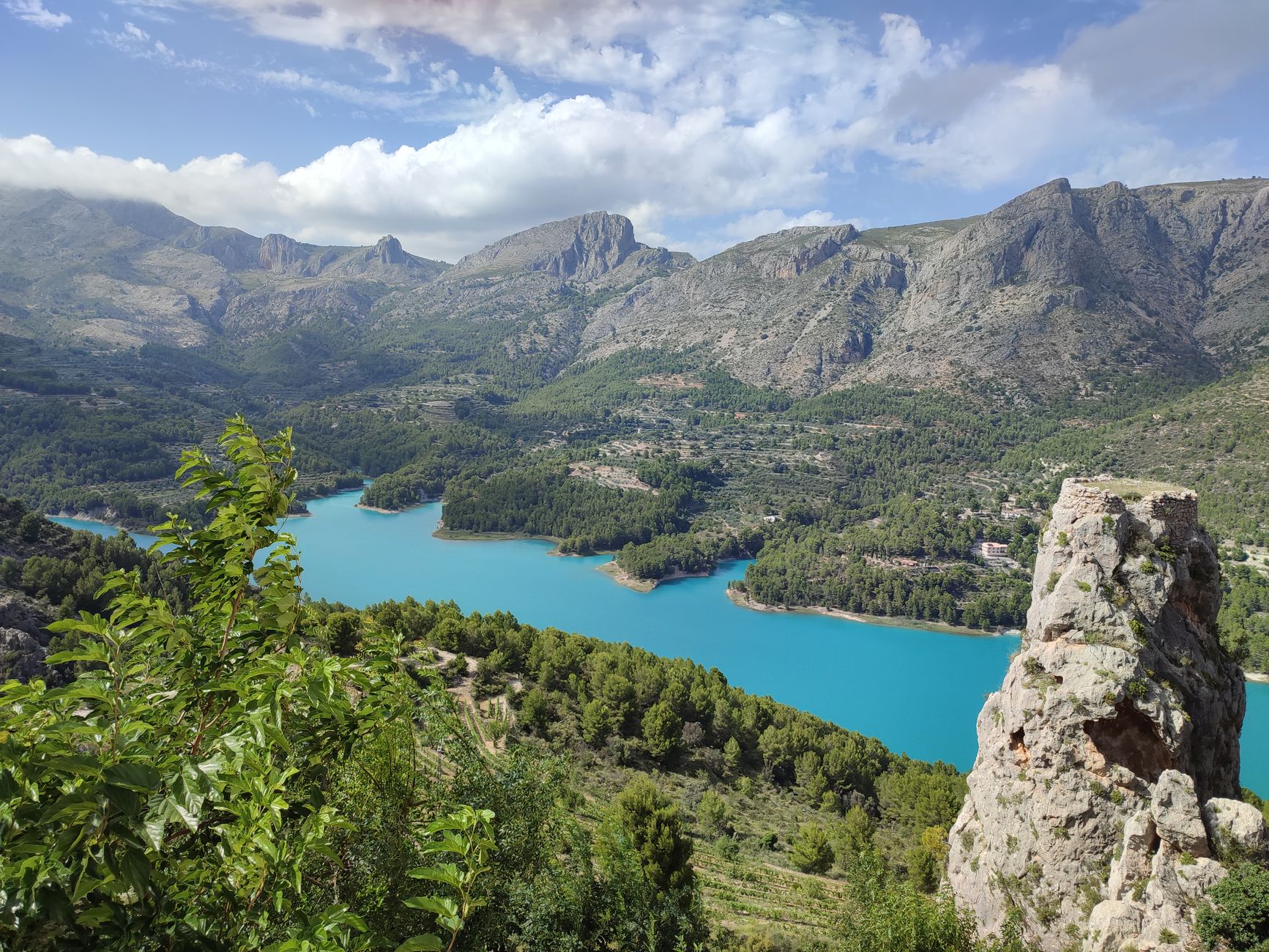
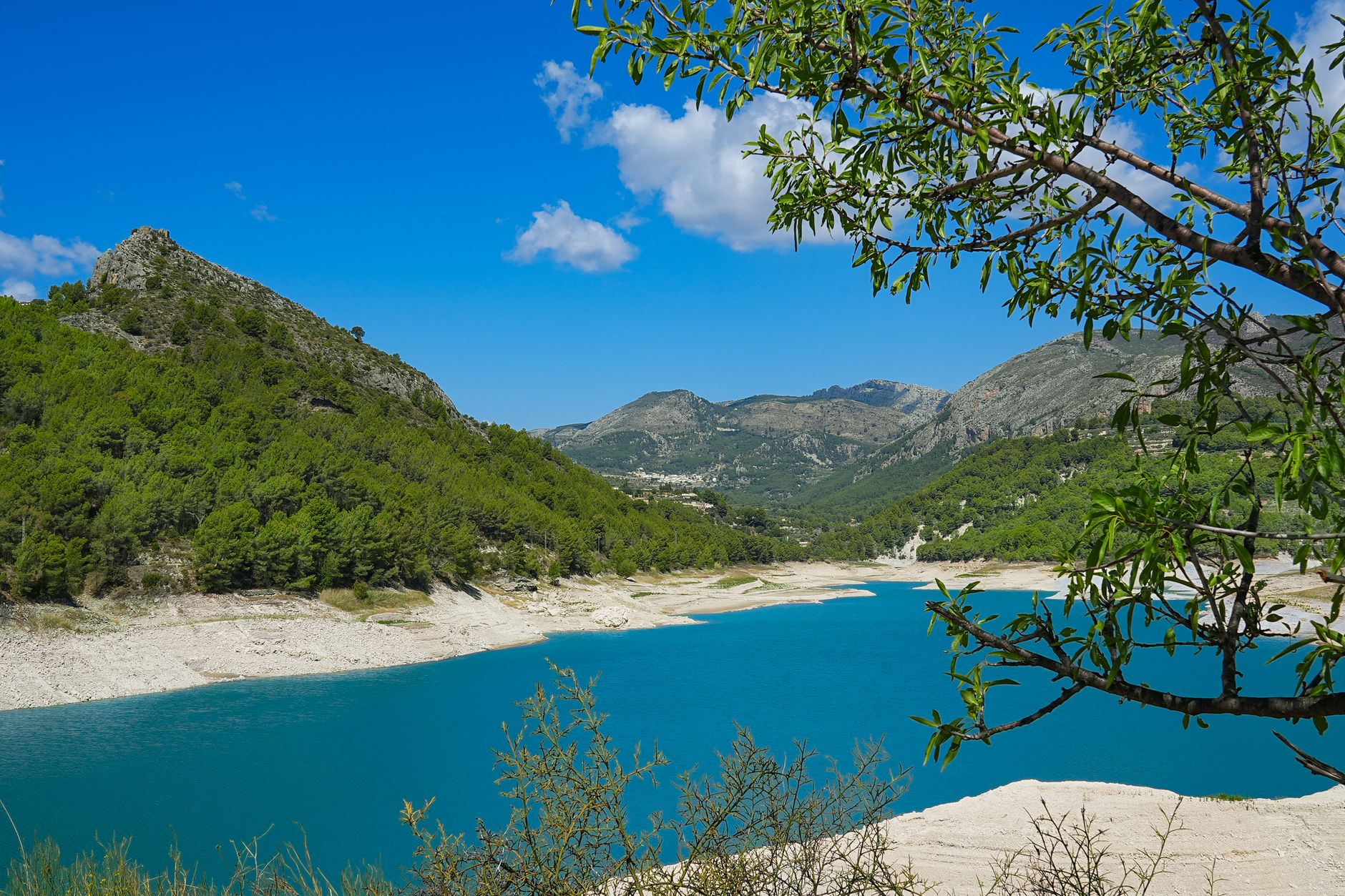
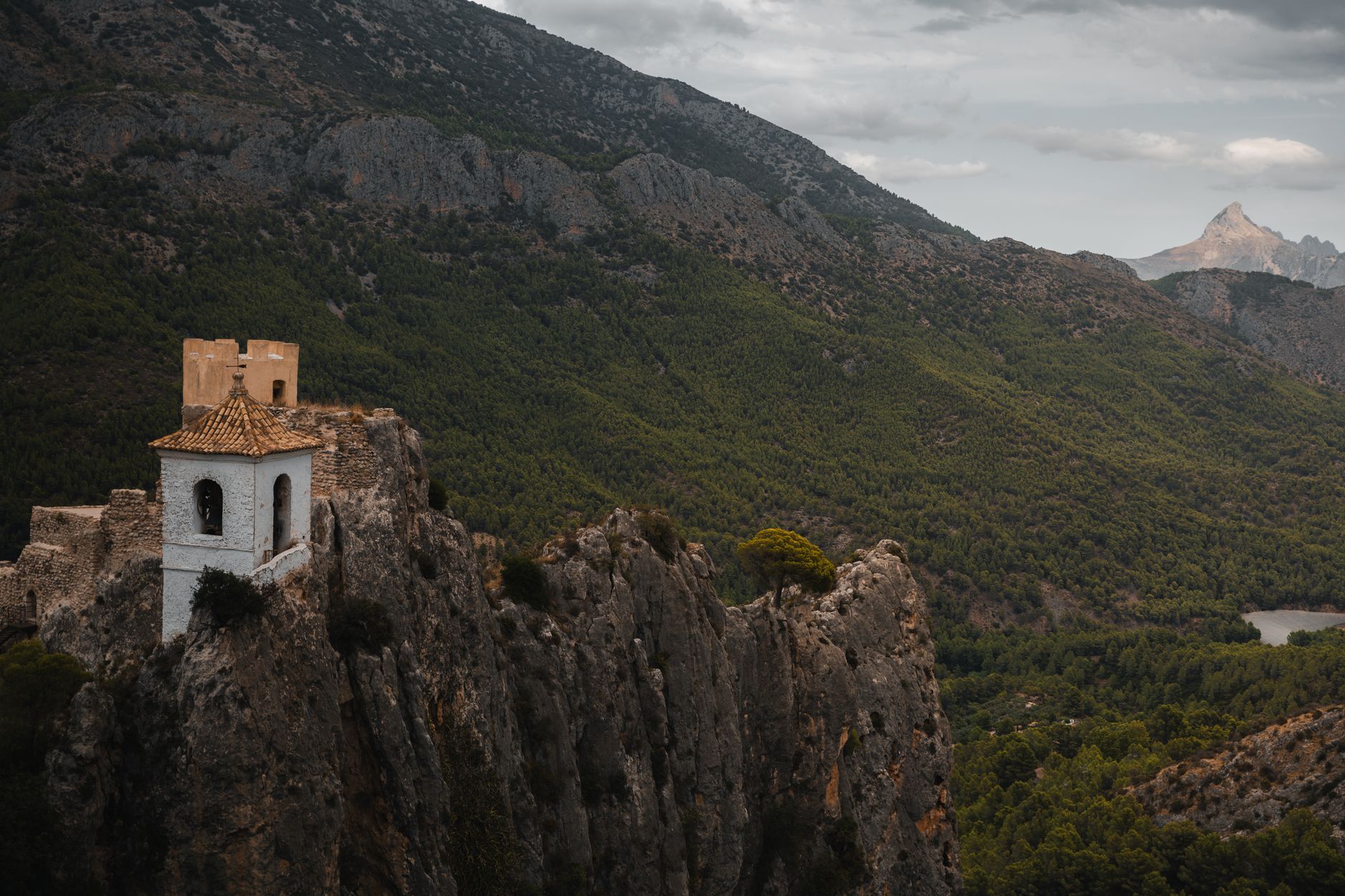
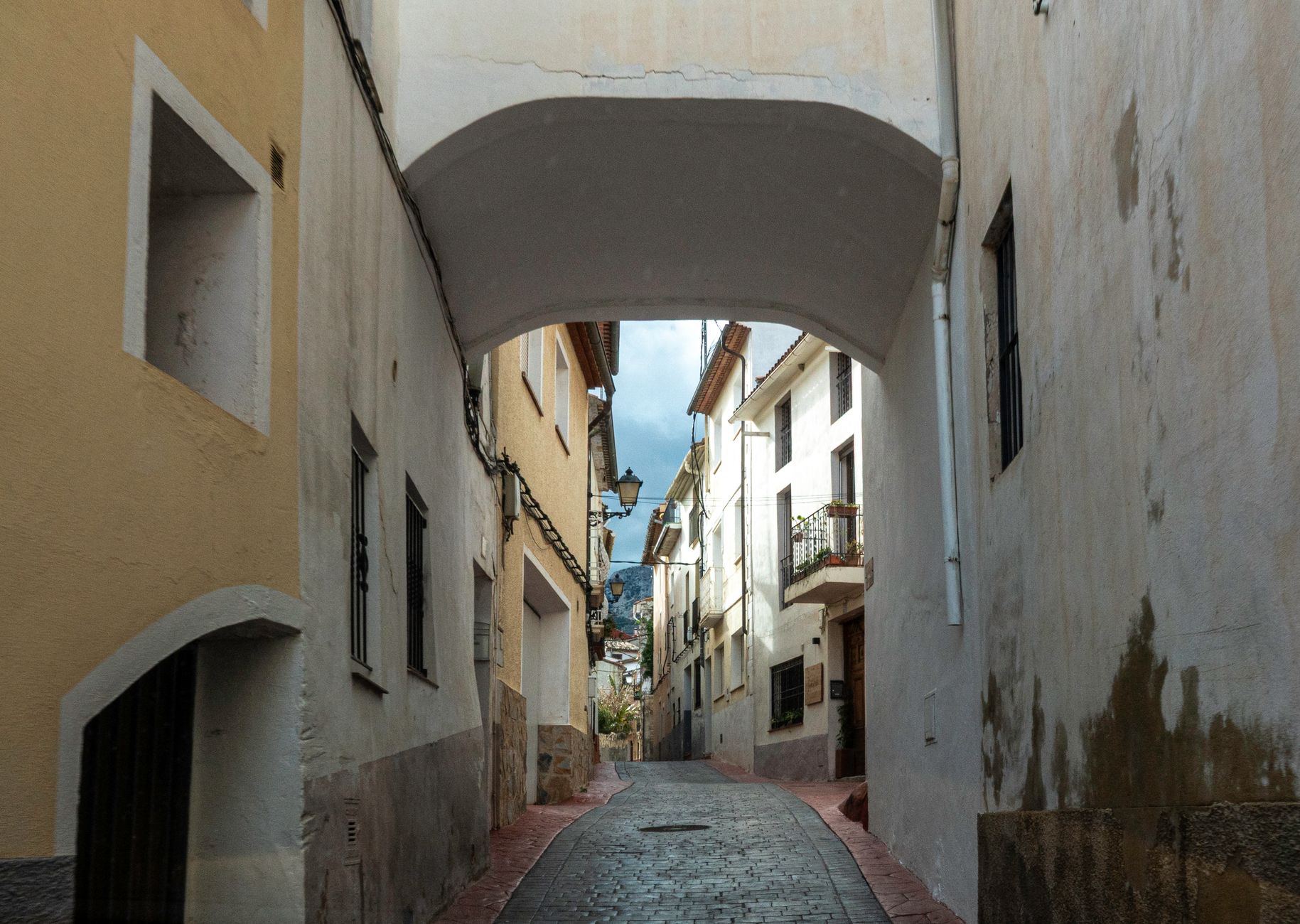
A tunnel hacked straight through limestone is the only way in, which tells you everything about who built it and who they were trying to keep out. Above the whitewashed houses of El Castell, the eleventh-century ramparts drop cleanly down to an electric-blue reservoir below. You climb steep cobbled lanes past small bodegas selling loquat brandy to reach the cemetery terrace at the top. It feels improbable, airy, and entirely real once the tour buses depart in the late afternoon.
Last updated 1 Sept 2026
Build a Guadalest itinerary.
Choose up to 4 threads that pull you in. Your plan arrives organised around them.
The Bed
Where to stay in Guadalest
Which part of town to book, and what each one costs you in walking, noise or quiet.
The Comparison
Guadalest, or somewhere near it
The places you are realistically choosing between, and the honest case for each.
The Local Record
Where to read more about Guadalest
The blogs, boards, guides and operators worth bookmarking.
What to do in Guadalest Valencia Spain
High above the Marina Baixa valley, the village splits into two parts: the lower quarter of El Arrabal and the fortified citadel reached through a single carved rock tunnel. Most visits centre on the climb to Castillo de San José and the terrace views over the turquoise reservoir. It suits walkers, history buffs, and anyone after hearty upland cooking, especially once day-trippers clear out and the village settles back into quiet mountain rhythms.
24 hours in Guadalest Valencia Spain
Arrive by nine to walk through the rock gateway into the castle before tour groups arrive. Tour Casa Orduña, then head down to El Arrabal for a lunch of rabbit with alioli and a chilled glass of local Moscatel. Spend the afternoon strolling the path down to the reservoir dam, catching the warm evening sun against the white bell tower. Select 1 Day above to see it.
2 days in Guadalest Valencia Spain
Day two takes you into the wider Guadalest Valley. Walk the nine-kilometre track around the water's edge in the morning, then head two kilometres up the road to neighboring Benimantell. Eat a slow lunch of olla de blat stew at a family restaurant, and finish the afternoon exploring the terraced almond and olive groves along the CV-70. Choose 2 Days to expand the plan.
3 days in Guadalest Valencia Spain
A third day allows an early drive to the cold natural springs at Les Fonts de l'Algar before the crowds build. Continue higher into the Sierra de Aitana for serious mountain ridge walking, stopping in tiny Confrides for roasted lamb and mountain honey pastries on the drive back down.
Guadalest Valencia Spain itineraries by interest
Mountain Fortresses in Guadalest Valencia Spain
Climb through the rock portal to the eleventh-century Castillo de San José and the restored rooms of seventeenth-century Casa Orduña.
Reservoir Trails in Guadalest Valencia Spain
Walk the nine-kilometre loop around Embalse de Guadalest through pine woods with views up to the Sierra de la Serrella crags.
Local Produce in Guadalest Valencia Spain
Sample sweet nisperos de Callosa d'en Sarrià, honey from wild thyme, and toasted Marcona almonds pressed in the Marina Baixa valley.
Regional Wine in Guadalest Valencia Spain
Taste dry Moscatel de la Marina and earthy red Monastrell poured directly from barrels in old cellars along Calle de la Peña.
Mountain Cooking in Guadalest Valencia Spain
Sit down to olla de blat wheat stew, rabbit with mountain garlic alioli, and minxos flatbreads stuffed with wild chard.
Quirky Museums in Guadalest Valencia Spain
Inspect tiny sculptures visible only under magnifying glasses at the Micro-Gigantic Museum and historical motorbikes down in the valley.
Alpine Hiking in Guadalest Valencia Spain
Tackle the high limestone paths of the Sierra de Aitana ridge for panoramas extending east to the Mediterranean coast.
Sacred Architecture in Guadalest Valencia Spain
Step inside the eighteenth-century baroque Iglesia de Nuestra Señora de la Asunción, rebuilt after the 1708 war of succession.
Traditional Crafts in Guadalest Valencia Spain
Browse handwoven esparto grass baskets, glazed earthenware jugs, and carved olive wood utensils crafted in nearby upland villages.
Waterfalls & Springs in Guadalest Valencia Spain
Drive fifteen minutes down the valley to swim in the cold mountain pools of Les Fonts de l'Algar beneath walnut orchards.
Village Day Trips in Guadalest Valencia Spain
Wander the quiet terraces of Benimantell and Confrides along the CV-70 for wood-fired lamb without the coastal crowds.
Scenic Drives in Guadalest Valencia Spain
Navigate the winding hairpins of the CV-755 from Altea through almond groves climbing into the rugged Serrella mountains.