


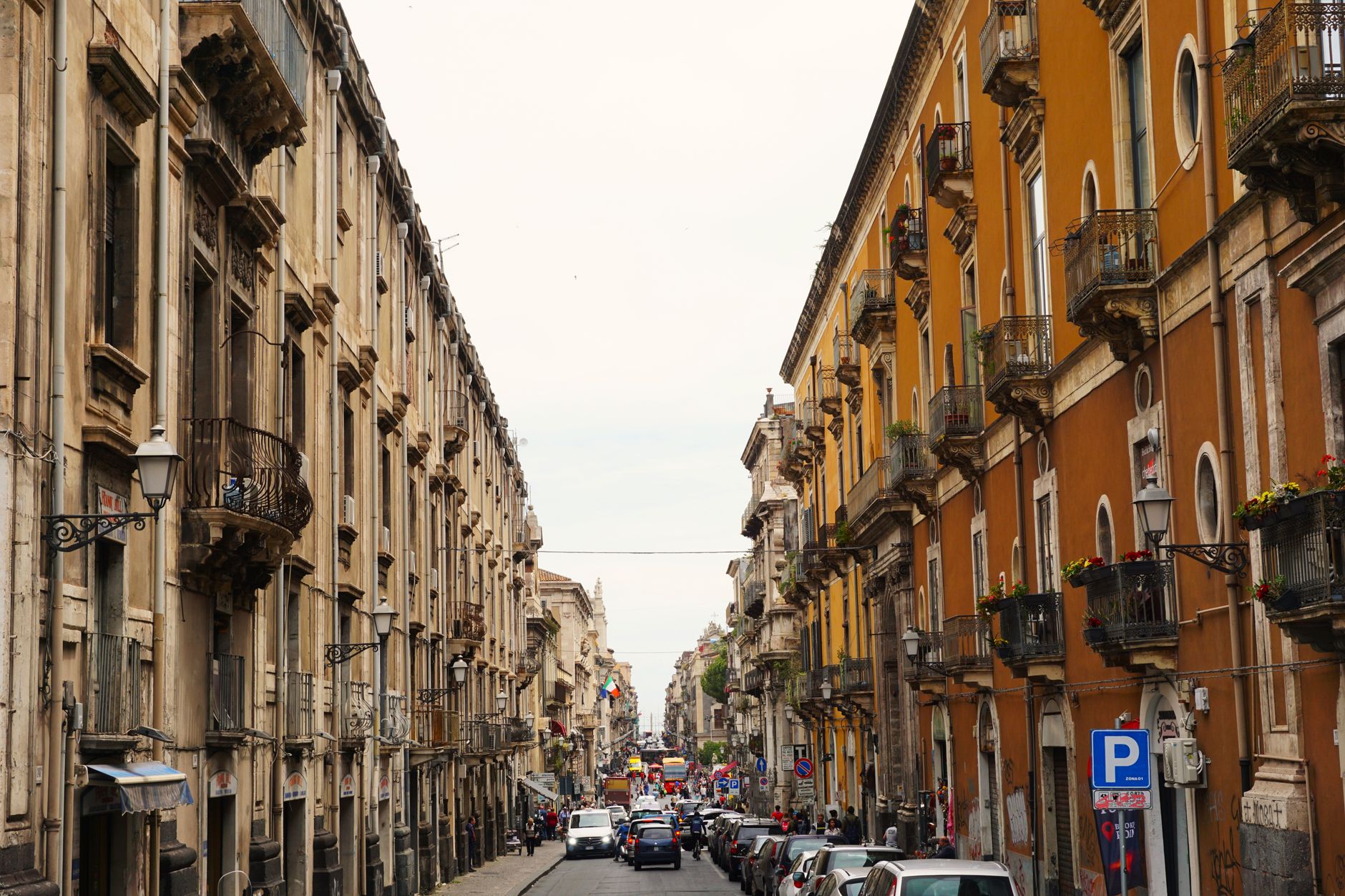


Catania sits on Sicily’s eastern coast, ten minutes by shuttle bus from Fontanarossa Airport and ninety minutes south of Messina by train. The city is defined by black Etna basalt architecture rebuilt after the 1693 earthquake, gritty daily markets, and a culinary tradition built on fried aubergine, swordfish, and Nerello Mascalese wine. Catania is worth visiting if you want raucous street food, working fish stalls, and direct trail access to Mount Etna. Look elsewhere if you want manicured historic streets, quiet nights, or calm sandy beaches within walking distance of the centre.
Last updated 9 Sept 2026
Build a Catania itinerary.
Choose up to 4 threads that pull you in. Your plan arrives organised around them.
The Bed
Where to stay in Catania
Which part of town to book, and what each one costs you in walking, noise or quiet.
The Comparison
Catania, or somewhere near it
The places you are realistically choosing between, and the honest case for each.
The Local Record
Where to read more about Catania
The blogs, boards, guides and operators worth bookmarking.
What to do in Catania Sicily Italy
Catania is built on the black bones of Mount Etna's past eruptions, laying its grand baroque avenues over ancient Roman foundations. The rhythm of the city belongs to early risers and late eaters, shifting from chaotic morning fish stalls to late-night outdoor grills along Via Plebiscito. It suits travellers who prefer grit, directness, and assertive flavours to manicured resort towns, rewarding anyone happy to navigate lively traffic on foot.
24 hours in Catania Sicily Italy
Start by dodging puddles at La Pescheria market behind Piazza del Duomo, pausing for a mid-morning espresso and cannolo at Savia. Walk up Via Etnea to explore the Roman Amphitheatre, then finish the evening with grilled horsemeat meatballs and cold local draft beer at an outdoor table along smoky Via Plebiscito. Select 1 Day above to see it.
2 days in Catania Sicily Italy
Spend your second morning touring the art inside Castello Ursino before taking the city bus north to the black volcanic sands of San Giovanni Li Cuti. In the evening, explore the student-filled alleys of the San Berillo district and sit down for fresh busiate pasta and Etna Rosso wine near the Teatro Massimo Bellini. Choose 2 Days to expand the plan.
3 days in Catania Sicily Italy
A third day allows an early ascent of Mount Etna from Rifugio Sapienza or a scenic loop on the narrow-gauge Circumetnea train through pistachio orchards in Bronte. Alternatively, take the 45-minute train south to Siracusa to wander the Greek ruins and marble alleys of Ortigia without having to pack your bags.
Catania Sicily Italy itineraries by interest
Local Seafood in Catania Sicily Italy
Watch swordfish and red prawns sliced at La Pescheria, then eat fried sardines from paper cones or raw sea urchin dressed with lemon on the wet stones.
Street Food in Catania Sicily Italy
Queue at Chiosco Giammona for seltz limone e sale, grab crisp arancini al ragù at Savia, and eat grilled horsemeat sandwiches along Via Plebiscito.
Sacred Architecture in Catania Sicily Italy
Admire Giovanni Battista Vaccarini’s dark basalt facade at the Duomo di Sant'Agata and climb the dome of Chiesa della Badia for clear views of Etna.
Volcanic Landscapes in Catania Sicily Italy
Hike the Silvestri Craters on Mount Etna's southern slope or take the cable car from Rifugio Sapienza toward the upper vents across crunching black scree.
Markets & Produce in Catania Sicily Italy
Navigate the shouts at A Fera o Luni market for Tarocco blood oranges, wild fennel, salted capers, and wheels of aged sheep's milk pecorino siciliano.
Wine & Vineyards in Catania Sicily Italy
Sample mineral-driven volcanic reds made from Nerello Mascalese and crisp Carricante whites grown in terraced ash vineyards along Etna's northern slopes.
Historic Ruins in Catania Sicily Italy
Explore the sunken Roman Amphitheatre on Piazza Stesicoro and the black lava tiers of the 2nd-century Teatro Romano hidden behind apartment blocks.
Local Pasta Dishes in Catania Sicily Italy
Order pasta alla Norma tossed with fried aubergine, rich tomato sauce, salted ricotta, and basil at trattorias tucked around the Teatro Massimo Bellini.
Coastal Walks in Catania Sicily Italy
Walk the black volcanic harbour of San Giovanni Li Cuti or head north to Aci Trezza to view the massive basalt sea stacks known as the Cyclopean Isles.
Pastry Traditions in Catania Sicily Italy
Start the morning with sheep's milk ricotta cannoli or almond granita served with warm brioche col tuppo at historic pasticcerie along Via Etnea.
Castles & Fortresses in Catania Sicily Italy
Visit 13th-century Castello Ursino, built on a coastal cliff by Frederick II before the 1669 lava flow pushed the shoreline five hundred metres outward.
Day Trips in Catania Sicily Italy
Ride the Circumetnea train around the base of the volcano or take a forty-minute coastal train south to Syracuse and the historic island of Ortigia.