.jpg)
.jpg)

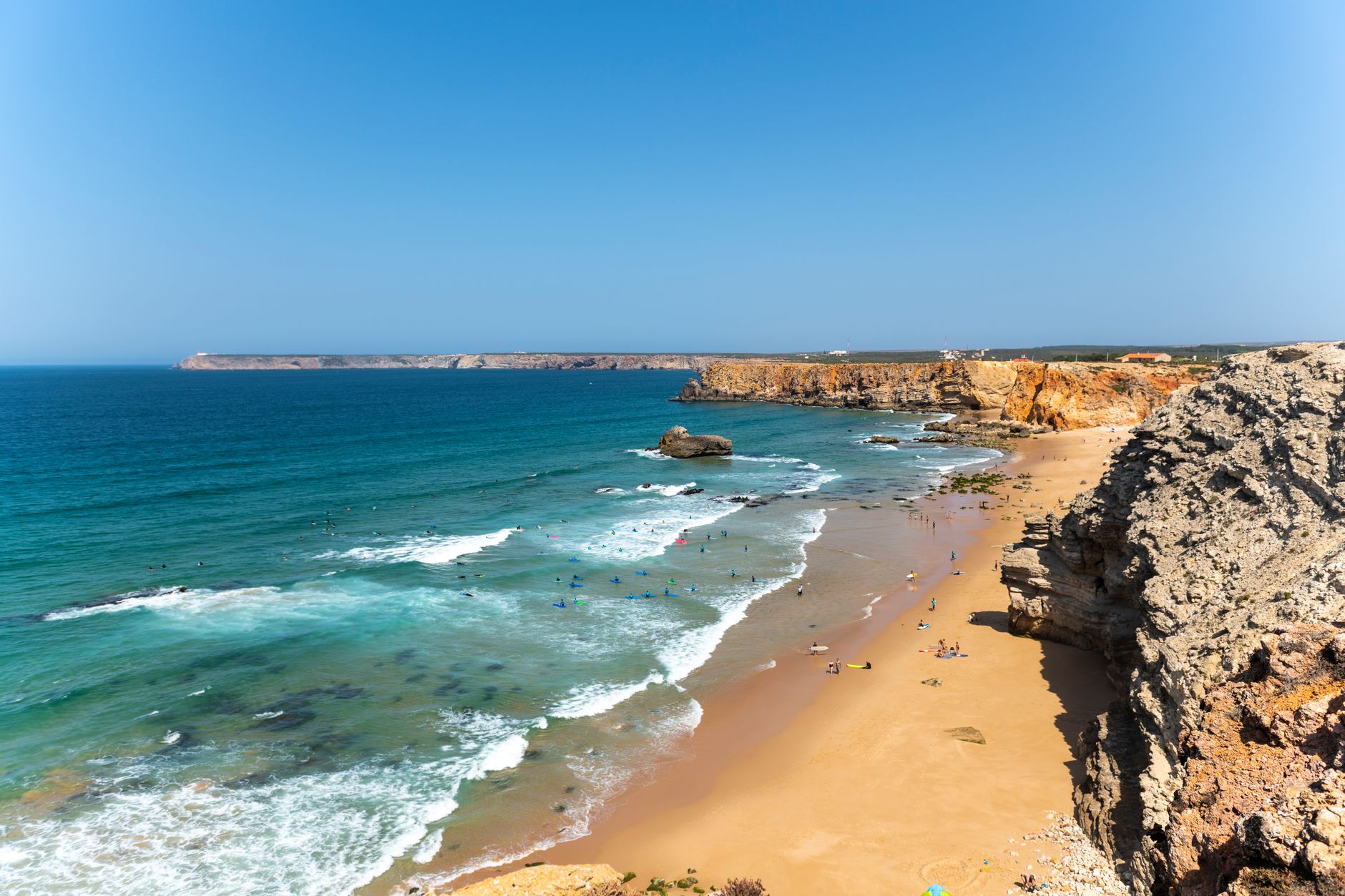


Sagres sits at the southwestern tip of the Algarve, an eighty-minute drive west of Faro Airport and thirty minutes from the rail terminal in Lagos. The town is known for raw Atlantic swells, sheer limestone headlands, and a working fishing fleet based at Porto da Baleeira. Sagres is worth visiting if you want wild coastal walking, world-class surf breaks, and fresh barnacles boiled in sea water. Look elsewhere if you want manicured resort promenades, lively nightclub strips, or sheltered swimming beaches.
Last updated 21 Sept 2026
Build a Sagres itinerary.
Choose up to 4 threads that pull you in. Your plan arrives organised around them.
The Bed
Where to stay in Sagres
Which part of town to book, and what each one costs you in walking, noise or quiet.
The Comparison
Sagres, or somewhere near it
The places you are realistically choosing between, and the honest case for each.
The Local Record
Where to read more about Sagres
The blogs, boards, guides and operators worth bookmarking.
What to do in Sagres Algarve Portugal
Sagres is a low-slung, wind-scoured outpost spread along a rocky plateau. Days here revolve around Atlantic tide charts, wind direction, and the arrival of the afternoon catch at the fishing docks. It suits independent travellers who prefer sturdy windbreakers over resort cabanas, wild cliff walks over paved esplanades, and a plate of grilled sea bream at a tiled corner tavern after spending the afternoon out in the salt spray.
24 hours in Sagres Algarve Portugal
Start early at the Fortaleza de Sagres before the tour buses arrive, pacing the vast windblown headland. For lunch, order grilled robalo and a salad at A Tasca near the port. In the late afternoon, drive six kilometres out to the lighthouse at Cabo de São Vicente to watch the sunset over the Atlantic, then head to Rua Comandante Matoso for a plate of percebes. Select 1 Day above to see it.
2 days in Sagres Algarve Portugal
Spend your second morning hiking the red sandstone cliffs above Praia do Telheiro on the western coast. In the afternoon, head inland to Vila do Bispo for a hearty plate of wild boar stew or percebes harvested that morning, then watch the local surfers tackle the steep right-handers at Praia do Beliche while the wind dies down. Choose 2 Days to expand the plan.
3 days in Sagres Algarve Portugal
With a third day, venture north into the protected Costa Vicentina. Walk the trail from Praia da Cordoama to Castelejo, where dark schist cliffs meet foaming surf. Stop at a roadside bakery for pasteis de nata and coffee, then end the day sampling Algarve white wines and grilled octopus at a quiet village tasca outside Raposeira.
Sagres Algarve Portugal itineraries by interest
Local Seafood in Sagres Algarve Portugal
Eat gooseneck barnacles (percebes) and grilled robalo at A Tasca overlooking Porto da Baleeira, paired with cold draft Sagres lager.
Maritime History in Sagres Algarve Portugal
Walk the massive limestone compass rose and fifteenth-century ramparts at Fortaleza de Sagres, built during Prince Henry the Navigator's era.
Coastal Walks in Sagres Algarve Portugal
Follow the marked Rota Vicentina cliffside trails along the edge of Cabo de São Vicente, watching gannets dive into sixty-metre swells.
Surfing in Sagres Algarve Portugal
Catch powerful southwest reef breaks at Praia do Tonel or ride the gentler east-facing sandy rollers along Praia do Beliche and Mareta.
Lighthouses in Sagres Algarve Portugal
Stand at Cabo de São Vicente lighthouse, where one of Europe's most powerful optical lenses flashes over the sheer southwestern headland.
Boat Excursions in Sagres Algarve Portugal
Board rigid inflatables at the Baleeira marina to spot short-beaked common dolphins, minke whales, and pelagic shearwaters offshore.
Day Trips in Sagres Algarve Portugal
Drive twenty minutes north to Vila do Bispo for roasted wild boar, or explore the cobbled streets and slave market museum in historic Lagos.
Beaches in Sagres Algarve Portugal
Sheltered by high limestone walls, Praia da Mareta offers calm swimming water, while Praia do Telheiro delivers rugged, empty Atlantic sand.
Craft Traditions in Sagres Algarve Portugal
Browse the stacks of terracotta pottery, glazed sardine tiles, and handwoven woollen blankets lining the main N268 road at Artesanato a Mó.
Birdwatching in Sagres Algarve Portugal
Visit during the autumn migration when booted eagles, griffon vultures, and honey buzzards funnel across the Sagres peninsula toward Africa.
Local Wine in Sagres Algarve Portugal
Sample crisp white blends made from Arinto and Siria grapes produced by coastal Algarve estates, poured alongside grilled sardines.
Cycling in Sagres Algarve Portugal
Rent a mountain bike to pedal the flat gravel trails of the Southwest Alentejo and Vicentine Coast Natural Park toward the hidden coves.