Bilbao.
,_Bilbao_(31966080332).jpg)


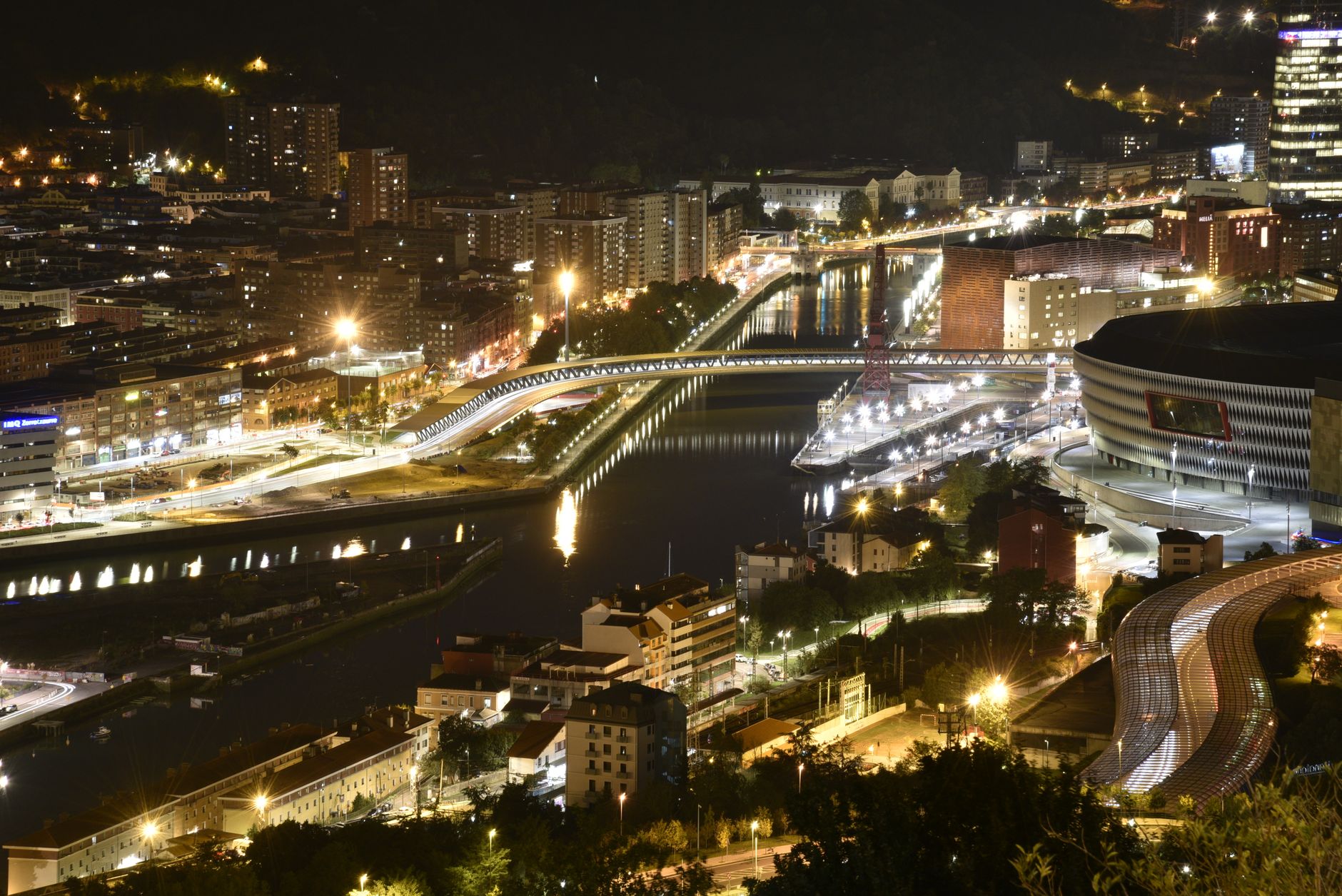


The Nervión river cuts through green valley walls, carrying the memory of ironworks and shipyards right under Frank Gehry's rippling titanium skin. You walk along wide river promenades where dry dock cranes stand like sculpture, then dive into the dense medieval grid of the Siete Calles. Here, life condenses into elbow-to-elbow counters stacked with pintxos, glasses of tart txakoli poured from great heights, and long debates over salt cod. It is industrial reinvention anchored by deep appetites.
Last updated 31 Aug 2026
Build a Bilbao itinerary.
Choose up to 4 threads that pull you in. Your plan arrives organised around them.
The Bed
Where to stay in Bilbao
Which part of town to book, and what each one costs you in walking, noise or quiet.
The Comparison
Bilbao, or somewhere near it
The places you are realistically choosing between, and the honest case for each.
The Local Record
Where to read more about Bilbao
The blogs, boards, guides and operators worth bookmarking.
What to do in Bilbao Basque Country Spain
Bilbao is built for travellers who like their culture accompanied by serious eating and manageable walking distances. The city follows the curves of the Nervión river, neatly splitting its energy between the contemporary architecture of Abandoibarra and the dense, tavern-heavy alleys of Casco Viejo. Days naturally pivot around midday market visits and evening pintxo crawls, suited to curious walkers and art lovers alike.
24 hours in Bilbao Basque Country Spain
Start early at the Guggenheim before the main halls fill, then cross the river on the Zubizuri bridge to Mercado de la Ribera for lunch. Spend the late afternoon wandering the Siete Calles, ending with a crawl for gildas and txakoli across Plaza Nueva. Everything connects on foot within a thirty-minute radius. Select 1 Day above to see it.
2 days in Bilbao Basque Country Spain
Ride the metro north to see the iron Vizcaya Bridge in Portugalete, then ride back for the quiet galleries of the Museo de Bellas Artes. In the evening, head into the Indautxu neighbourhood around Calle García Rivero for grilled txuleta ribeye and a different, residential tavern pace. Choose 2 Days to expand the plan.
3 days in Bilbao Basque Country Spain
Take a forty-minute drive out to the coast to climb the stone stairway of San Juan de Gaztelugatxe, followed by a harbour lunch of grilled sardines in Bermeo. Return to town for a late afternoon funicular ride up Mount Artxanda to watch the valley settle under the evening dusk.
Bilbao Basque Country Spain itineraries by interest
Pintxos & Taverns in Bilbao Basque Country Spain
Stand at counters along Calle Somera for gilda skewers of anchovy, olive, and guindilla pepper washed down with pours of Hondarrabi Zuri.
Modern Art in Bilbao Basque Country Spain
Pair the Guggenheim’s massive Serra steel sculptures with the fine arts collection at the Museo de Bellas Artes, just a ten-minute walk apart.
Local Seafood in Bilbao Basque Country Spain
Order bacalao al pil-pil, cod emulsified with olive oil and garlic, or fresh kokotxas at classic dining rooms like Victor Montes in Plaza Nueva.
Food Markets in Bilbao Basque Country Spain
Browse the stained-glass halls of Mercado de la Ribera for Idiazabal cheese, Guernica peppers, and fresh Cantabrian hake before lunch.
Historic Architecture in Bilbao Basque Country Spain
Wander the Gothic Santiago Cathedral and seventeenth-century arcades in Casco Viejo, Bilbao's original medieval settlement.
Riverfront Walks in Bilbao Basque Country Spain
Stroll the Nervión path from Zubizuri footbridge past the red Arrontegi crane to the Maritime Museum, flat and easy for an evening walk.
Wine & Vineyards in Bilbao Basque Country Spain
Sip slightly effervescent Bizkaiko Txakolina produced on steep coastal slopes, paired with grilled txuleta steak at rustic asadores.
City Views in Bilbao Basque Country Spain
Ride the 1915 Artxanda funicular up Mount Artxanda for a sweeping panorama of the valley and Gehry’s museum curving along the river.
Coastal Rail Trips in Bilbao Basque Country Spain
Take the metro line 1 north to Portugalete to cross the 1893 Vizcaya transporter bridge over the estuary into Las Arenas.
Atlantic Beaches in Bilbao Basque Country Spain
Hop on the suburban train to Sopelana and Plentzia for wild cliffside beaches, Atlantic surf breaks, and seaside promenade lunches.
Maritime History in Bilbao Basque Country Spain
Explore ship-building heritage and historic wooden vessels at the Itsasmuseum, situated on the old Euskalduna shipyard dry docks.
Day Trips in Bilbao Basque Country Spain
Drive forty minutes to San Juan de Gaztelugatxe or the fishing village of Bermeo for fresh bonito tuna straight off the Atlantic boats.