

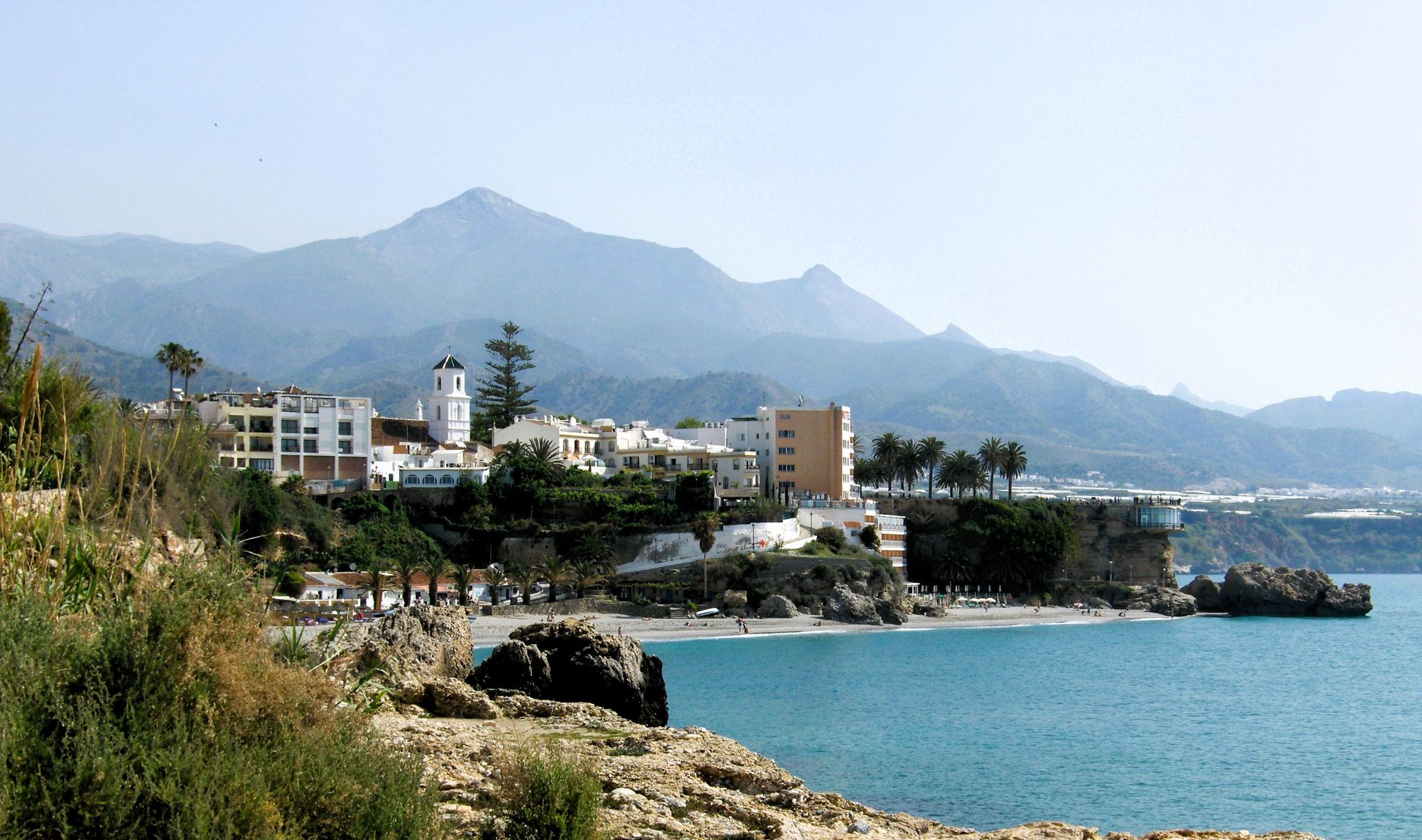


Nerja sits where the limestone ridges of the Sierra de Almijara drop straight into the Alboran Sea. You smell the salt first, followed closely by olive wood smoke from the sardine espetos roasting in sand pits along Playa de Burriana. The town revolves around the Balcón de Europa, a former fortress promontory where old men debate football on shaded benches. Below, clear coves like Calahonda yield sweet red prawns and grilled octopus served without fuss.
Last updated 22 Aug 2026
Build a Nerja itinerary.
Choose up to 4 threads that pull you in. Your plan arrives organised around them.
We'll craft a 3-lens plan for Nerja, one collapsible strand per lens.
Markets & Produce
Tuesday’s open-air market on Calle Cisne overflows with subtropical avocados from the Axarquía valley, local goat cheeses, and sweet Moscatel raisins from Cómpeta.
Markets & Produce
Tuesday’s open-air market on Calle Cisne overflows with subtropical avocados from the Axarquía valley, local goat cheeses, and sweet Moscatel raisins from Cómpeta.
Breakfast and Axarquía Produce
Mercado Municipal de Nerja
Grab a counter stool for toasted mollete with grated tomato and olive oil, then inspect the regional avocado and cherimoya displays. Plan forty minutes; bring cash.
Editor TipThe subtropical microclimate of the surrounding Axarquía valley has yielded unique harvests of mango, custard apple, and olive oil since Phoenician and Moorish times. Order café con leche and ask for local extra virgin oil; they keep the good bottles tucked behind the grinder.
Countertop Seafood Tapas Crawl
Bar El Pulguilla
Claim standing room at the lively front bar by 8:30 PM. Order a cold draft beer or dry Axarquía white wine to receive a free plate of fried baby squid or prawns.
Editor TipThis family-run institution honours the classic eastern Andalusian tapeo ritual, frying fresh daily catch sourced directly from nearby fishing ports like Caleta de Vélez. Stand at the counter rather than sitting in the rear dining room; service is faster and the tapas keep coming with drinks.
Axarquía Wine and Flamenco
El Molino
Grab a wooden table near the vintage olive press around eight thirty. Order a carafe of dry Axarquía Moscatel and a plate of cured goat cheese. Cash preferred; under twenty euros.
Editor TipThe terraced slate hills of the Axarquía have produced Moscatel de Alejandría grapes since Phoenician traders planted them. Locals gather here to drink it alongside traditional verdiales songs. Seats along the whitewashed wall offer the clearest acoustic line to the guitarist.
Climbing the Mudéjar Quarter
Barrio Alto
Wander the steep alleys before tour buses arrive. Twelve ceramic plaques map the 1569 Morisco rebellion; allow sixty minutes of steady walking in flat shoes.
Editor TipFollowing the Reconquista, Moorish families fortified themselves in these steep limestone lanes until the final 1569 revolt reshaped the Axarquía landscape. Wear rubber-soled shoes. The whitewashed cobbles turn slick as glass where the morning dew lingers.
Salt-Crusted Sea Bream
Restaurante La Rompiente
Book an outdoor table for eight in the evening. Order whatever round white fish arrived from the Caleta de Vélez docks this afternoon, paired with dry Moscatel.
Editor TipMaro perches on sheer limestone cliffs above a protected marine park, where coastal farmers have cultivated sweet potatoes and avocados alongside artisanal inshore fishermen for generations. Catch the local red bus from Nerja bus station; it costs under two euros and saves navigating the steep village parking.
Day Trips
Take the fifteen-minute bus ride uphill to Frigiliana for sixteenth-century Mudéjar brickwork, steep cobbled alleyways, and the last remaining cane honey factory in Europe.
Day Trips
Take the fifteen-minute bus ride uphill to Frigiliana for sixteenth-century Mudéjar brickwork, steep cobbled alleyways, and the last remaining cane honey factory in Europe.
Sampling Wood-Fired Cane Honey
Fábrica de Miel de Caña Nuestra Señora del Carmen
Stop by the ground-floor shop inside the sixteenth-century mansion. Pick up a jar of dark miel de caña and sweet fig bread for around five euros.
Editor TipOperating since the seventeenth century, this remains Europe's sole functional sugar cane molasses mill, preserving Andalusian agro-industrial heritage. Drizzle the dark syrup over sharp goat cheese or fried berenjenas back at your apartment.
Local History
Trace the town's evolution at the Museo de Nerja, from early prehistoric cave dwellers to the nineteenth-century sugar cane mills that once drove the coastal economy.
Local History
Trace the town's evolution at the Museo de Nerja, from early prehistoric cave dwellers to the nineteenth-century sugar cane mills that once drove the coastal economy.
Exploring Paleolithic Caverns
Cueva de Nerja
Book the 10:30 slot online to skip the coach lines. Catch the local bus from Avenida de Pescia; the self-guided cavern walk takes roughly an hour.
Editor TipAccidentally discovered by five local youths chasing bats in 1959, this five-kilometer karst system holds monumental stalactites and prehistoric cave art. Bring a light layer. The temperature inside the caverns stays at a cool nineteen degrees Celsius year-round.
Discovering Sugar Mills and Antiquity
Museo de Nerja
Pay three euros at the Plaza de España desk. Spend fifty minutes walking through Roman amphorae, cave artifacts, and blueprints of 19th-century cane factories.
Editor TipBefore package holidays reshaped the coastline, Nerja was a tough working town powered by 16th-century sugar refineries and seasonal sardine netting. Start with the industrial history exhibits on the ground floor while your legs and attention span are fresh.
Fried Boquerones and Cañas
Freiduría Dolores El Chispa
Order a cold beer at the counter to claim your plate of fried fish. The kitchen turns out crisp anchovies in minutes. No booking needed; expect to spend under twelve euros.
Editor TipNerja lived on small-boat fishing long before resort culture took hold. Freidurías preserve the daily ritual of turning the morning Mediterranean catch into blistering, salt-crusted bites. Head through the narrow front hall straight to the rear garden for breezy bench seating.
Aubergines with Cane Molasses
Bar El Casino
Settle onto the upper terrace without a reservation. Order the crisp berenjenas con miel de caña and local cured goat cheese for fifteen euros.
Editor TipFrigiliana houses Europe's sole surviving sugar cane refinery, El Ingenio, producing the distinctively bitter molasses that has seasoned Axarquía cooking since the seventeenth century. Wear shoes with grip for the climb up Calle Real; seventeenth-century cobblestones offer little mercy to slick leather soles.
Note from the Editor
“Beat the tour coaches to the caves before eleven, then walk into town before midday heat settles. Nerja rewards early risers with quiet stone streets and fresh coffee.”
The Bed
Where to stay in Nerja
Which part of town to book, and what each one costs you in walking, noise or quiet.
The Comparison
Nerja, or somewhere near it
The places you are realistically choosing between, and the honest case for each.
The Local Record
Where to read more about Nerja
The blogs, boards, guides and operators worth bookmarking.
What to do in Nerja Andalusia Spain
Nerja is an unhurried coastal town built along high sea cliffs, where days naturally swing between the shaded stone plaza of the Balcón de Europa and the sandy coves below. It suits independent travellers who appreciate straightforward Andalusian cooking, genuine neighbourhood tapas bars, and easy access to coastal footpaths without the high-rise clutter found further west along the Costa del Sol.
24 hours in Nerja Andalusia Spain
Start early at the Balcón de Europa before the heat gathers, walk ten minutes east to Playa de Burriana for wood-roasted sardines at lunchtime, and spend the evening wandering the pedestrian lanes of Calle Cristo for draft beer and free tapas plates of fried boquerones. Select 1 Day above to see it.
2 days in Nerja Andalusia Spain
Head underground into the massive Cueva de Nerja in the morning, then drive ten minutes inland to Frigiliana. Climb its steep whitewashed streets to sample roasted kid goat with cane honey and crisp Moscatel wine, returning to town for sunset over Calahonda cove. Choose 2 Days to expand the plan.
3 days in Nerja Andalusia Spain
Dedicate a full day to the wilder coastline of the Maro-Cerro Gordo cliffs. Rent a kayak to explore hidden sea caves, pack local goat cheese and fresh bread for the beach, and finish with a slow dinner of grilled dorada at a quiet cliffside chiringuito.
Nerja Andalusia Spain itineraries by interest
Local Seafood in Nerja Andalusia Spain
Skewered sardines roasted over olive wood on Burriana beach, fried boquerones at El Pulguilla, and local red prawns simmered in clay cazuelas with garlic and dry sherry.
Coastal Walks in Nerja Andalusia Spain
Follow the cliffside path from Playa Carabeo down through the rocky arches of Calahonda, where whitewashed sea walls meet the Mediterranean surf on quiet mornings.
Cave Exploration in Nerja Andalusia Spain
The Cueva de Nerja holds mammoth Upper Paleolithic caverns, five-million-year-old stalactites, and the towering central column inside the Sala del Cataclismo.
Hiking in Nerja Andalusia Spain
Scramble up the Río Chillar gorge through cool calf-deep riverbeds, or tackle the steep pine trails leading into the limestone heights of the Sierras de Tejeda.
Markets & Produce in Nerja Andalusia Spain
Tuesday’s open-air market on Calle Cisne overflows with subtropical avocados from the Axarquía valley, local goat cheeses, and sweet Moscatel raisins from Cómpeta.
Day Trips in Nerja Andalusia Spain
Take the fifteen-minute bus ride uphill to Frigiliana for sixteenth-century Mudéjar brickwork, steep cobbled alleyways, and the last remaining cane honey factory in Europe.
Tapas Culture in Nerja Andalusia Spain
Bar-hop along Calle Cristo and Calle Almirante Ferrándiz, where ordering a small glass of draft Cruzcampo automatically earns a free plate of braised pork or fried squid.
Beaches in Nerja Andalusia Spain
Skip the crowded stretches for the pebbled cove at Playa de Maro, where clear waters beneath jagged cliffs make for rewarding sea kayaking and snorkeling.
Sacred Architecture in Nerja Andalusia Spain
The seventeenth-century Iglesia de El Salvador near the promontory blends baroque details with Mudéjar woodwork, offering quiet cool away from the midday sun.
Local History in Nerja Andalusia Spain
Trace the town's evolution at the Museo de Nerja, from early prehistoric cave dwellers to the nineteenth-century sugar cane mills that once drove the coastal economy.
Traditional Desserts in Nerja Andalusia Spain
Stop by local pastelerías for tortas de aceite and sweet arropía candy made with concentrated cane syrup, a sugary legacy of the Axarquía region's cane harvest.
Wine & Vineyards in Nerja Andalusia Spain
Taste bone-dry whites and unfortified sweet wines pressed from high-altitude Moscatel de Alejandría grapes grown on the steep slate hillsides above nearby Sayalonga.