Ouzoud.


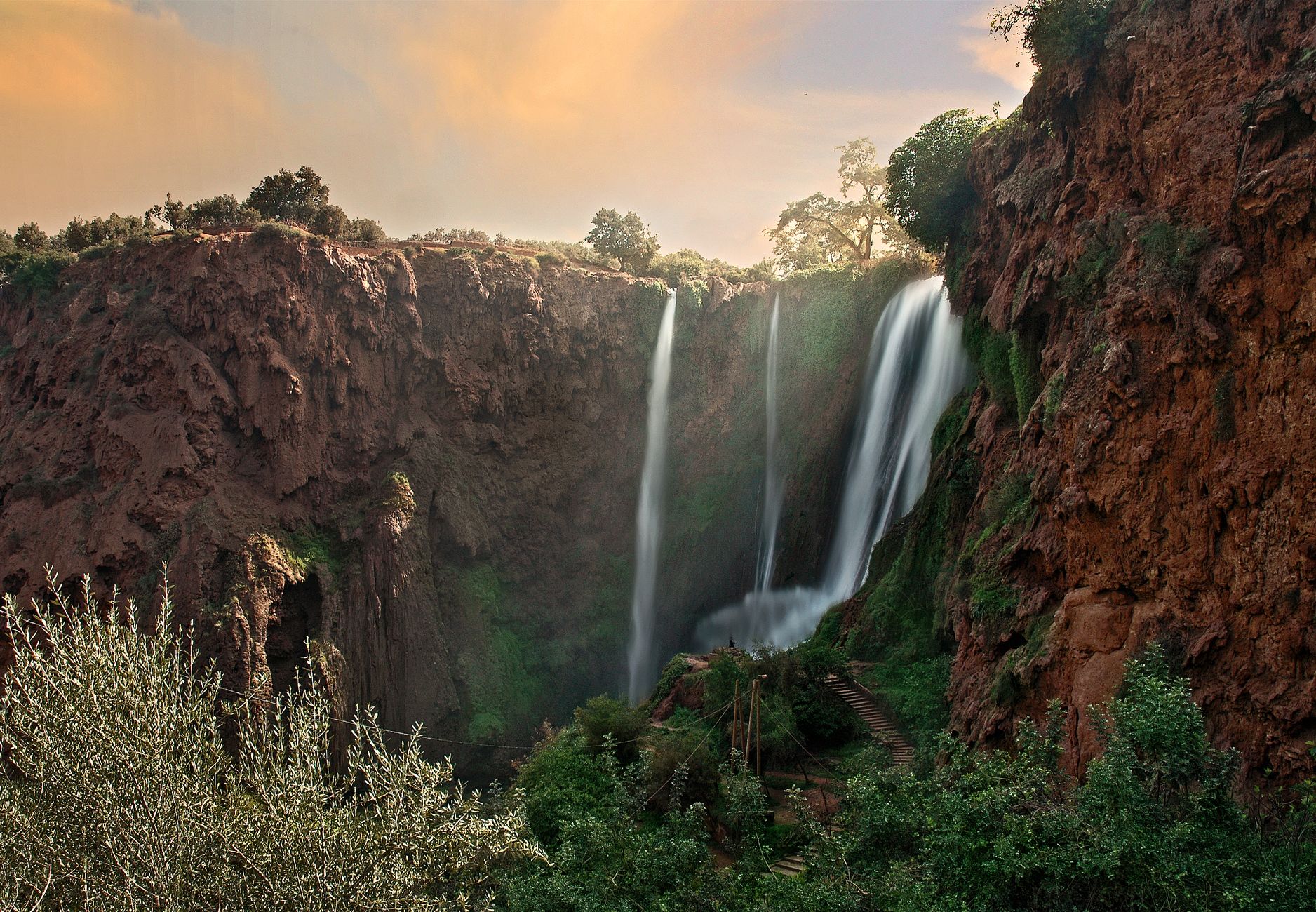


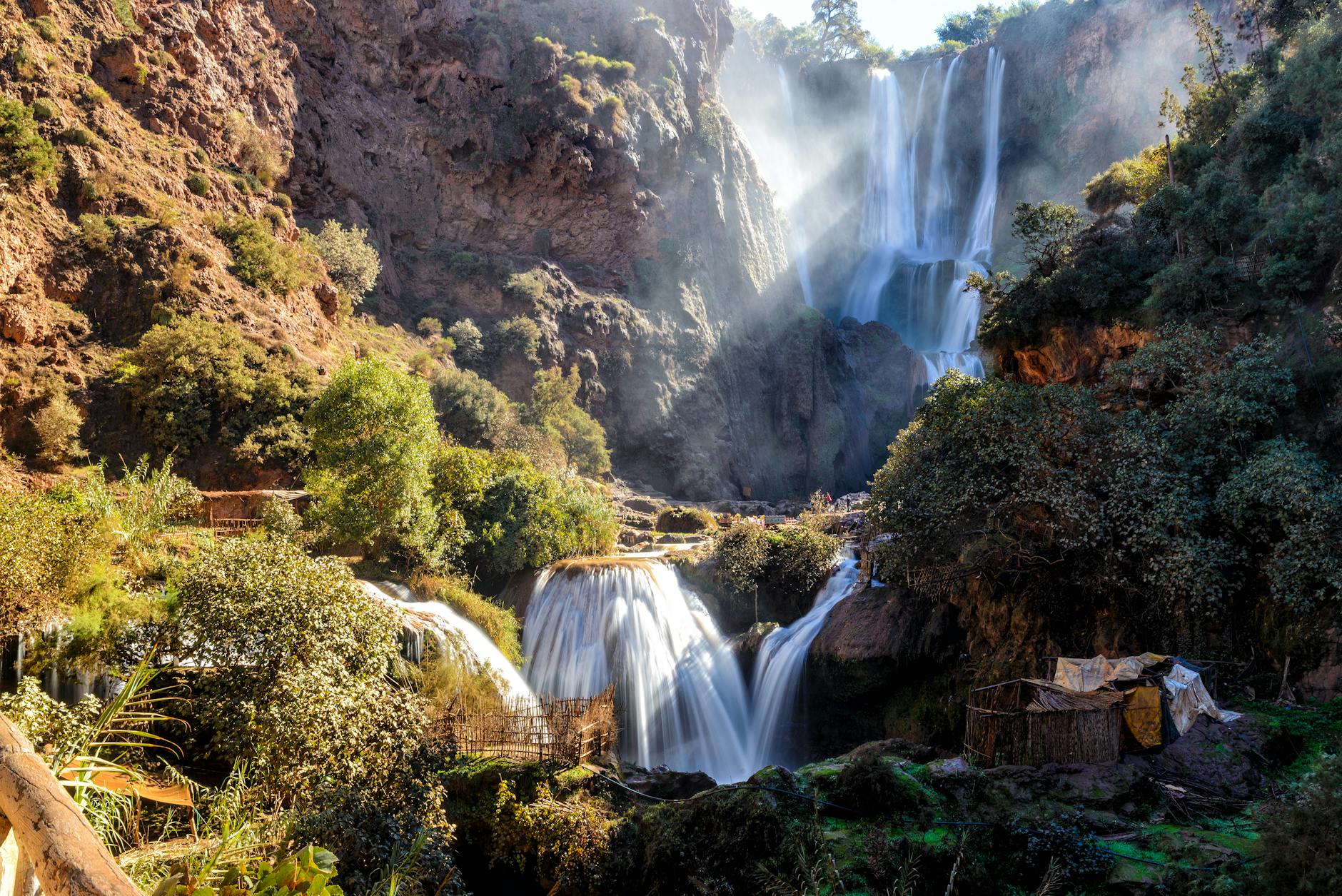
Ouzoud sits 150 kilometres northeast of Marrakech, a winding two-and-a-half-hour drive into the foothills of the Middle Atlas. The settlement revolves around its three-tiered, 110-metre waterfall dropping over red sandstone cliffs into the El-Abid river gorge, surrounded by centuries-old olive orchards. Traditional water mills still grind grain above the falls. Ouzoud is worth visiting if you want to hike rugged gorge trails and eat slow-simmered goat tagine beside cold mountain water. Look elsewhere if you want late-night bars, historic medina architecture, indoor museums, or flat, paved walking paths.
Last updated 13 Sept 2026
Build a Ouzoud itinerary.
Choose up to 4 threads that pull you in. Your plan arrives organised around them.
The Bed
Where to stay in Ouzoud
Which part of town to book, and what each one costs you in walking, noise or quiet.
The Comparison
Ouzoud, or somewhere near it
The places you are realistically choosing between, and the honest case for each.
The Local Record
Where to read more about Ouzoud
The blogs, boards, guides and operators worth bookmarking.
What to do in Ouzoud Middle Atlas & Tadla Morocco
The village of Ouzoud is small and built around the rim of its canyon. Mornings belong to the quiet upper trails and olive groves before tour coaches pull in at midday. Days run at the pace of the river, spent stepping down stone paths, watching macaques in the fig branches, and lingering over clay pots of simmering lamb. It suits hikers, independent drivers, and anyone looking to swap urban heat for mountain water.
24 hours in Ouzoud Middle Atlas & Tadla Morocco
Walk the east rim path at eight in the morning before the crowds descend. Take the shaded stone steps down to the base for a mint tea and goat tagine at a riverside trestle table, then ride a raft across the spray. Hike up the western ridge path by late afternoon. Select 1 Day above to see it.
2 days in Ouzoud Middle Atlas & Tadla Morocco
A second day lets you hike downstream through the Oued el-Abid gorge to the adobe village of Tanaghmelt. You will walk through pomegranate orchards, swim in quiet freshwater eddies, and eat fresh flatbread with wild thyme honey at a family-run terrace above the valley. Choose 2 Days to expand the plan.
3 days in Ouzoud Middle Atlas & Tadla Morocco
With three days, hire a local driver to explore the natural rock bridge at Imi n'Ifri near Demnate, thirty kilometres south. Spend a slow afternoon tracking mountain trails around the Zaouiat Ahansal road or exploring the olive presses and prehistoric cave shelters.
Ouzoud Middle Atlas & Tadla Morocco itineraries by interest
Waterfalls & Gorges in Ouzoud Middle Atlas & Tadla Morocco
Descend the stairs beside the 110-metre cascade down to the mist of Oued Ouzoud, where small wooden boats cross the pool below sandstone cliffs.
Local Wildlife in Ouzoud Middle Atlas & Tadla Morocco
Watch wild Barbary macaques foraging among carob and fig trees along the lower gorge path before day-tripper buses arrive from Marrakech.
Hiking in Ouzoud Middle Atlas & Tadla Morocco
Trek the six-kilometre loop down the Oued el-Abid canyon, passing olive mills, red rock ravines, and natural limestone swimming basins.
Regional Cooking in Ouzoud Middle Atlas & Tadla Morocco
Eat slow-cooked goat tagines seasoned with cumin and wild thyme, simmered over charcoal braziers at open-air tables along the riverbank.
Rural Life in Ouzoud Middle Atlas & Tadla Morocco
Visit traditional stone watermills above the falls that still grind local wheat and olives, using hydraulic power from the rushing stream.
Village Walks in Ouzoud Middle Atlas & Tadla Morocco
Walk the terraced dirt lanes of nearby Tanaghmelt, an adobe village built into the hillside overlooking pomegranate orchards and gardens.
River Swimming in Ouzoud Middle Atlas & Tadla Morocco
Swim in the cool, green freshwater pools of the lower riverbed below the main falls, away from the spray and the tourist boat landings.
Market Produce in Ouzoud Middle Atlas & Tadla Morocco
Sample pressed olive oil, mountain honey scented with euphorbia, and fresh Berber bread baked daily in clay tafarnout ovens.
Caving in Ouzoud Middle Atlas & Tadla Morocco
Explore the dark limestone caves behind the cascades, carved by centuries of water flow through the red rock of the Middle Atlas.
Day Trips in Ouzoud Middle Atlas & Tadla Morocco
Drive forty minutes to the dramatic limestone arch of Imi n'Ifri near Demnate, or climb toward the cedar forests of the High Atlas.
Breakfast Culture in Ouzoud Middle Atlas & Tadla Morocco
Start early with fresh mint tea, fried sfenj doughnuts, and spiced Berber omelettes cooked in earthenware dishes at village cafes.
Kayaking in Ouzoud Middle Atlas & Tadla Morocco
Paddle sit-on-top kayaks along the calmer stretches of the El-Abid river, navigating between reed beds and steep canyon walls.