

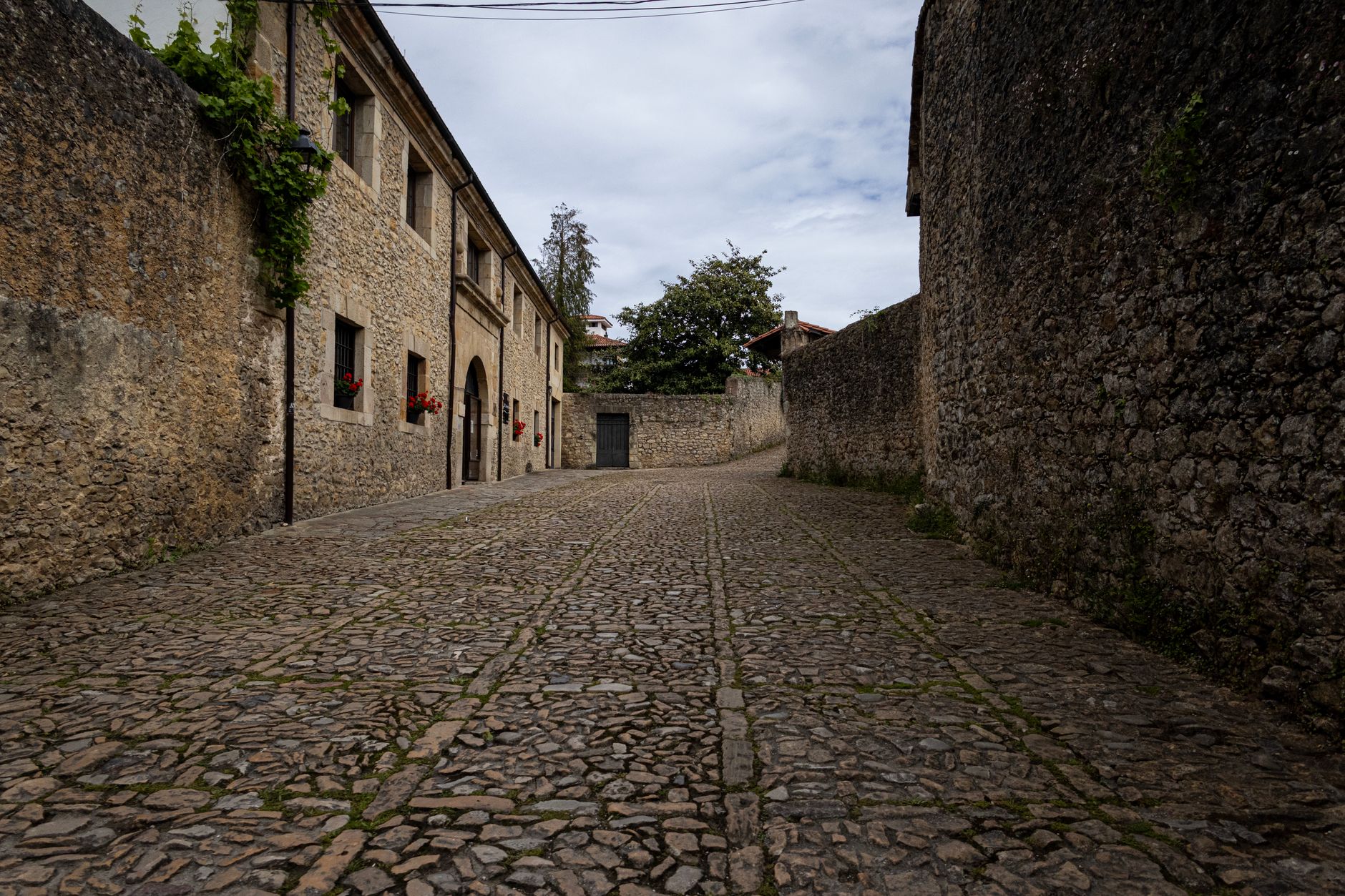
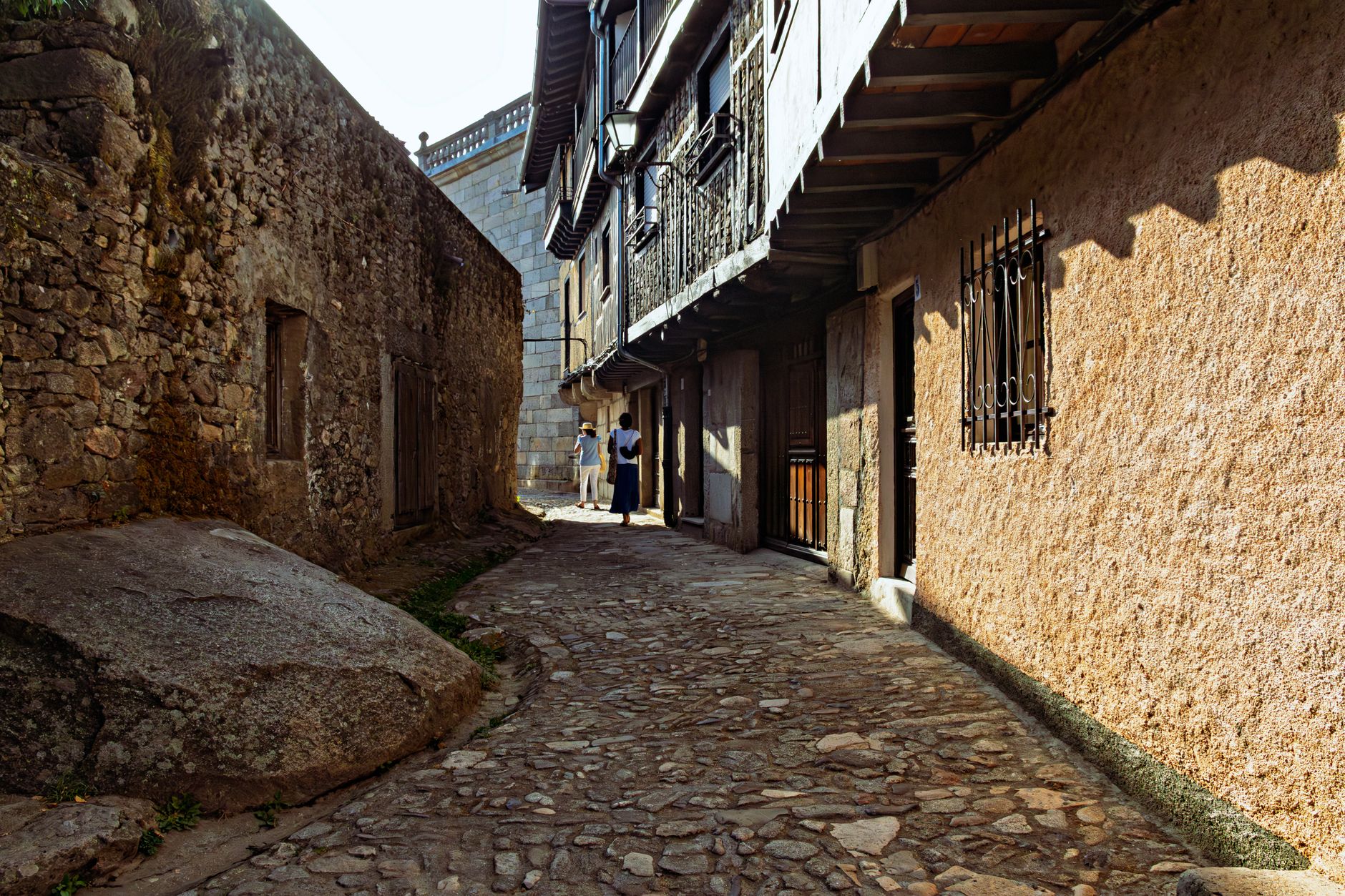
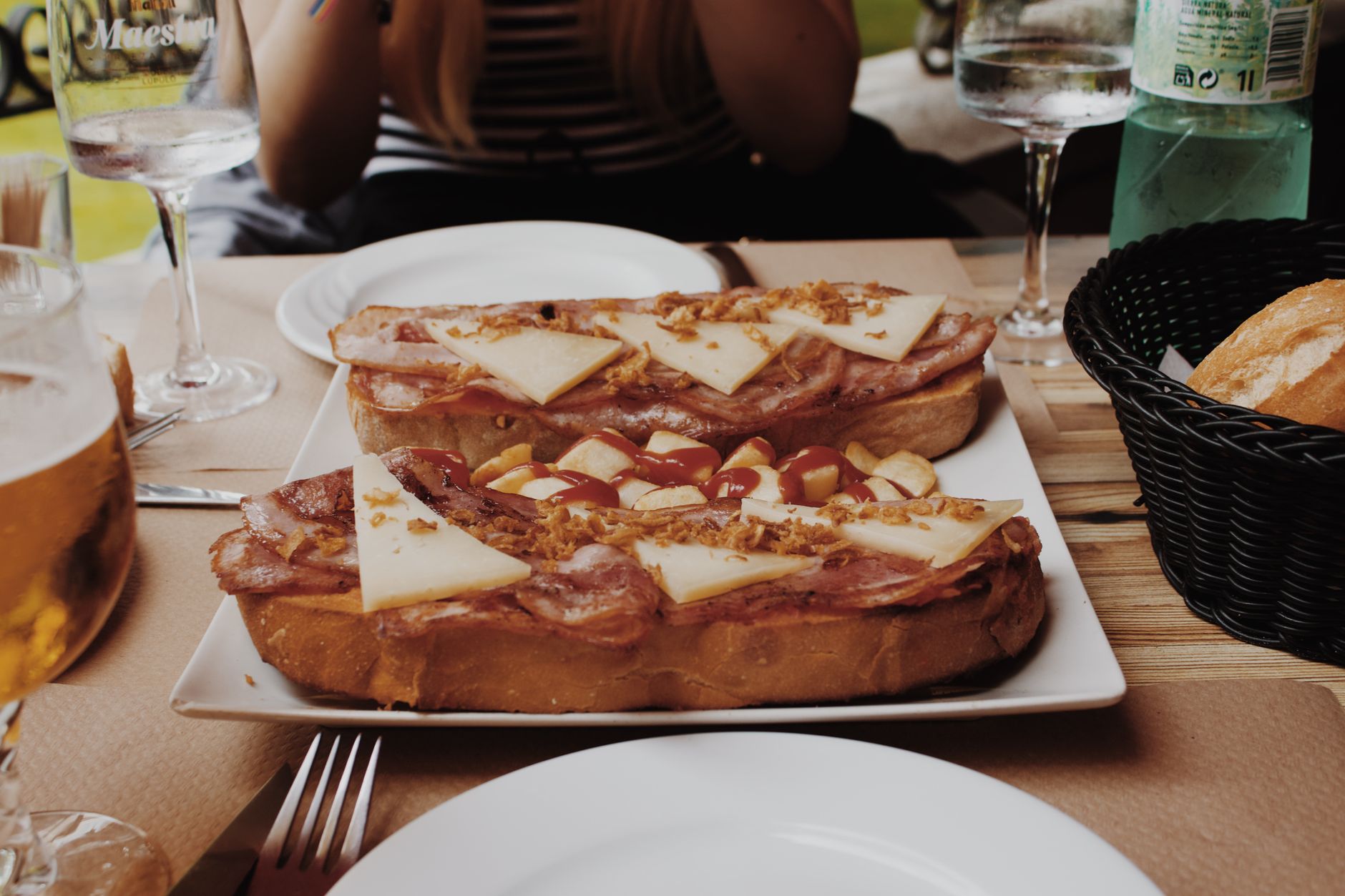
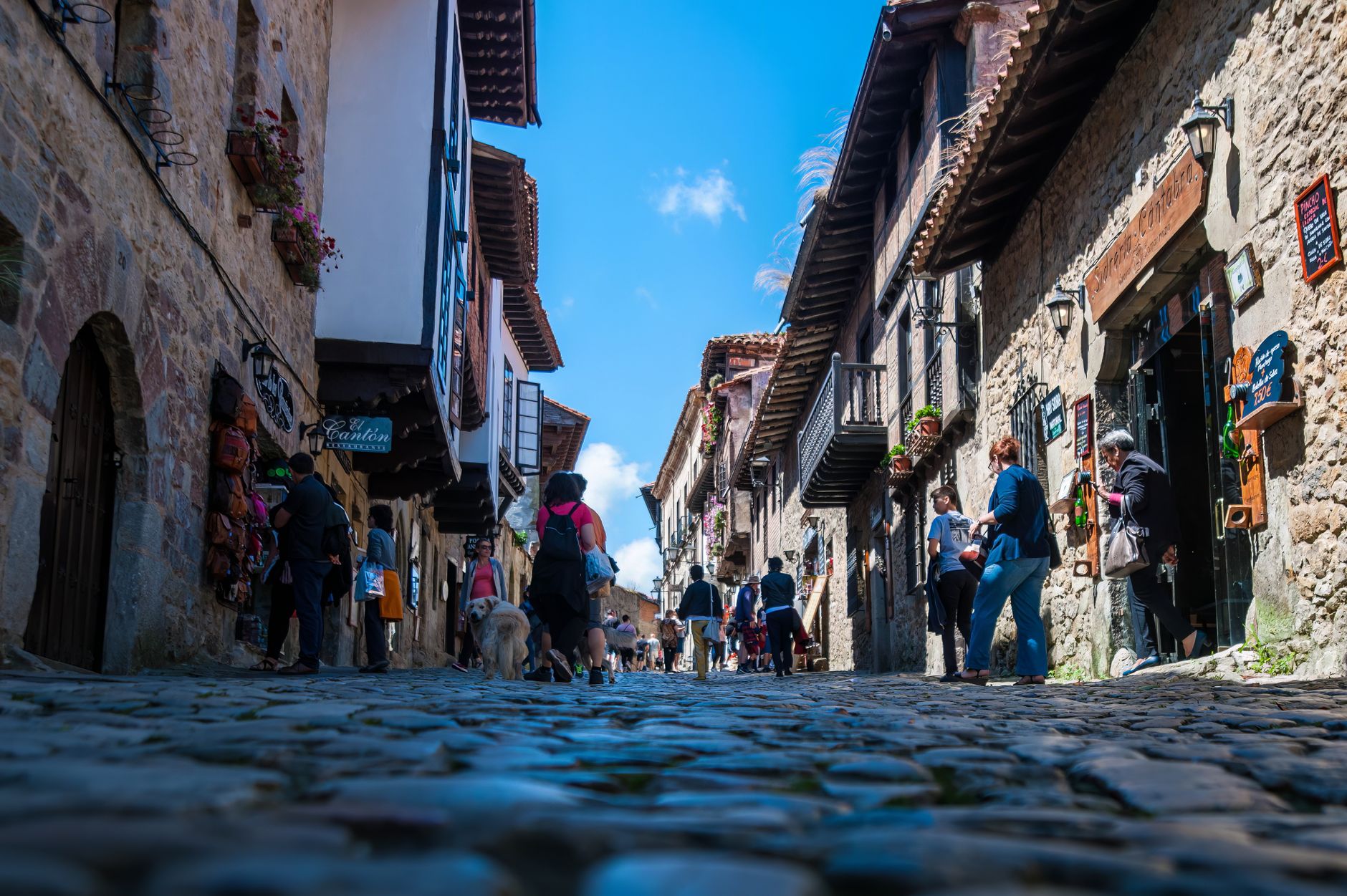
The old joke calls Santillana the town of three lies: neither holy, flat, nor on the sea. What it is, in reality, is heavy golden sandstone, wet cobblestones underfoot, and the lingering smell of woodsmoke and cow manure rolling off the green coastal pastures. You come for the twelfth-century collegiate church of Santa Juliana and the prehistoric bison of nearby Altamira, but you stay because a slice of quesada pasiega and a glass of cold milk at a wooden bench make an afternoon feel entirely complete.
Last updated 22 Aug 2026
Build a Santillana del Mar itinerary.
Choose up to 4 threads that pull you in. Your plan arrives organised around them.
We'll craft a 3-lens plan for Santillana del Mar, one collapsible strand per lens.
Coastal Walks
Walk four kilometres north to the cliff paths above Playa de Santa Justa, where a hermitage sits wedged under folding sea strata against the Atlantic spray.
Coastal Walks
Walk four kilometres north to the cliff paths above Playa de Santa Justa, where a hermitage sits wedged under folding sea strata against the Atlantic spray.
Fresh Milk and Sponge Cake
Casa Quevedo
Walk in off Calle del Río for a glass of whole farm milk and a slab of house-baked bizcocho for under four euros. Cash only. Plan thirty minutes.
Editor TipCantabrian dairy traditions run deep here, where morning milking still shapes village rhythm and simple sponge cakes have sustained pilgrims on the northern Camino since the Middle Ages. Take the wooden bench outside to watch the milk vans unload before the souvenir shops open their shutters.
Twelfth Century Romanesque Cloister
Colegiata de Santa Juliana
Buy your four-euro ticket at the south gate. Give yourself an hour to inspect the carved stone capitals depicting lions and botanicals without rushing.
Editor TipThis twelfth-century collegiate church holds the relics of martyr Saint Juliana and anchored Santillana as a pivotal medieval stopping point on the coastal route to Santiago. The northeast corner capitals catch the best morning light for seeing the carved foliage detail clearly.
Clifftop Walk to Santa Justa
Ermita de Santa Justa
A five-kilometre path north from town leads to the cliffs at Ubiarco. The 16th-century hermitage is tucked right into a sea cave over the Atlantic. Allow two hours round-trip.
Editor TipCantabria's coastline alternates between sheer limestone and quiet coves, where fishermen and pilgrims on the Camino del Norte have traced the Bay of Biscay for centuries. Wear stiff soles for the damp shale steps, and check the tide chart so you do not get caught at high water.
Cider & Taverns
Pull up a stool at a sidrería for tart Cantabrian cider poured from height into wide tumblers, served alongside plates of fried rabas and grilled padrón peppers.
Cider & Taverns
Pull up a stool at a sidrería for tart Cantabrian cider poured from height into wide tumblers, served alongside plates of fried rabas and grilled padrón peppers.
Cantabrian Cider and Mountain Cheeses
Taberna El Cantón
Order chilled natural cider poured from height and a board of sharp Picón Bejes-Tresviso cheese with crusty bread. No reservation needed; grab an oak barrel table by eight.
Editor TipThe northern ritual of pouring cider from overhead breaks the acidity against the glass wall, a centuries-old tavern method that awakens the tart, unfiltered juice. Drink each short pour in one draught while the carbonation is alive, leaving the dregs to rinse the rim.
Midmorning Cider and Picón
Taberna El Pasadizo
Duck into the cool flagstone tavern on Calle Carrera around eleven thirty. Order a bottle of dry regional cider poured from height and a wedge of pungent blue cheese.
Editor TipCantabrian sidra relies on an aggressive top-down pour to wake up its natural fizz, cutting right through the intense, cave-aged bite of local Picón Bejes-Tresviso cheese. Drink each pour in a single swallow while the froth holds, then toss the dregs into the floor trough.
Pouring Cantabrian Natural Cider
Taberna El Chistu
Claim a bench in the stone courtyard. Order a bottle of unfiltered sidra with smoked cecina and cured Queso de Nata. Allow about ninety minutes; expect under twenty euros.
Editor TipNorthern Spain pours cider from overhead to aerate the liquor and break the bubbles on the glass rim, a sharp, uncarbonated tradition alive across Cantabrian valleys. Drink each pour in one swallow before it goes flat; lingering over the glass defeats the entire ritual.
Sharing Cantabrian Beef Raciones
Restaurante El Pasaje
Walk in past eight for Tudanca beef carpaccio and grilled rabas. Tables fill with locals by nine. Dinner runs around thirty-five euros per person without booking.
Editor TipTudanca cattle graze high alpine pastures across the Cantabrian mountains, yielding lean, deeply mineral beef that defines rustic tavern cooking here. Skip dessert and order a chilled shot of herbal orujo to close out the table.
Mid-Morning Cider and Rabas
Taberna El Muelle, Suances
Grab an outside barrel table along the harbour wall. Order a bottle of northern natural cider and a plate of fresh rabas de calamar for around fifteen euros.
Editor TipCantabrian cider culture centres on the ritual of escanciado, pouring from shoulder height into a broad glass to awaken carbonation just before you drink it in one swift gulp. Never let the poured cider sit on the wood. Drink it immediately while the foam is alive, then dump the dregs.
Aerated Cider and Tavern Stew
Casa Cofiño
Drive fifteen minutes west to Caviedes. Walk in at 20:00 for the bar counter, order a bottle of regional cider, and split the cocido montañés.
Editor TipTavern life in the Cantabrian valleys centres on sharp natural cider poured from overhead to break bubbles into the glass before immediate drinking. Drink each pour in one swallow while the froth fizzes. Leaving cider to sit at the table is considered bad form.
Note from the Editor
“Get into the plaza before the tour coaches arrive at ten. The stone alleys belong to you and the dairy farmers for about ninety minutes, which is exactly how long you need.”
The Bed
Where to stay in Santillana del Mar
Which part of town to book, and what each one costs you in walking, noise or quiet.
The Comparison
Santillana del Mar, or somewhere near it
The places you are realistically choosing between, and the honest case for each.
The Local Record
Where to read more about Santillana del Mar
The blogs, boards, guides and operators worth bookmarking.
What to do in Santillana del Mar Cantabria Spain
Santillana del Mar is laid out along two parallel cobbled lanes paved with smooth river stones that demand sturdy rubber soles. The town operates at an easy rhythm, balancing daytime visitors touring aristocratic stone mansions with slow, cider-fueled evenings. It suits walkers, history buffs, and anyone who appreciates good butter, regional stews, and ancient church cloisters far more than late-night cocktail bars.
24 hours in Santillana del Mar Cantabria Spain
Reserve a morning slot at the Altamira museum before walking downhill into the village along Calle de Santo Domingo. Eat a steaming bowl of cocido montañés for lunch, spend two hours in the cloister of Santa Juliana, and finish the evening with fresh milk, quesada, and a glass of cider on Plaza Mayor. Select 1 Day above to see it.
2 days in Santillana del Mar Cantabria Spain
On day two, walk out through green grazing pastures to the sea cliff chapel at Playa de Santa Justa. Spend the afternoon in nearby Comillas visiting Gaudí’s El Capricho, followed by an unhurried dinner of grilled bonito or fresh rabas at a fishing tavern in San Vicente de la Barquera. Choose 2 Days to expand the plan.
3 days in Santillana del Mar Cantabria Spain
A third day lets you drive south into the dramatic limestone gorge of the Desfiladero de la Hermida towards the Picos de Europa. Explore alpine villages, taste sharp Picón Bejes-Tresviso blue cheese where it matures in mountain caves, and return to Santillana for a quiet evening stroll.
Santillana del Mar Cantabria Spain itineraries by interest
Sacred Architecture in Santillana del Mar Cantabria Spain
Step into the twelfth-century Colegiata de Santa Juliana to inspect Romanesque capitals carved with foliage and beasts, then walk through the damp, quiet cloisters.
Prehistoric Art in Santillana del Mar Cantabria Spain
Book weeks ahead for the Neocave replica at the Altamira Museum, just two kilometres uphill, where paleolithic charcoal and ochre bison cover the ceiling.
Dairy & Pastry in Santillana del Mar Cantabria Spain
Look for Casa Quevedo beside the collegiate church for tall glasses of fresh milk paired with thick, buttery quesada pasiega and warm sobaos baked that morning.
Mountain Cooking in Santillana del Mar Cantabria Spain
Order a terrine of cocido montañés, the regional white bean stew simmered with collard greens, chorizo, blood sausage, and pork belly that cures damp weather.
Coastal Walks in Santillana del Mar Cantabria Spain
Walk four kilometres north to the cliff paths above Playa de Santa Justa, where a hermitage sits wedged under folding sea strata against the Atlantic spray.
Local Cheeses in Santillana del Mar Cantabria Spain
Sample smoked Queso de Áliva, creamy Queso Nata de Cantabria, and sharp blue Picón Bejes-Tresviso at family-run deli counters along Calle del Cantón.
Cider & Taverns in Santillana del Mar Cantabria Spain
Pull up a stool at a sidrería for tart Cantabrian cider poured from height into wide tumblers, served alongside plates of fried rabas and grilled padrón peppers.
Noble Mansions in Santillana del Mar Cantabria Spain
Admire carved stone heraldry along Calle de Juan Infante, pausing at the fourteenth-century Torre del Merino and the Renaissance Palacio de Velarde.
Day Trips in Santillana del Mar Cantabria Spain
Drive twenty minutes west to Comillas to tour El Capricho by Antoni Gaudí, then head down to San Vicente de la Barquera for freshly landed hake and turbot.
Cantabrian Seafood in Santillana del Mar Cantabria Spain
Coastal boats supply restaurants with salt-cured Santoña anchovies, boiled brown crab, and grilled squid served simply with parsley, garlic, and lemon.
Rural Traditions in Santillana del Mar Cantabria Spain
Explore the Museo del Barquillero and local timber workshops to see carved albarcas, the traditional Cantabrian wooden clogs built for wet pastures.
Botanical Gardens in Santillana del Mar Cantabria Spain
Visit the family-founded Santillana Zoo and botanical park on the edge of town, notable for its native Atlantic woodland and primate conservation enclosures.