Tangier.



Tangier sits where two waters collide, leaning hard into the Strait of Gibraltar. Salt air cuts through frying sardines, damp limestone, and diesel exhaust. You climb the steep cobbles of the Kasbah, watch ferries cross toward Tarifa, and drink gunpowder green tea heavy with spearmint. Below the medina walls, fishmongers gut red mullet on marble slabs while the Atlantic wind pushes against the Mediterranean blue.
Last updated 22 Aug 2026
Build a Tangier itinerary.
Choose up to 4 threads that pull you in. Your plan arrives organised around them.
We'll craft a 1-lens plan for Tangier, one collapsible strand per lens.
Local Seafood
Walk down to the Port de Pêche for silver trays of grilled sardines, pageot, and deep-fried squid splashed with lemon, served at plastic tables with warm round bread.
Local Seafood
Walk down to the Port de Pêche for silver trays of grilled sardines, pageot, and deep-fried squid splashed with lemon, served at plastic tables with warm round bread.
Surveying the Morning Catch
Marché Central de Tanger
Walk through the circular hall where fishmongers gut sea bass and arrange sardines over shaved ice. Budget thirty minutes; stalls begin packing up by early afternoon.
Editor TipSitting where the Atlantic meets the Mediterranean, Tangier draws from two currents, supplying stalls with everything from deep-water swordfish to tiny anchovies. Wear sturdy shoes with rubber soles. The wet stone tiles get slick from melted ice and seawater.
Wood-Fired Clay Pot Seafood
Saveur de Poisson
Queue before opening at 12:15 PM for the daily fixed-price seafood menu cooked over wood embers. No reservations; bring cash for the set meal and fresh fruit juice.
Editor TipChef Mohammed Babba uses local briar-wood charcoal and wild herbs to prepare whatever the port delivered at dawn, bypassing conventional stoves entirely. Come with an empty stomach. The meal starts with a rich fish broth and ends with honey-drizzled nuts and berries.
Trawler Landings at the Docks
Port de Pêche de Tanger
Walk along the working quayside by 08:30 to watch small trawlers unload red mullet and swordfish. The port area is open daily; spend forty-five minutes observing the sorting.
Editor TipTangier sits at the clash of the Atlantic and Mediterranean, providing local day-boats with immediate access to deep-water currents and exceptional silver sardines. Step aside promptly for men pushing wooden ice carts. You are wandering through an active workspace.
Morning Atlantic Netting Rituals
Port d'Asilah
Wander the concrete pier freely as small wooden trawlers unload silver sardines and sea bream. Plan forty-five minutes before the morning auction starts inside the cooperative.
Editor TipAsilah’s artisanal fleet works the Atlantic shelf using hand-cast nets and longlines, landing pelagic fish that supply northern Morocco’s coast daily. Wear rubber-soled shoes; wet stone and fish oil make the slipway surprisingly treacherous.
Salt-Baked Sea Bream
Restaurant Casa Pepe
Arrive right at opening to claim a terrace table without reserving. Expect around 180 dirhams for the daily dorada or grilled swordfish, served with garlicky potatoes.
Editor TipOpened in the 1960s, this Iberian-influenced institution honors the Strait's mixed maritime heritage, baking line-caught fish in coarse sea salt to trap natural juices. Ask for the daily catch board rather than the printed menu; whatever arrived from the docks two hours earlier is the right call.
Platter of Daily Landings
Casa Garcia
Walk in without reservations for a late lunch. Point directly to the iced glass display for red mullet and Atlantic barnacles. Lunch runs around 250 dirhams.
Editor TipAsilah's small fleet works local Atlantic shallows daily, landing sea bream and goose barnacles that supply local tables before Tangier's larger wholesale buyers can intervene. Ask what arrived off the boats at noon rather than consulting the printed card. Simpler preparations are always superior.
Open-Fire Grilled Sea Bass
Chez Abdou
Arrive by taxi along the dirt beach track. Order wild sea bass roasted over lumpwood embers with spiced zaalouk and crisp fried squid. Cash only.
Editor TipPlage Sidi Kacem faces the full force of the open Atlantic, yielding exceptionally firm, clean-tasting white fish that need nothing more than charcoal, salt, and lemon. Pre-arrange your return pickup with your taxi driver before sitting down, as empty cabs do not patrol this sand road after dark.
Note from the Editor
“The port wakes up hours before the medina opens its shutters. Head down to the water by nine to watch the boats unload, then cut up through the alleys before midday tour groups arrive.”
The Bed
Where to stay in Tangier
Which part of town to book, and what each one costs you in walking, noise or quiet.
The Comparison
Tangier, or somewhere near it
The places you are realistically choosing between, and the honest case for each.
The Local Record
Where to read more about Tangier
The blogs, boards, guides and operators worth bookmarking.
What to do in Tangier Rif & the Mediterranean Morocco
Tangier rewards walking without an agenda. The town is built across steep hills facing Spain, pivoting around Grand Socco and the walled Kasbah. Days settle into a steady rhythm of morning market strolls, lingering lunches of fried rockfish, and late afternoons sipping mint tea above the port. It suits independent travellers who prefer lively street life, old port grit, and coastal light over manicured resorts.
24 hours in Tangier Rif & the Mediterranean Morocco
Start at Grand Socco with black coffee and msemmen before wandering the Kasbah down to Bab el-Bahr. Grab a wooden bench at the fishing port for fried whiting and salad at noon. Spend the late afternoon drinking spearmint tea on the terraces at Café Hafa as cargo ships crawl past Tarifa. Select 1 Day above to see it.
2 days in Tangier Rif & the Mediterranean Morocco
Day two opens the coastline. Ride a taxi out to Cap Spartel and the Atlantic beaches of Achakkar, then head back through the tree-lined boulevards of the Ville Nouvelle. Stop along Boulevard Pasteur for pastry, and finish with a slow tagine of lamb and prunes near the Petit Socco. Choose 2 Days to expand the plan.
3 days in Tangier Rif & the Mediterranean Morocco
A third day lets you venture into the Rif mountains. Take a shared taxi to Chefchaouen to wander its blue-washed medina beneath the craggy peaks, or ride east to Tetouan to explore the artisan quarters and leather tanneries without the crowds of larger northern cities.
Tangier Rif & the Mediterranean Morocco itineraries by interest
Local Seafood in Tangier Rif & the Mediterranean Morocco
Walk down to the Port de Pêche for silver trays of grilled sardines, pageot, and deep-fried squid splashed with lemon, served at plastic tables with warm round bread.
Cafe Culture in Tangier Rif & the Mediterranean Morocco
Sit on the terraced steps of Café Hafa or find an iron chair at Gran Café de Paris, ordering sweet mint tea or strong espresso while watching the Strait and the plaza.
Historic Architecture in Tangier Rif & the Mediterranean Morocco
Climb through Bab el-Assa to reach the seventeenth-century Dar el-Makhzen palace, then trace the Portuguese ramparts and the whitewashed alleys of the Kasbah quarter.
Street Food in Tangier Rif & the Mediterranean Morocco
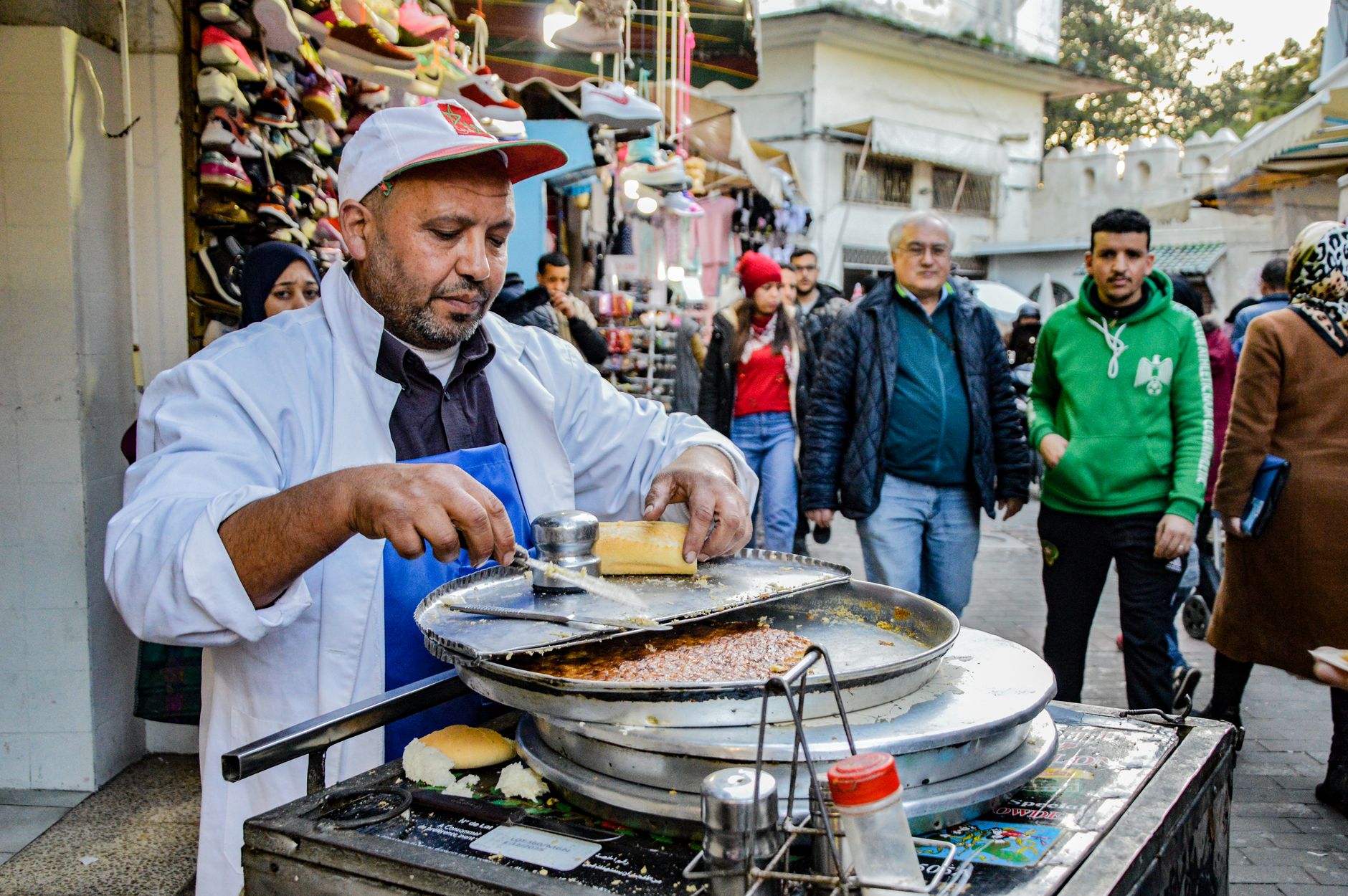
Order hot kalinti dusted with cumin and paprika from street carts near Grand Socco, or grab flaky msemmen flatbread griddled over gas burners behind the vegetable stalls.
Markets & Produce in Tangier Rif & the Mediterranean Morocco
Navigate the covered Central Market off Rue de Fès for bundles of wild mountain herbs, pickled lemons, rounds of Jbala goat cheese, and freshly pressed olive oil.
Mountain Hiking in Tangier Rif & the Mediterranean Morocco
Take the bus south into the limestone crags of Talassemtane National Park above Chefchaouen to walk under Spanish fir trees toward the God's Bridge rock formation.
Coastal Walks in Tangier Rif & the Mediterranean Morocco
Follow the windy headlands around Cap Spartel where the lighthouse marks the edge of two oceans, then walk the rocky path down toward the Cave of Hercules.
Craft Traditions in Tangier Rif & the Mediterranean Morocco
Watch weavers run wooden foot looms along the Kasbah stairs, producing heavy wool blankets and striped mendil cloths traditionally worn by Rif mountain women.
Day Trips in Tangier Rif & the Mediterranean Morocco
Catch an early grand taxi to Asilah for quiet Atlantic ramparts and mural-lined lanes, or head inland to Tetouan to explore its UNESCO-listed Andalusian medina.
Modern Art in Tangier Rif & the Mediterranean Morocco
Browse contemporary North African canvases and photography at Villa Harris, or visit the American Legation museum for old regional maps and rolling exhibits.
Sacred Architecture in Tangier Rif & the Mediterranean Morocco
Note the green-tiled minaret of the Grand Mosque rising above Petit Socco and seek out the quiet Anglican Church of Saint Andrew with its Arabic inscriptions.
Beaches in Tangier Rif & the Mediterranean Morocco
Walk the wide sweep of Playa Municipal along the bay, or catch a collective taxi out to the Atlantic breakers at Achakkar for sunset views over open water.