

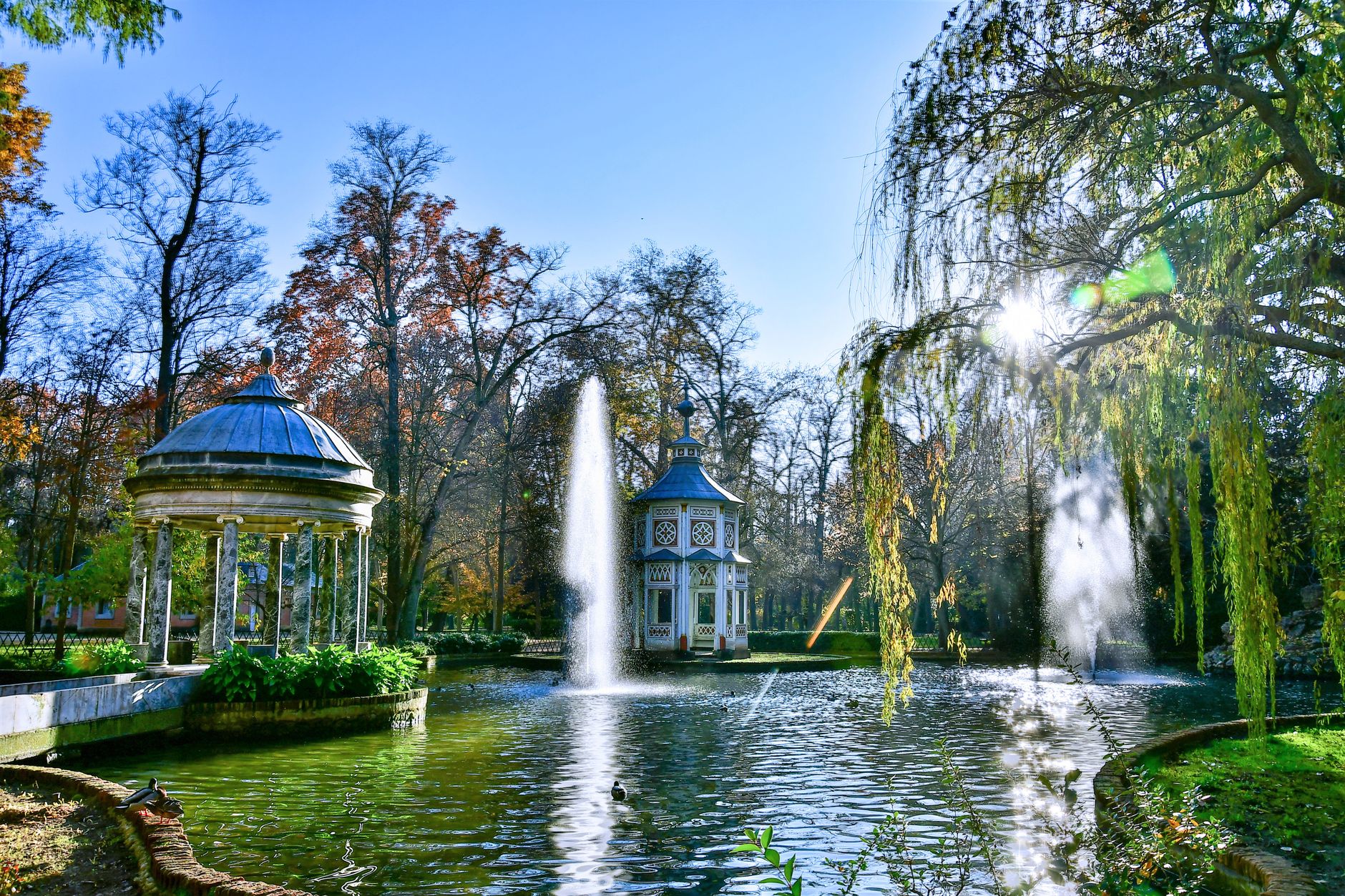
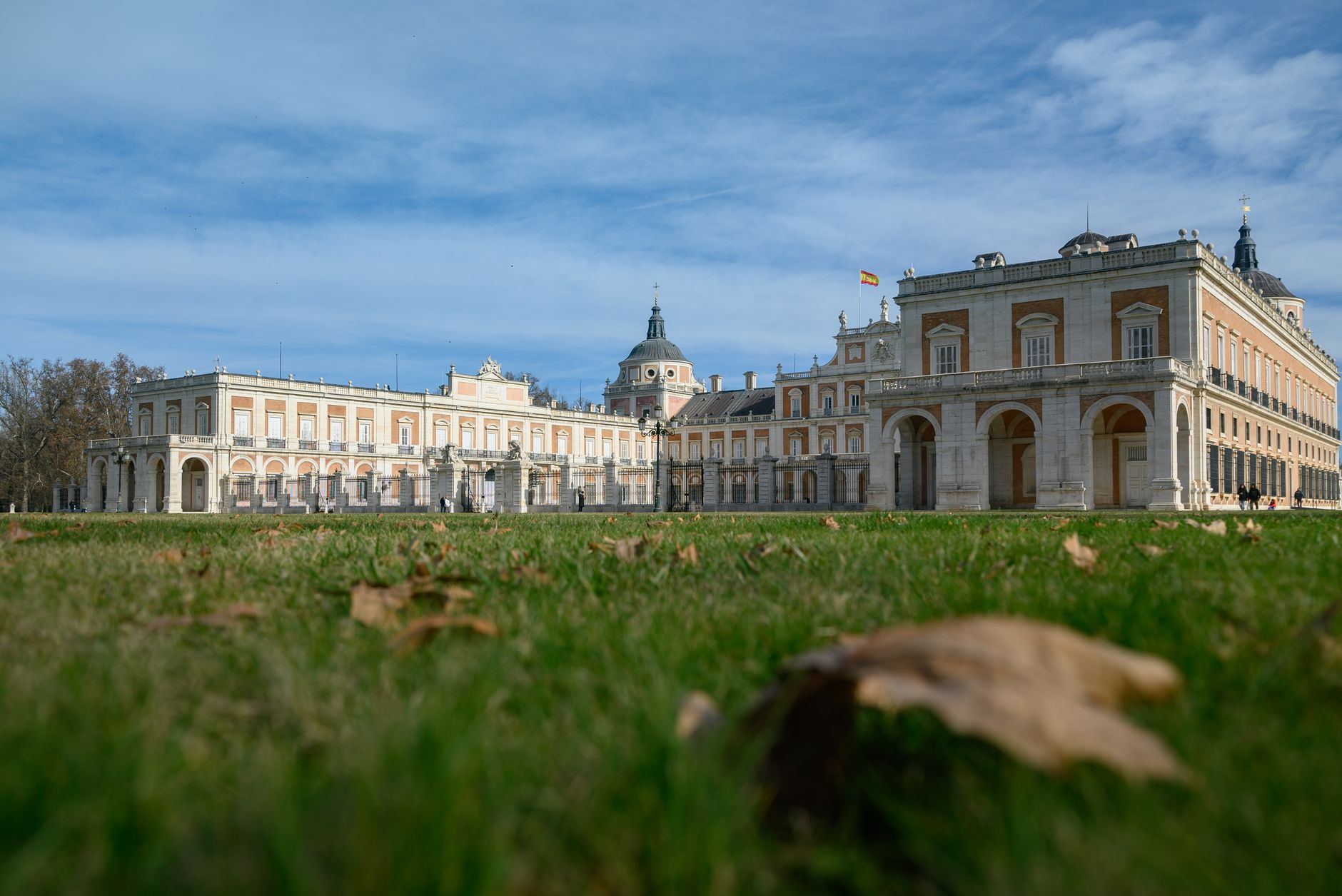

The dry scrub of the Castilian plateau drops away into towering plane trees and cool water where the Tagus meets the Jarama. Aranjuez was built as an oasis for Spanish royalty escaping Madrid's summer heat, and it remains shaded, formal, and green. You walk down wide eighteenth-century avenues laid on a grid, past the red-brick Palacio Real into riverside orchards celebrated for spring strawberries and wild asparagus. It has an imperial scale, balanced by easy river walks.
Last updated 30 Aug 2026
Build a Aranjuez itinerary.
Choose up to 4 threads that pull you in. Your plan arrives organised around them.
The Bed
Where to stay in Aranjuez
Which part of town to book, and what each one costs you in walking, noise or quiet.
The Comparison
Aranjuez, or somewhere near it
The places you are realistically choosing between, and the honest case for each.
The Local Record
Where to read more about Aranjuez
The blogs, boards, guides and operators worth bookmarking.
What to do in Aranjuez Madrid Spain
Life here revolves around the Tagus River and the vast royal grounds that dictate the town's geometry. Visitors come for the opulent palace halls and sprawling botanical gardens, staying for long lunches of game and garden vegetables at historic riverside taverns. It is exceptionally flat and walkable, making it ideal for relaxed day-trippers, garden enthusiasts, and anyone seeking a slower counterweight to central Madrid's pace.
24 hours in Aranjuez Madrid Spain
Arrive by train, walking ten minutes past the station to the Palacio Real for a morning tour of the royal quarters. Cross into the Jardín de la Isla before taking a late lunch of asparagus and roast lamb on Calle de las Infantas. Spend the afternoon wandering the vast Jardín del Príncipe out to the Casa del Labrador before an evening vermouth in Plaza de San Antonio. Select 1 Day above to see it.
2 days in Aranjuez Madrid Spain
A second morning allows time to inspect the ornate royal barges at the Museo de Falúas Reales. Head south to the orchards of the Vega for fresh strawberries, then cross the river to lunch on braised pheasant. Spend a slow afternoon cycling the quiet towpaths along the Tagus or exploring the historic bullring on Calle de San Jerónimo. Choose 2 Days to expand the plan.
3 days in Aranjuez Madrid Spain
With three days, venture beyond the royal perimeter. Take a twenty-minute drive northeast to the picturesque Plaza Mayor of Chinchón for garlic soup and anise liqueur, or explore local wineries near Colmenar de Oreja. Return for a quiet twilight walk through the poplar groves of the Cortijo de San Isidro.
Aranjuez Madrid Spain itineraries by interest
Royal Palaces in Aranjuez Madrid Spain
Tour the Palacio Real de Aranjuez, its porcelain cabinet, and the neo-classical Casa del Labrador set deep inside the Jardín del Príncipe.
Riverside Gardens in Aranjuez Madrid Spain
Wander the Jardín de la Isla and Jardín del Príncipe under centuries-old plane trees, stone fountains, and shady bends of the Tagus River.
Market Produce in Aranjuez Madrid Spain
Sample sweet fresón strawberries with cream and tender local asparagus at the Mercado de Abastos along Calle Stuart during spring harvest.
Traditional Dining in Aranjuez Madrid Spain
Sit for roast suckling pig, pheasant casserole, or braised partridge served in long-standing mesones along the royal garden perimeter.
Historic Railways in Aranjuez Madrid Spain
Ride the vintage wooden carriages of the seasonal Tren de la Fresa, running since 1851 from Madrid down to the Aranjuez station.
River Navigation in Aranjuez Madrid Spain
Explore the royal river fleet at the Museo de Falúas Reales, housing carved mahogany gondolas and gilded barges used by Spanish monarchs.
Civic Architecture in Aranjuez Madrid Spain
Walk the Enlightenment-era grid along Calle Real and Plaza de San Antonio, framed by the baroque Iglesia de San Antonio and stone arcades.
Walking & Strolling in Aranjuez Madrid Spain
Follow the shaded dirt paths of the Paseo del Deleite, linking royal estates to quiet irrigation canals and poplar groves along the river.
Regional Wine in Aranjuez Madrid Spain
Taste crisp Malvar whites and spicy Tempranillo reds produced across the southern Madrid wine subzone along the fertile Tagus valley.
Cycling Routes in Aranjuez Madrid Spain
Pedal flat gravel tracks through the Soto de las Cuevas and riverside paths flanking old hydraulic dams and vegetable allotments.
Local Festivals in Aranjuez Madrid Spain
Experience the September Fiestas del Motín, reenacting the 1808 uprising against Godoy with period costumes and riverbank performances.
Day Trips in Aranjuez Madrid Spain
Drive thirty minutes south to the windmills of Consuegra or east to the medieval hill town of Chinchón and its famous circular plaza.