
.jpg)
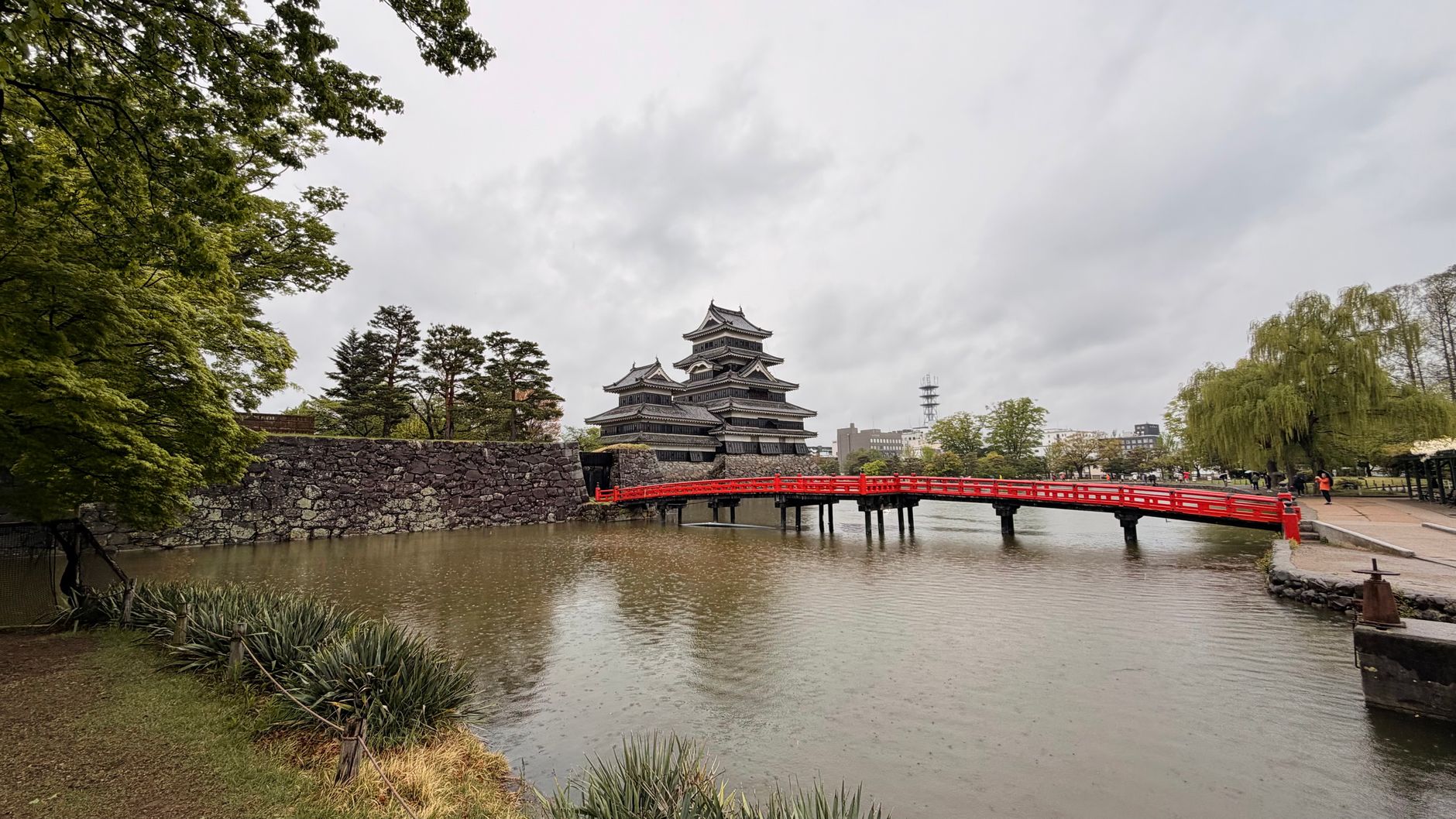


Cold mountain melt runs clean through street-side stone gutters, framed by the jagged snowline of the Northern Alps. Walking in from the station, the six-story black wooden keep of the 1592 castle anchors the grid. Across the Metoba River, merchant storehouses with thick plaster walls hold soba masters rolling buckwheat dough by hand and woodturners carving birch. It is a walkable, unpretentious castle town built on cold water, craft, and serious noodles.
Last updated 28 Aug 2026
Build a Matsumoto itinerary.
Choose up to 4 threads that pull you in. Your plan arrives organised around them.
The Bed
Where to stay in Matsumoto
Which part of town to book, and what each one costs you in walking, noise or quiet.
The Comparison
Matsumoto, or somewhere near it
The places you are realistically choosing between, and the honest case for each.
The Local Record
Where to read more about Matsumoto
The blogs, boards, guides and operators worth bookmarking.
What to do in Matsumoto Chūbu Japan
Matsumoto settles comfortably into a flat valley below the Northern Alps, making it an easy town to navigate on foot or via town bicycle. The day pivots around the castle grounds and the restored kura storehouses of Nakamachi, with detours for cold soba and craft studios. It suits travellers who prefer walkable distances, deep craft history, and quiet evenings in place of neon metropolis chaos.
24 hours in Matsumoto Chūbu Japan
Start at 8:30 at Matsumoto Castle to climb the original wooden keep before tour groups arrive. Walk five minutes south across the river for handmade buckwheat soba on Nakamachi Street. Spend the afternoon at the Yayoi Kusama museum, then finish with garlic-marinated sanzokuyaki fried chicken and cold draft beer on Nawate Street. Select 1 Day above to see it.
2 days in Matsumoto Chūbu Japan
Spend your second morning exploring the Matsumoto Folkcraft Museum before taking the twenty-minute local bus to Asama Onsen for an afternoon public bath. Return to the town centre to browse lacquerware shops along the Metoba River, dining on charcoal-grilled mountain trout and local Shinshu beef at a neighbourhood izakaya. Choose 2 Days to expand the plan.
3 days in Matsumoto Chūbu Japan
A third day lets you catch an early direct bus into the high alpine meadows of Kamikochi for a flat day-hike along the Azusa River. Alternatively, take the JR train south to Narai-juku in the Kiso Valley to walk through a mile of preserved Edo-era wooden merchant houses and workshop studios.
Matsumoto Chūbu Japan itineraries by interest
Feudal Architecture in Matsumoto Chūbu Japan
Climb steep wooden stairs inside the 1592 black keep of Matsumoto Castle, one of Japan's twelve surviving original tenshu.
Regional Soba in Matsumoto Chūbu Japan
Eat cold zaru soba ground from local buckwheat, dipped in dashi broth and finished with hot sobayu cooking water.
Contemporary Art in Matsumoto Chūbu Japan
Visit the Matsumoto City Museum of Art to see Yayoi Kusama's polka-dot sculptures, paintings, and immersive mirrored rooms.
Merchant Quarters in Matsumoto Chūbu Japan
Walk Nakamachi Street among Edo-period kura storehouses with raised black-and-white namako plaster walls and tea shops.
Woodcraft & Folk Art in Matsumoto Chūbu Japan
Browse handmade lacquered bento boxes, turned birch bowls, and Mingei pottery at the Matsumoto Folkcraft Museum.
Hot Springs in Matsumoto Chūbu Japan
Soak in the sulfur waters of Asama Onsen or Tobira Onsen, tucked into the cedar valleys just east of town.
Alpine Day Trips in Matsumoto Chūbu Japan
Ride the bus to Kamikochi in the Chubu Sangaku park for walks along the turquoise Azusa River under Mount Hotaka.
Sake Breweries in Matsumoto Chūbu Japan
Taste dry, mineral-rich junmai sakes brewed with Alps snowmelt at small kura like Sasai Shuzo near the castle moat.
Mountain Hiking in Matsumoto Chūbu Japan
Take trails up Mount Utsukushigahara or the hills of Joyama Park for panoramic views across the valley floor.
Pub Culture in Matsumoto Chūbu Japan
Order crisp sanzokuyaki fried chicken cutlets and local draught beer in lively izakayas around Nawate Street.
Sacred Shrines in Matsumoto Chūbu Japan
Visit Yohashira Shrine, known for four enshrined deities, or the quiet cedar groves of Fukashi Shrine near downtown.
Historic Post Towns in Matsumoto Chūbu Japan
Take a train south to Narai-juku along the historic Kiso Valley trail to see preserved wooden Edo lodgings.