


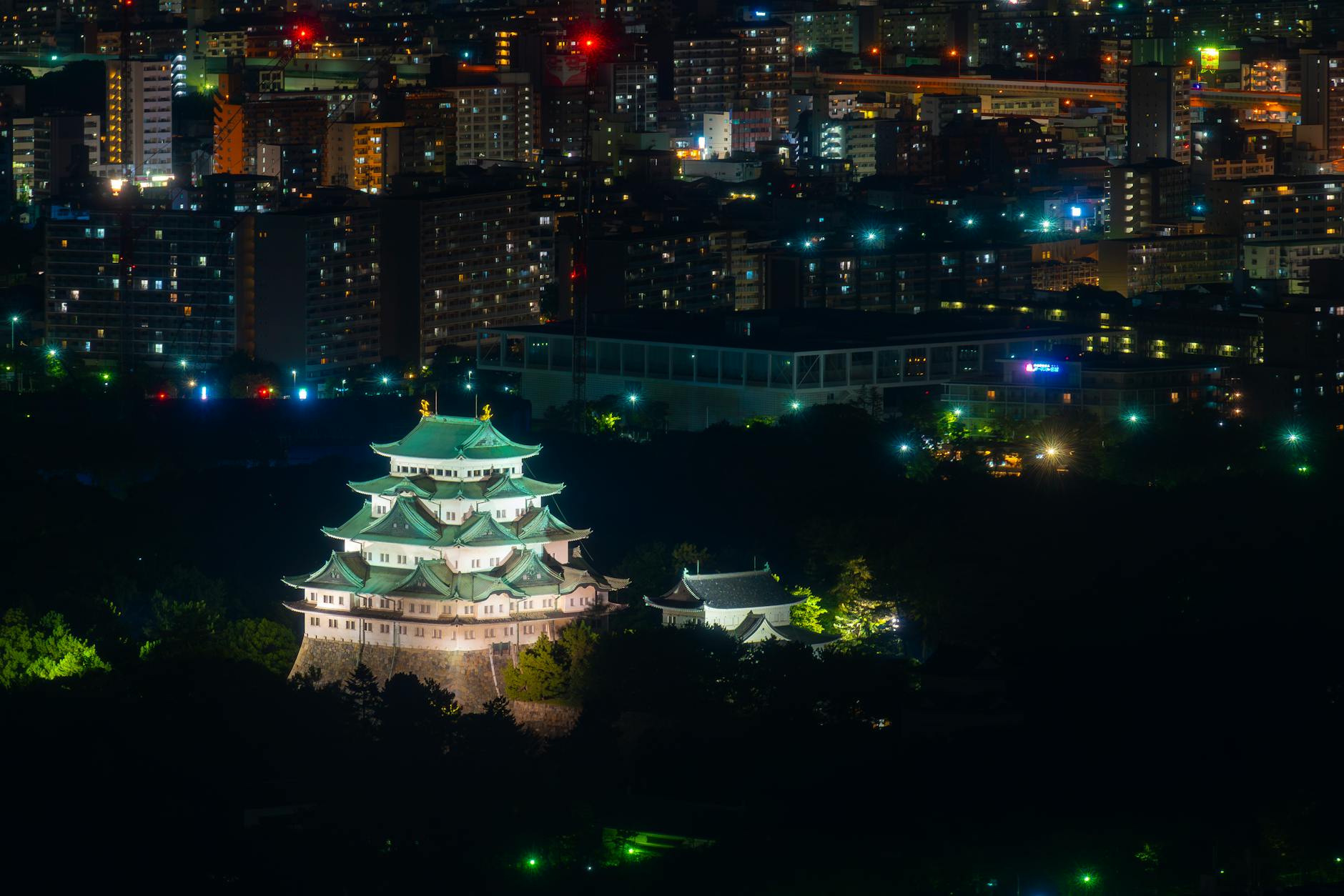


Nagoya sits along the Tokaido Shinkansen line, ninety minutes west of Tokyo and thirty-five minutes east of Kyoto. Japan's fourth-largest city built its modern wealth on manufacturing, but its daily rhythms revolve around a fiercely distinct regional kitchen built on dark hatcho miso. The street layout is spacious, the subway is intuitive, and the pace is remarkably steady. Nagoya is worth visiting if you want unvarnished regional comfort food and industrial craft history without the crowds of Kyoto. Look elsewhere if you want preserved historic streetscapes, dense clusters of ancient temples, or high-energy nightlife.
Last updated 9 Sept 2026
Build a Nagoya itinerary.
Choose up to 4 threads that pull you in. Your plan arrives organised around them.
The Bed
Where to stay in Nagoya
Which part of town to book, and what each one costs you in walking, noise or quiet.
The Comparison
Nagoya, or somewhere near it
The places you are realistically choosing between, and the honest case for each.
The Local Record
Where to read more about Nagoya
The blogs, boards, guides and operators worth bookmarking.
What to do in Nagoya Chūbu Japan
Nagoya is a practical, wide-grid metropolis centered on two hubs: Nagoya Station and the Sakae shopping district. Days run to a distinct rhythm of rich breakfast kissaten cafes, quiet afternoons in cypress palaces or red-brick factories, and lively evenings over dark miso hot pots. It suits travellers who appreciate great engineering, robust regional cooking, and straightforward transit.
24 hours in Nagoya Chūbu Japan
Start with morning coffee and Ogura red bean toast in Sakae, then take the Meijo subway line to Nagoya Castle's restored Hommaru Palace. For lunch, eat hitsumabushi eel at Atsuta Horaiken. Spend the afternoon admiring historic looms at the Toyota Museum before an evening of peppered chicken wings in Fushimi. Select 1 Day above to see it.
2 days in Nagoya Chūbu Japan
Head to the preserved stone lanes of Shikemichi for pour-over coffee in a former storehouse, followed by the lacquerware and sword collections at the Tokugawa Art Museum. After wandering the gardens of Tokugawa-en, settle in for a bubbling clay pot of misonikomi udon on the edge of Osu. Choose 2 Days to expand the plan.
3 days in Nagoya Chūbu Japan
Board a morning train to Inuyama Castle, scaling its original 1537 wooden keep overlooking the Kiso River, or ride twenty minutes south to the pottery kilns of Tokoname. Return to Nagoya for flat kishimen noodles at a platform stand inside Nagoya Station before departing.
Nagoya Chūbu Japan itineraries by interest
Local Comfort Food in Nagoya Chūbu Japan
Slurp thick udon simmered in earthy hatcho miso broth at Yamamotoya Sohonke, or order crispy, twice-fried tebasaki chicken wings at Sekai no Yama-chan.
Regional Grilling in Nagoya Chūbu Japan
Eat hitsumabushi at Atsuta Horaiken, where charcoal-grilled unagi is served over rice in three ritual stages, finished with dashi broth and nori.
Breakfast Rituals in Nagoya Chūbu Japan
Order morning coffee at a kissaten like Komeda to receive the complimentary service of thick buttered toast, sweet Ogura red bean paste, and a boiled egg.
Feudal Architecture in Nagoya Chūbu Japan
Walk the vast grounds of Nagoya Castle to view the meticulously reconstructed timber Hommaru Palace, built entirely of fragrant Japanese cypress.
Sacred Sites in Nagoya Chūbu Japan
Walk under cedar groves at Atsuta Jingu, an ancient Shinto shrine that has guarded the sacred Kusanagi sword for nearly two millennia.
Historic Quarters in Nagoya Chūbu Japan
Explore Shikemichi, an Edo-period merchant district of black-tiled kura storehouses, stone lanes, and quiet cafes along the Hori Canal.
Industrial Heritage in Nagoya Chūbu Japan
Watch automated textile looms and early metal casting at the Toyota Commemorative Museum of Industry and Technology, housed in a 1911 red-brick factory.
Ceramic Traditions in Nagoya Chūbu Japan
Visit Noritake Garden to examine century-old European tableware, hand-paint porcelain plates, and explore early kiln chimneys near Nagoya Station.
Day Trips in Nagoya Chūbu Japan
Take a thirty-minute Meitetsu train to Inuyama to climb the authentic sixteenth-century wooden keep of Inuyama Castle perched above the Kiso River.
Craft & Swords in Nagoya Chūbu Japan
View masterwork samurai blades, calligraphic scrolls, and private Daimyo tea utensils preserved inside the Tokugawa Art Museum.
Produce Markets in Nagoya Chūbu Japan
Wander Yanagibashi Central Market before dawn for raw skipjack tuna, salted sea bream, and early bowls of kishimen flat noodles.
Public Gardens in Nagoya Chūbu Japan
Stroll around the central pond and waterfall of Tokugawa-en, a classic strolling garden designed to evoke the coastal scenery of Owari Province.