


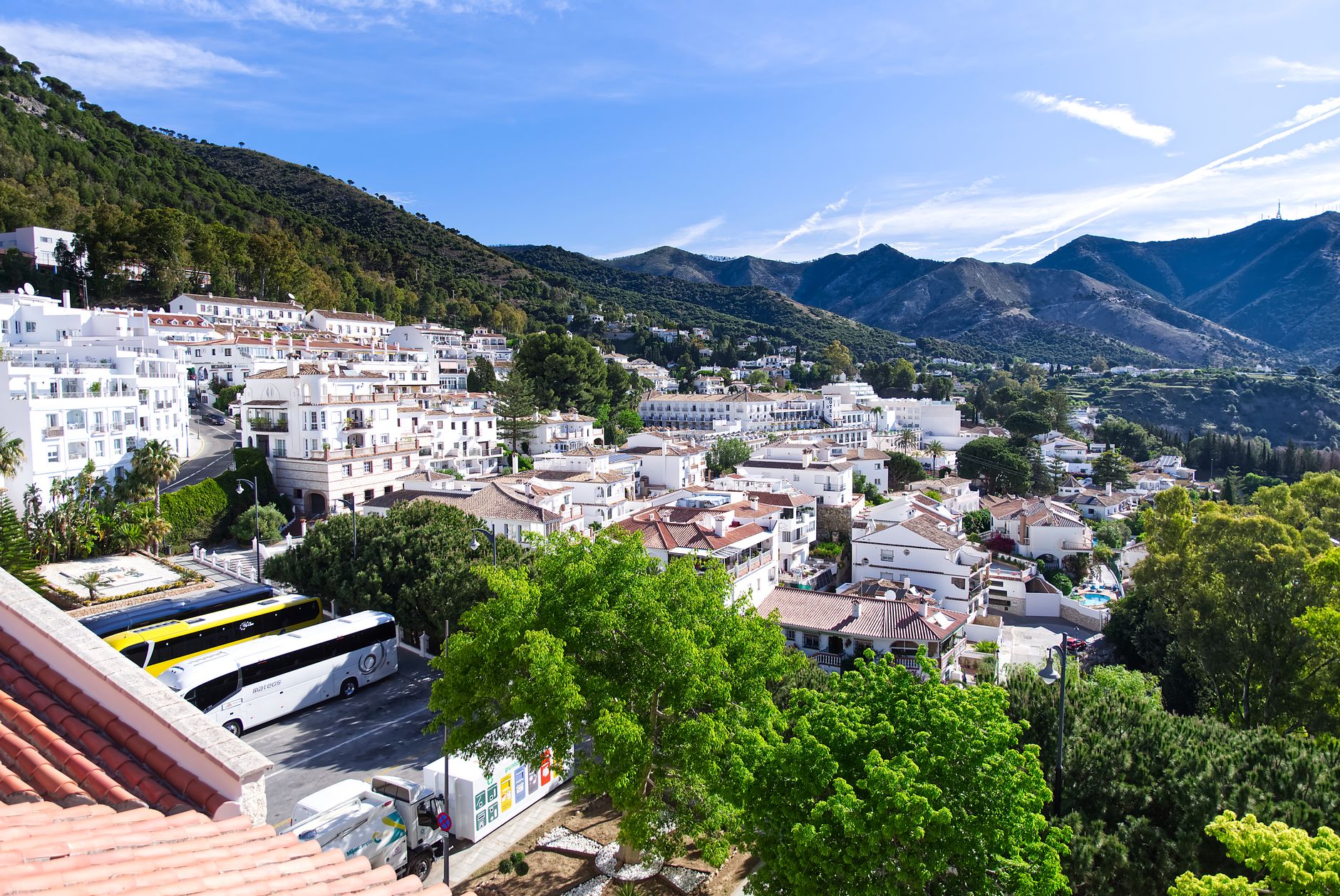
Four hundred metres above the sea, the air cools and whitewash catches the morning glare. Mijas sits pinned to the limestone flank of its sierra, gazing out toward the Rif mountains on clear mornings. You climb narrow lanes paved with smooth river pebbles, past geranium pots fixed to blinding lime walls. Beyond the rock chapel and the old oval bullring, the real reward is sitting on shaded plaza benches with a morning café con leche while the valley below slowly stirs to life.
Last updated 29 Aug 2026
Build a Mijas itinerary.
Choose up to 4 threads that pull you in. Your plan arrives organised around them.
The Bed
Where to stay in Mijas
Which part of town to book, and what each one costs you in walking, noise or quiet.
The Comparison
Mijas, or somewhere near it
The places you are realistically choosing between, and the honest case for each.
The Local Record
Where to read more about Mijas
The blogs, boards, guides and operators worth bookmarking.
What to do in Mijas Andalusia Spain
Mijas divides naturally between the high whitewashed pueblo and the coastal stretch of La Cala. Days in the upper village follow an unhurried rhythm: climbing the cobbled alleys of Calle San Sebastián, taking the breeze along the Muralla gardens, and pausing for tapas around Plaza de la Constitución. It suits independent walkers, history lovers, and anyone seeking Andalusian village character without sacrificing coastal access.
24 hours in Mijas Andalusia Spain
Start early at Ermita de la Virgen de la Peña before tour buses arrive. Wander Calle San Sebastián to the Muralla gardens for views, stop for a lunch of gazpachuelo and fried fish, and spend the afternoon admiring Picasso ceramics at CAC Mijas. Finish with sunset tapas and chilled Moscatel. Select 1 Day above to see it.
2 days in Mijas Andalusia Spain
Spend your second day descending to La Cala de Mijas. Walk along the coastal boardwalk of Senda Litoral, take an outdoor table for grilled sardine espetos directly on the sand, and return to the upper pueblo by evening for quiet drinks on Plaza de la Libertad. Choose 2 Days to expand the plan.
3 days in Mijas Andalusia Spain
A third day allows an early morning hike up into the Sierra de Mijas trails toward Pico Mijas. Afterward, take a thirty-minute drive inland to the whitewashed hilltop village of Alhaurín el Grande or explore the citrus groves and slow-paced taverns of the Guadalhorce valley.
Mijas Andalusia Spain itineraries by interest
Sacred Architecture in Mijas Andalusia Spain
Visit Ermita de la Virgen de la Peña, carved directly into the rock face in the sixteenth century, and the mudejar tower of Inmaculada Concepción.
Modern Art in Mijas Andalusia Spain
CAC Mijas holds an unexpected collection of ceramics by Picasso, alongside works by Salvador Dalí, housed in a quiet townhouse on Calle Málaga.
Mountain Trails in Mijas Andalusia Spain
Marked trailheads behind the village climb through pine forests into the Sierra de Mijas toward the Pico Mijas summit and sweeping coastal overlooks.
Traditional Sweets in Mijas Andalusia Spain
Street vendors roast almendras garrapiñadas in hot copper pots, while village bakeries turn out classic tortas de aceite and aniseed borrachuelos.
Regional Cooking in Mijas Andalusia Spain
Sit down for gazpachuelo malagueño, garlic-spiked sopa de ajo, and plates of fried boquerones seasoned with fresh lemon juice and sea salt.
Folk Heritage in Mijas Andalusia Spain
The Casa Museo on Plaza de la Libertad preserves traditional olive presses, wine cellars, and craft workshops from the village's agricultural past.
Coastal Dining in Mijas Andalusia Spain
Head down to La Cala de Mijas for grilled sardine espetos cooked over open beach embers and whole sea bass baked in mounds of coarse salt.
Historic Fortifications in Mijas Andalusia Spain
Walk the botanical paths of the Muralla gardens, following the defensive stone perimeter of the Moorish fortress high above the Mediterranean.
Local Wine in Mijas Andalusia Spain
Sample dry Moscatel de Alejandría and fortified Pedro Ximénez sweet wines from surrounding hillsides at taverns near Plaza de la Constitución.
Craft Traditions in Mijas Andalusia Spain
Independent workshops along Calle San Sebastián hand-paint ceramic tiles and weave esparto grass baskets using century-old regional methods.
Scenic Viewpoints in Mijas Andalusia Spain
The Mirador del Compás provides clear lines of sight across Fuengirola and the coast, extending to Gibraltar and north Africa on crisp mornings.
Bullfighting History in Mijas Andalusia Spain
The 1900 Plaza de Toros stands out for its unusual oval footprint, built directly into the village rock next to the old municipal gardens.