


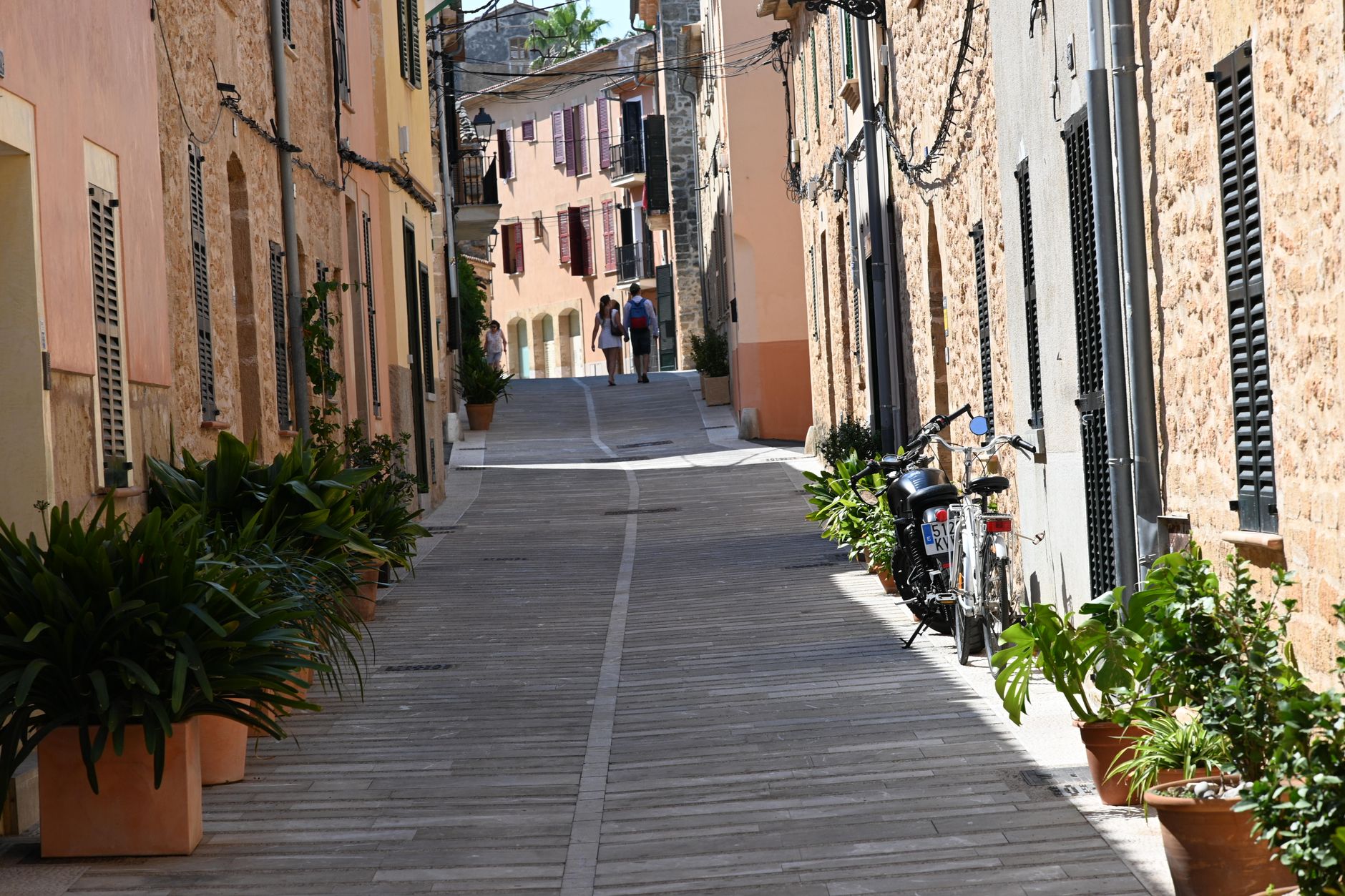
The Tramuntana mountains drop their morning shadow straight across honey-coloured sandstone alleys before the market stalls on Plaça Major have even unloaded their crates. Founded inland to dodge Saracen pirates, the town still feels hunkered down and deliberate. You walk up the 365 stone steps of El Calvari, wonder why you ordered that second cortado, and stare out over olive groves toward the bay. It is quiet stone, excellent almond cake, and zero rush.
Last updated 1 Sept 2026
Build a Pollença itinerary.
Choose up to 4 threads that pull you in. Your plan arrives organised around them.
The Bed
Where to stay in Pollença
Which part of town to book, and what each one costs you in walking, noise or quiet.
The Comparison
Pollença, or somewhere near it
The places you are realistically choosing between, and the honest case for each.
The Local Record
Where to read more about Pollença
The blogs, boards, guides and operators worth bookmarking.
What to do in Pollença Mallorca Spain
Pollença sits tucked against the Serra de Tramuntana, anchored by Plaça Major and the steep climb to El Calvari. It is a working Mallorcan town that rewards early risers and pedestrian exploration over resort entertainment. Days fall into an easy rhythm of morning walks up cobblestone stairways, lazy lunches over tumbet in shady courtyards, and quiet evenings watching the light fade over limestone rooftops.
24 hours in Pollença Mallorca Spain
Start before the heat with the 365 steps up El Calvari, then descend to Plaça Major for a glass of freshly pressed orange juice. Lunch on slow-roasted suckling pig at a family-run cellar restaurant, wander the Pont Romà, and finish the evening with a glass of crisp local white on Carrer Antoni Maura. Select 1 Day above to see it.
2 days in Pollença Mallorca Spain
Dedicate day two to the coast. Catch a ten-minute bus to Cala Sant Vicenç for a morning swim off the rocks, then drive out along the wild peninsula road toward Cap de Formentor. Return inland for grilled lamb and a carafe of red wine in the serene Vall d’en March. Choose 2 Days to expand the plan.
3 days in Pollença Mallorca Spain
A third day lets you tackle the forested climb up Puig de Maria for picnic views across the north coast. Afterward, visit the centuries-old looms at Teixits Vicens to see traditional Mallorcan tongue fabrics made, followed by an unhurried dinner of seafood rice in Port de Pollença.
Pollença Mallorca Spain itineraries by interest
Sacred Architecture in Pollença Mallorca Spain
Climb the 365 cypress-lined steps to El Calvari chapel or visit the 16th-century cloister at Convent de Sant Domingo during the summer classical festival.
Markets & Produce in Pollença Mallorca Spain
Arrive by 8:30 on Sunday morning for raw-milk cheeses from Menorca, Ramellet tomatoes on strings, and salt-cured olives on Plaça Major.
Local Cuisine in Pollença Mallorca Spain
Order frit mallorquí offal fry, vegetable tumbet baked in earthenware, and soupy arròs brut spiked with wild mushroom and rabbit.
Hiking in Pollença Mallorca Spain
Take the steep cobbled path up Puig de Maria for a two-hour round trip through pine woods to a fourteenth-century hermitage and sweeping views.
Wine & Vineyards in Pollença Mallorca Spain
Taste mineral Callet and spiced Manto Negro at gravity-fed cellars like Can Axartell or small tasting rooms off the road to Campanet.
Craft Traditions in Pollença Mallorca Spain
Watch heritage shuttle looms weave geometric roba de llengües cloth at the historic Teixits Vicens workshop on the outskirts.
Coastal Walks in Pollença Mallorca Spain
Hike the stony trail through the Boquer Valley toward Cala Bóquer, scanning limestone ridges for Eleanor falcons and wild goats.
Beaches in Pollença Mallorca Spain
Swim in turquoise coves carved between cliffs at Cala Barques and Cala Molins, ten minutes north by car or local bus.
Maritime History in Pollença Mallorca Spain
Stroll the pine-shaded coastal promenade at Port de Pollença, where fishermen mend nets beside stone breakwaters built in the 1930s.
Pastries & Baking in Pollença Mallorca Spain
Pick up a spiral ensaïmada dusted with icing sugar or a savory panada meat pastry from ovens along Carrer del Bisbe Desbach.
Modern Art in Pollença Mallorca Spain
Browse the contemporary collection and prehistoric pottery inside the Convent cloisters, or wander independent studios along Carrer Major.
Day Trips in Pollença Mallorca Spain
Drive the twisting road out to the lighthouse at Cap de Formentor, or explore the fourteenth-century defensive walls of nearby Alcúdia.