

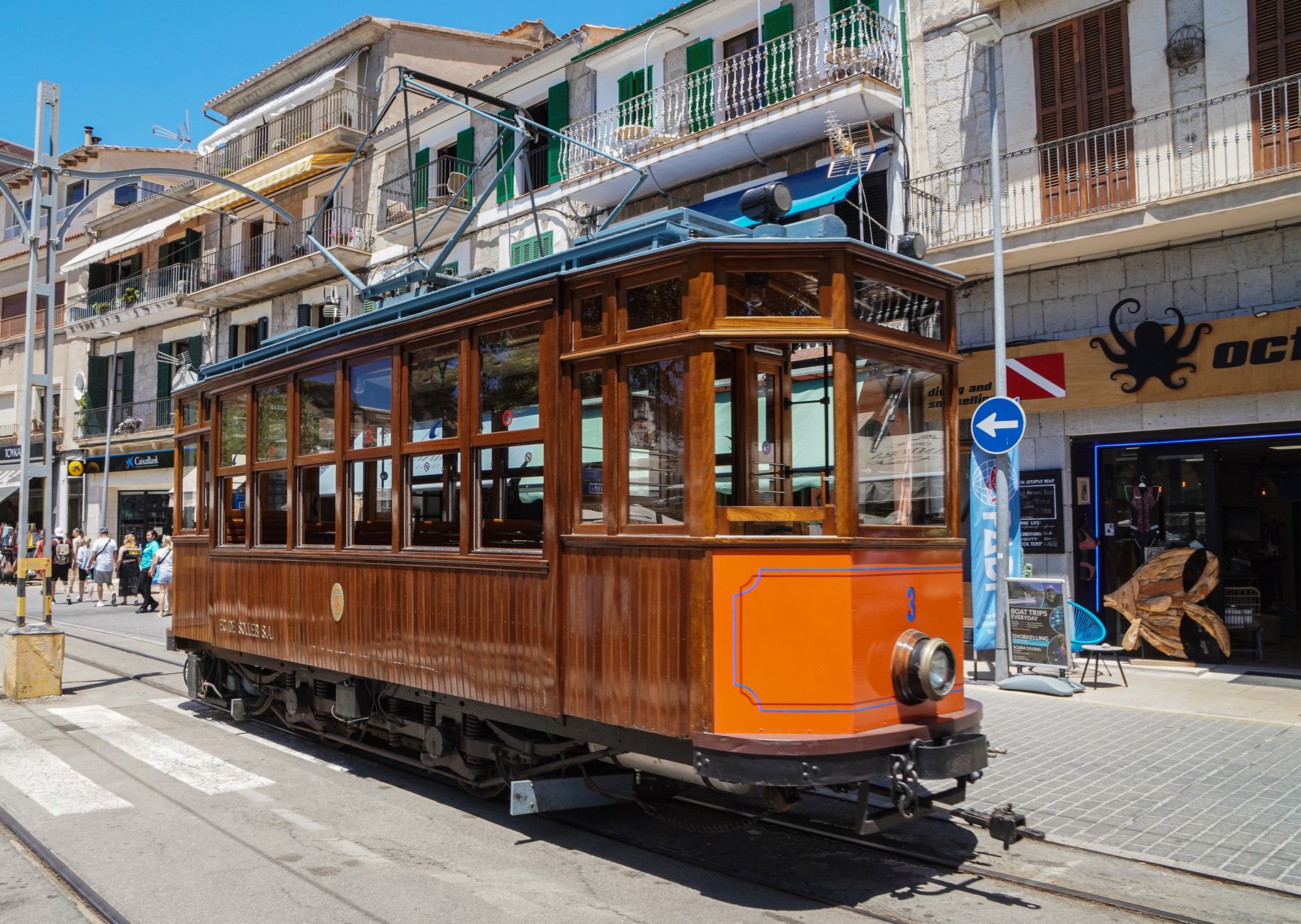
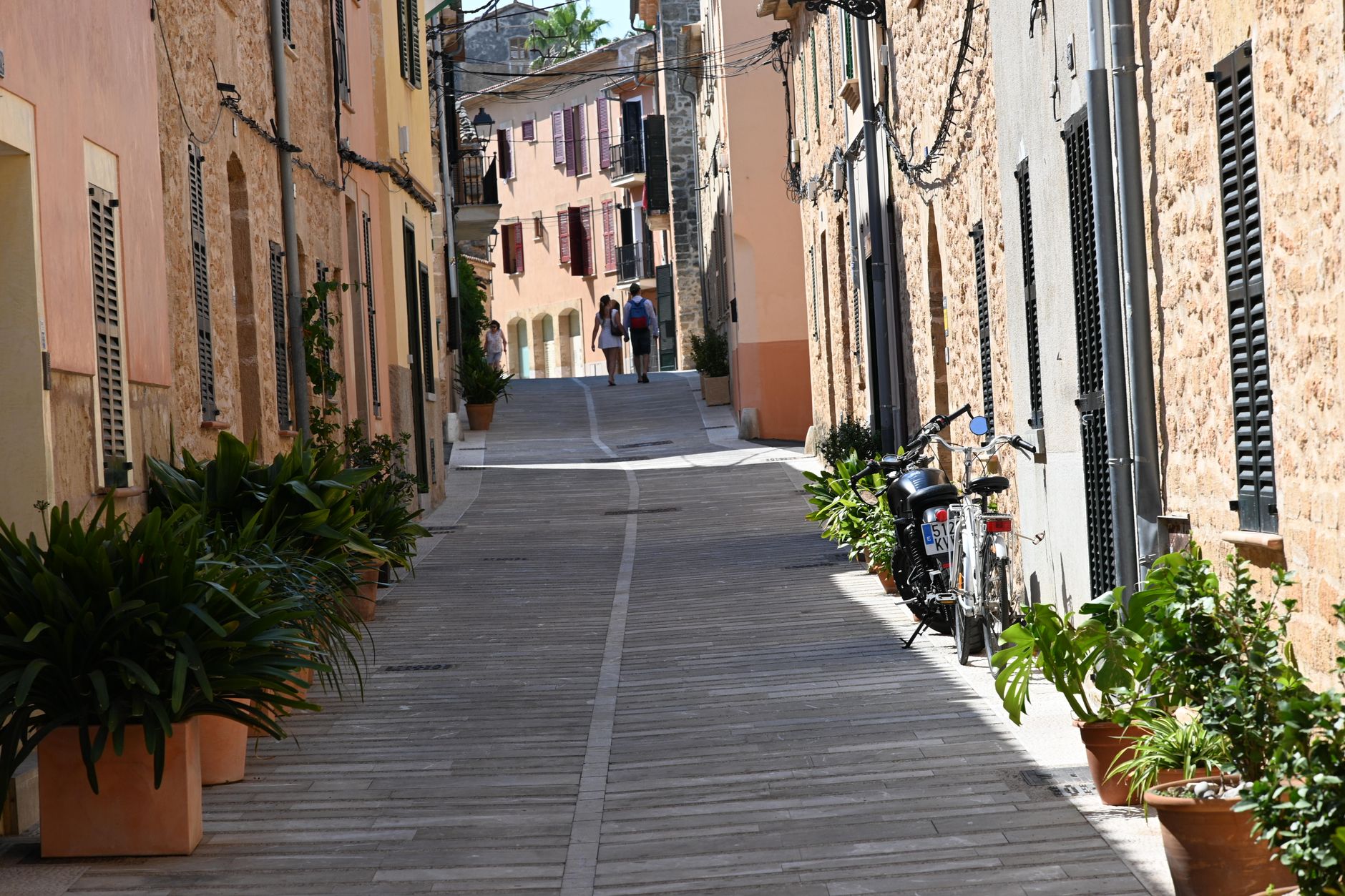

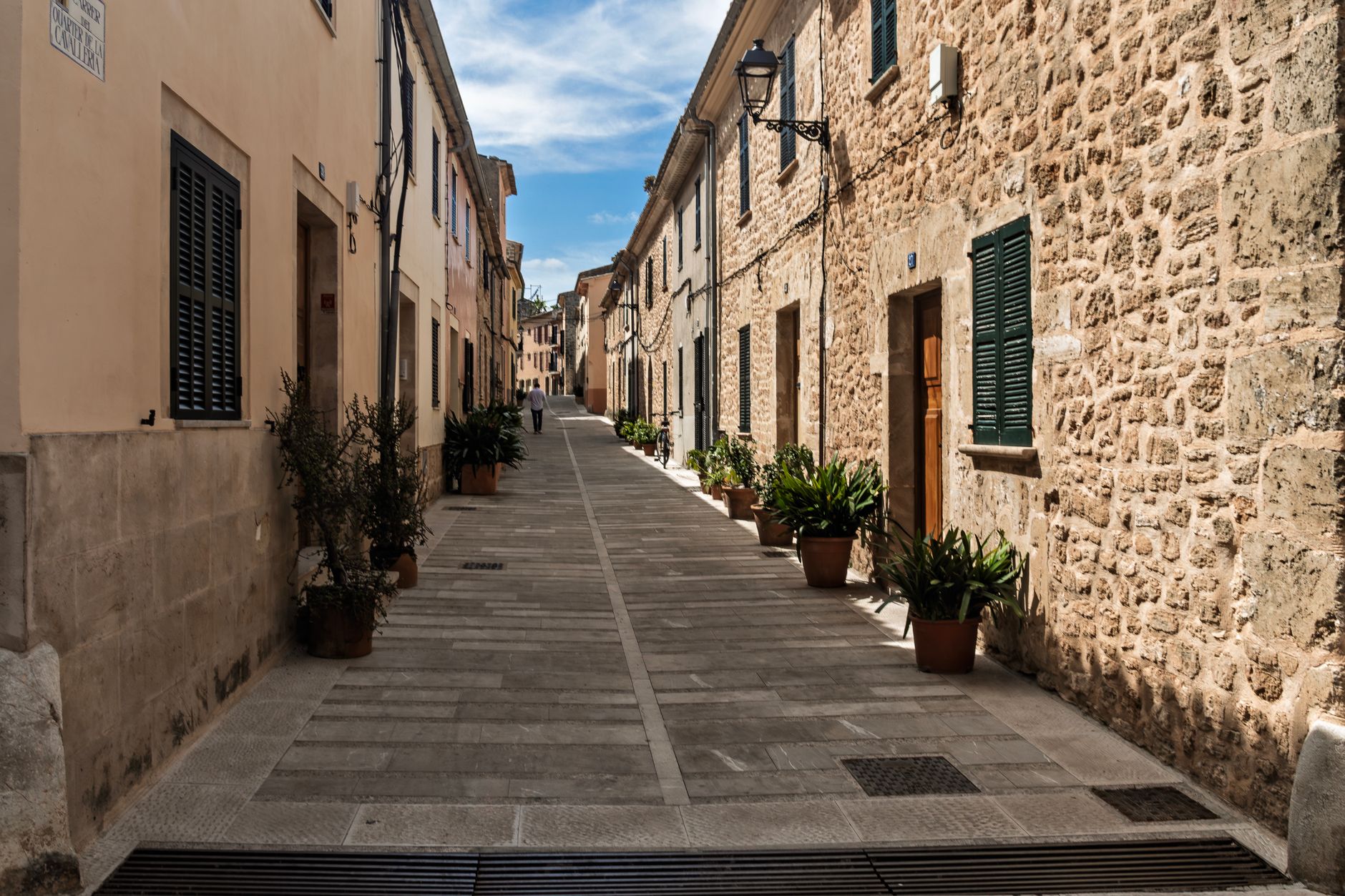
Sóller sits 27 kilometres north of Palma, reached in thirty minutes through the road tunnel or an hour by the 1912 wooden railway. The valley is famous for its sweet Canoneta oranges and modernist townhouses funded by nineteenth-century trade with France. Sóller is worth visiting if you want stone hiking trails, citrus orchards, and modernist architecture beneath limestone peaks. Look elsewhere if you want late-night clubbing, broad sandy beaches, or flat walking terrain.
Last updated 26 Sept 2026
Build a Sóller itinerary.
Choose up to 4 threads that pull you in. Your plan arrives organised around them.
The Bed
Where to stay in Sóller
Which part of town to book, and what each one costs you in walking, noise or quiet.
The Comparison
Sóller, or somewhere near it
The places you are realistically choosing between, and the honest case for each.
The Local Record
Where to read more about Sóller
The blogs, boards, guides and operators worth bookmarking.
What to do in Sóller Mallorca Spain
Life here anchors on Plaça de Sa Constitució, where the bell tower of Sant Bartomeu looms and café chairs spill onto the cobbles. The valley is shaped by stone terraces and citrus trees, framed by the peaks of the Tramuntana. Days start with an espresso as the vintage tram squeals through the square, moving naturally between mountain walks and the bay at Port de Sóller.
24 hours in Sóller Mallorca Spain
Start your morning with fresh orange juice on Plaça de Sa Constitució, then tour the art inside Can Prunera on Carrer de Sa Lluna. Catch the 1913 tram down to Port de Sóller for lunch—order red prawns along the marina. Walk the western pier before an evening return. Select 1 Day above to see it.
2 days in Sóller Mallorca Spain
Spend your second morning walking the ancient stone path up through Biniaraix into the terraced village of Fornalutx. Eat pa amb oli rubbed with ramellet tomatoes for lunch, then spend the late afternoon at the Museu de la Mar watching fishing boats unload at the harbour. Choose 2 Days to expand the plan.
3 days in Sóller Mallorca Spain
A third day allows an unhurried boat trip along the northern cliffs to the gorge at Sa Calobra, or a slow drive along the MA-10 towards Deià. Return to town for a dinner of roast suckling pig and local red wine from Binissalem grapes, served without the midday crowds.
Sóller Mallorca Spain itineraries by interest
Modernist Architecture in Sóller Mallorca Spain
Joan Rubió's neo-Gothic facade at Sant Bartomeu and Banco de Sóller show the Catalan Modernisme brought back from France.
Hiking in Sóller Mallorca Spain
Follow the dry-stone GR221 route up to the hamlet of Fornalutx or tackle the cobbled mountain trails toward the Barranc de Biniaraix.
Local Seafood in Sóller Mallorca Spain
Order sweet gambas rojas de Sóller grilled over coarse salt at the working dockside tavernas down in Port de Sóller.
Historic Transit in Sóller Mallorca Spain
Ride the 1912 wooden train through the Tramuntana tunnels from Palma, then transfer to the 1913 streetcar down to the sea.
Citrus & Orchards in Sóller Mallorca Spain
Sample Canoneta oranges, citrus jams, and freshly pressed juice along the valley paths of Ecovinyassa and Sa Vall.
Markets & Produce in Sóller Mallorca Spain
Saturday morning on Plaça de Sa Constitució brings local Mahón cheeses, Sobrassada de Mallorca, and green olives.
Village Walks in Sóller Mallorca Spain
Wander along Carrer de Sa Lluna past stone facades, iron balconies, and quiet courtyards leading to the edge of the valley.
Maritime History in Sóller Mallorca Spain
Visit the Museu de la Mar inside the 13th-century Santa Caterina oratory overlooking the horseshoe bay and naval cliffs.
Contemporary Art in Sóller Mallorca Spain
See original ceramics by Picasso and lithographs by Joan Miró housed inside the 1912 railway station rooms at Can Prunera.
Day Trips in Sóller Mallorca Spain
Drive the winding MA-10 coastal road to the terraced village of Deià and the former monastery estate at Valldemossa.
Bakeries & Sweets in Sóller Mallorca Spain
Pick up a spiral ensaïmada dusted with powdered sugar or an almond gató cake from centuries-old wood-fired village ovens.
Coastal Cruising in Sóller Mallorca Spain
Board a wooden excursion boat from Port de Sóller to the secluded pebble cove and sheer rock canyon at Sa Calobra.