

Sanlúcar sits where the muddy Guadalquivir River empties into the Atlantic tide. You smell brine and humid oak before you see the water. The town splits neatly between the sun-bleached fishermen's quarter of Bajo de Guía and the high, quiet alleys of the Barrio Alto, where cool bodegas raise flor yeast on Palomino grapes. People come here to eat plump langostinos fried crisp in oil and drink cold, bone-dry manzanilla out of small glasses while cargo ships slip silently past the Doñana dunes.
Last updated 22 Aug 2026
Build a Sanlúcar de Barrameda itinerary.
Choose up to 4 threads that pull you in. Your plan arrives organised around them.
We'll craft a 3-lens plan for Sanlúcar de Barrameda, one collapsible strand per lens.
Coastal Walks
Stroll along Playa de la Calzada toward the working Bonanza port as the tide retreats, watching small wooden trawlers unload the evening catch.
Coastal Walks
Stroll along Playa de la Calzada toward the working Bonanza port as the tide retreats, watching small wooden trawlers unload the evening catch.
Guadalquivir Estuary Stroll
Paseo Marítimo Bajo de Guía
Walk the quiet shoreline path toward the river mouth before heat sets in. Allow forty-five minutes; free access, with clear views across to Doñana.
Editor TipThis tidal meeting of the Guadalquivir River and the Atlantic Ocean has sheltered fishing fleets and transatlantic expeditions since the sixteenth century. Grab an espresso at the riverside kiosk while fishing skiffs drift past the sandbanks.
Browsing the Morning Catch
Mercado de Abastos
Arrive before nine while the marble slabs are wet and piled high with Sanlúcar prawns. Pick up fresh fruit or head to the outer stalls for fried churros. Budget ten euros.
Editor TipRebuilt over eighteenth-century foundations, this municipal market supplies the town's tapas bars with chocos and red mullet straight from the morning auction at Bonanza port. Do not touch the fish. Point clearly, let the vendor scale and gut it, and bring small euro coins.
Estuary Crossing and Shoreline Walk
Playa de Malandar
Take the small passenger barge from Bajo de Guía across the Guadalquivir mouth for about two euros cash. Spend ninety minutes walking the untouched sand trails at the edge of the park.
Editor TipThis quiet stretch of dunes forms the southern boundary of Doñana National Park, where the Atlantic tide meets the river that once carried Spanish galleons inward toward Seville. Confirm the skipper's exact return times before setting off down the beach; the boats run on tide rather than rigid clocks.
Dockside Fish and Chilled Manzanilla
Bar Los Corrales
Prop yourself at the stainless steel bar facing the Bonanza wharves. Order fried acedías and a glass of salty Manzanilla pasada; budget eight to twelve euros.
Editor TipPuerto de Bonanza is Sanlúcar's working fishing harbour, where morning trawlers land wedge sole, mantis shrimp, and cuttlefish before the afternoon fish auction opens. Arrive before noon to claim a bar stool before the off-duty boat crews fill the room.
Twilight Walk by Tidal Traps
Corrales de Pesca de Chipiona
Walk the flat stone promenade from Playa de las Canteras at low tide. Watch local fishers work the ancient tidal barriers during the evening ebb.
Editor TipDating to Roman antiquity, these porous limestone corrals trap cuttlefish and sea bream naturally as the Atlantic tide recedes across the rocky shore. Bring a light windbreaker and flat shoes; the Atlantic breeze turns sharp once the sun drops behind the reef.
Local Seafood
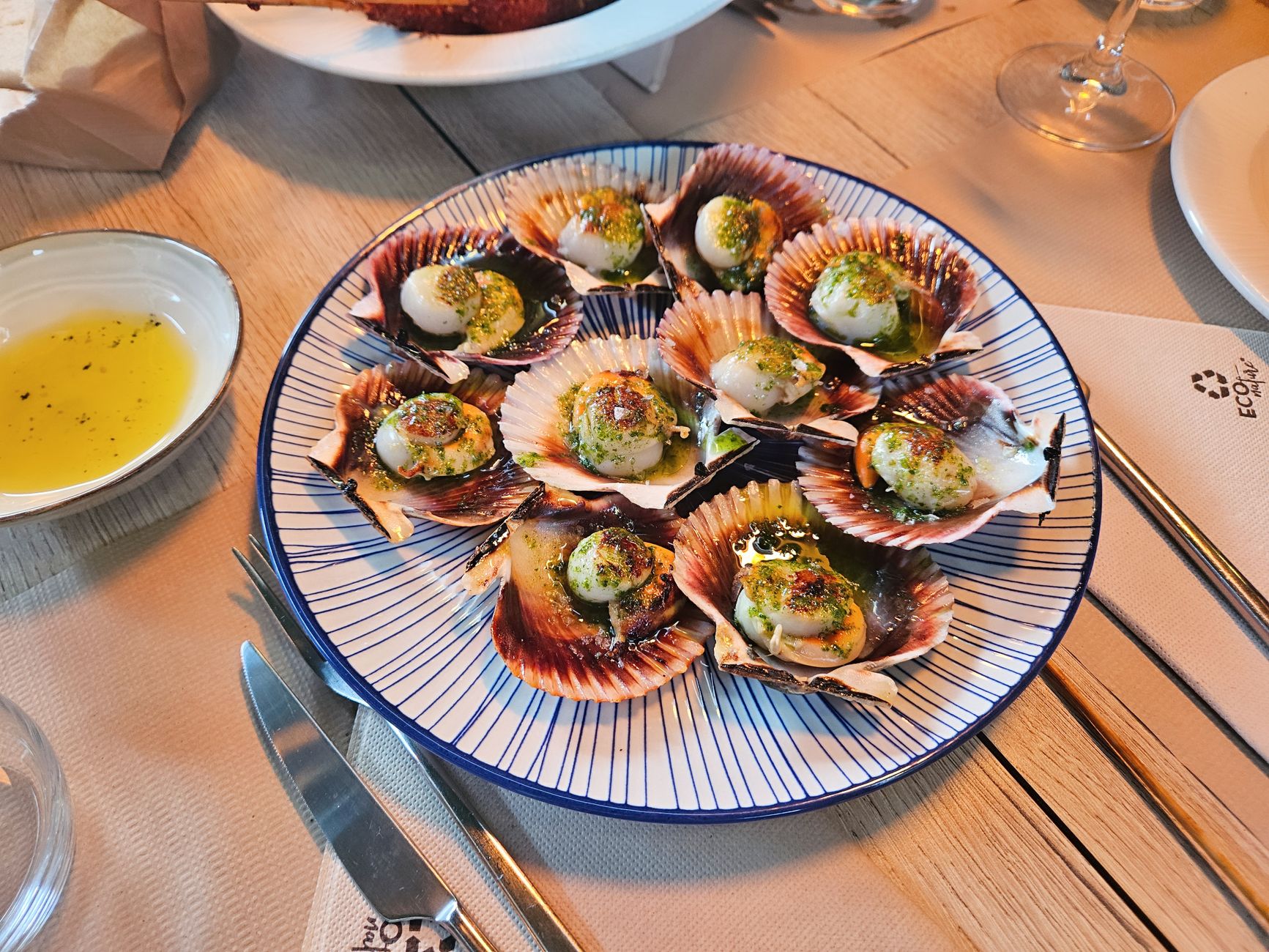
Order boiled langostinos de Sanlúcar, crisp tortillitas de camarones, and stewed chocos with potatoes along the dockside tables at Bajo de Guía.
Local Seafood
Order boiled langostinos de Sanlúcar, crisp tortillitas de camarones, and stewed chocos with potatoes along the dockside tables at Bajo de Guía.
Tortillitas de Camarones Tasting
Casa Balbino
Step up to the counter and order two tortillitas with a chilled glass of Manzanilla. No reservations; expect standing room around noon for under ten euros.
Editor TipBalbino has fried these paper-thin, lace-edged patties of chickpea flour, parsley, and tiny whole glass shrimp over bubbling olive oil since 1924. Stand at the bar rather than hunting for a terrace table to get your fritters straight from the fryer.
Estuary Sunset and Boiled Langostinos
Casa Bigote
Walk the Bajo de Guía promenade before sitting down for boiled king prawns and cuttlefish stew. Reserve an outside table two days ahead. Expect to spend ninety minutes.
Editor TipSitting across the Guadalquivir river from Doñana National Park, this former fishermen's tavern has served local langostinos cooked simply in salted seawater since 1951. Arrive thirty minutes before your table to watch fishing barges cross against the pink light over the dunes.
Note from the Editor
“The fish auctions run early, but the town moves late. Give yourself an easy morning stroll by the river before the bar crowds gather at noon on Plaza del Cabildo.”
Routes Through Sanlúcar de Barrameda
Trips readers have saved that pass through here — the well-worn ones first.
Browse all tripsThe Bed
Where to stay in Sanlúcar de Barrameda
Which part of town to book, and what each one costs you in walking, noise or quiet.
The Comparison
Sanlúcar de Barrameda, or somewhere near it
The places you are realistically choosing between, and the honest case for each.
The Local Record
Where to read more about Sanlúcar de Barrameda
The blogs, boards, guides and operators worth bookmarking.
What to do in Sanlúcar de Barrameda Andalusia Spain
Sanlúcar de Barrameda is shaped by the tides and the sherry barrel. Life here moves between the busy tapeo around Plaza del Cabildo and the seaside promenade of Bajo de Guía. The town rewards travellers who enjoy slow afternoons, unpretentious seafood taverns, and walkable historic quarters. You will spend your days tasting cold manzanilla, climbing through the quiet Barrio Alto, and watching the sun sink behind the dunes of Doñana across the river.
24 hours in Sanlúcar de Barrameda Andalusia Spain
Start with churros near Mercado de Abastos before walking up to Castillo de Santiago. By one in the afternoon, join the crowd at Casa Balbino for tortillitas de camarones. Walk twenty minutes down to Bajo de Guía for grilled sea bass and chilled wine at sunset, then finish with a slow digestif back in Plaza del Cabildo. Select 1 Day above to see it.
2 days in Sanlúcar de Barrameda Andalusia Spain
Spend your second morning exploring Barrio Alto's quiet bodega corridors and the gardens of Palacio Ducal de Medina Sidonia. Afterward, wander over to the working docks at Bonanza to watch the fleet return. Dine on stewed cuttlefish and papas aliñás at Taberna Der Guerrita, where locals debate vintage sherries over small plates. Choose 2 Days to expand the plan.
3 days in Sanlúcar de Barrameda Andalusia Spain
A third day allows an easy morning boat crossing into Parque Nacional de Doñana to track wetland birds and roam coastal dunes. In the afternoon, take a twenty-minute ride to the salt flats of Chipiona or inland to Trebujena for a rustic vineyard lunch among old albariza soils before one final plate of langostinos by the river.
Sanlúcar de Barrameda Andalusia Spain itineraries by interest
Local Seafood in Sanlúcar de Barrameda Andalusia Spain
Order boiled langostinos de Sanlúcar, crisp tortillitas de camarones, and stewed chocos with potatoes along the dockside tables at Bajo de Guía.
Wine & Vineyards in Sanlúcar de Barrameda Andalusia Spain
Tour Barrio Alto bodegas like Barbadillo and La Cigarrera to taste pale, saline manzanilla aged under flor yeast in tall American oak butts.
Markets & Produce in Sanlúcar de Barrameda Andalusia Spain
Wander the bustling Mercado de Abastos on Calle Trascuesta for sand-grown navazo potatoes, fresh bluefin tuna belly, and mounds of live Atlantic coquinas.
Maritime History in Sanlúcar de Barrameda Andalusia Spain
Explore the fifteenth-century Castillo de Santiago and the riverbanks where Ferdinand Magellan and Columbus outfitted Atlantic expeditions.
Coastal Walks in Sanlúcar de Barrameda Andalusia Spain
Stroll along Playa de la Calzada toward the working Bonanza port as the tide retreats, watching small wooden trawlers unload the evening catch.
Sacred Architecture in Sanlúcar de Barrameda Andalusia Spain
Step inside the fourteenth-century Parroquia de Nuestra Señora de la O, admiring the carved Mudéjar stone portal and quiet limestone nave.
Historic Palaces in Sanlúcar de Barrameda Andalusia Spain
Visit the Palacio Ducal de Medina Sidonia, home to an immense historic archive, peaceful Renaissance courtyards, and a breezy garden cafe.
Nature & Wildlife in Sanlúcar de Barrameda Andalusia Spain
Cross the river Guadalquivir by ferry to explore the wild pine woods, salt marshes, and moving dunes of Parque Nacional de Doñana with a guide.
Tapas Bars in Sanlúcar de Barrameda Andalusia Spain
Grab an outdoor stool at Plaza del Cabildo for cold manzanilla, jamón ibérico, and seasoned papas aliñás at legendary taverns like Casa Balbino.
Equestrian Culture in Sanlúcar de Barrameda Andalusia Spain
Watch the historic August beach horse races thunder across the wet sand of Playa de las Piletas at low tide, an annual tradition since 1845.
Day Trips in Sanlúcar de Barrameda Andalusia Spain
Catch a quick bus south to Jerez de la Frontera for flamenco and dark oloroso sherries, or visit the sherry town of El Puerto de Santa María.
Local Taverns in Sanlúcar de Barrameda Andalusia Spain
Duck into neighbourhood despachos de vino like Taberna Der Guerrita in Barrio Alto for rare single-cask bottlings and plates of cured mojama.