Segovia.


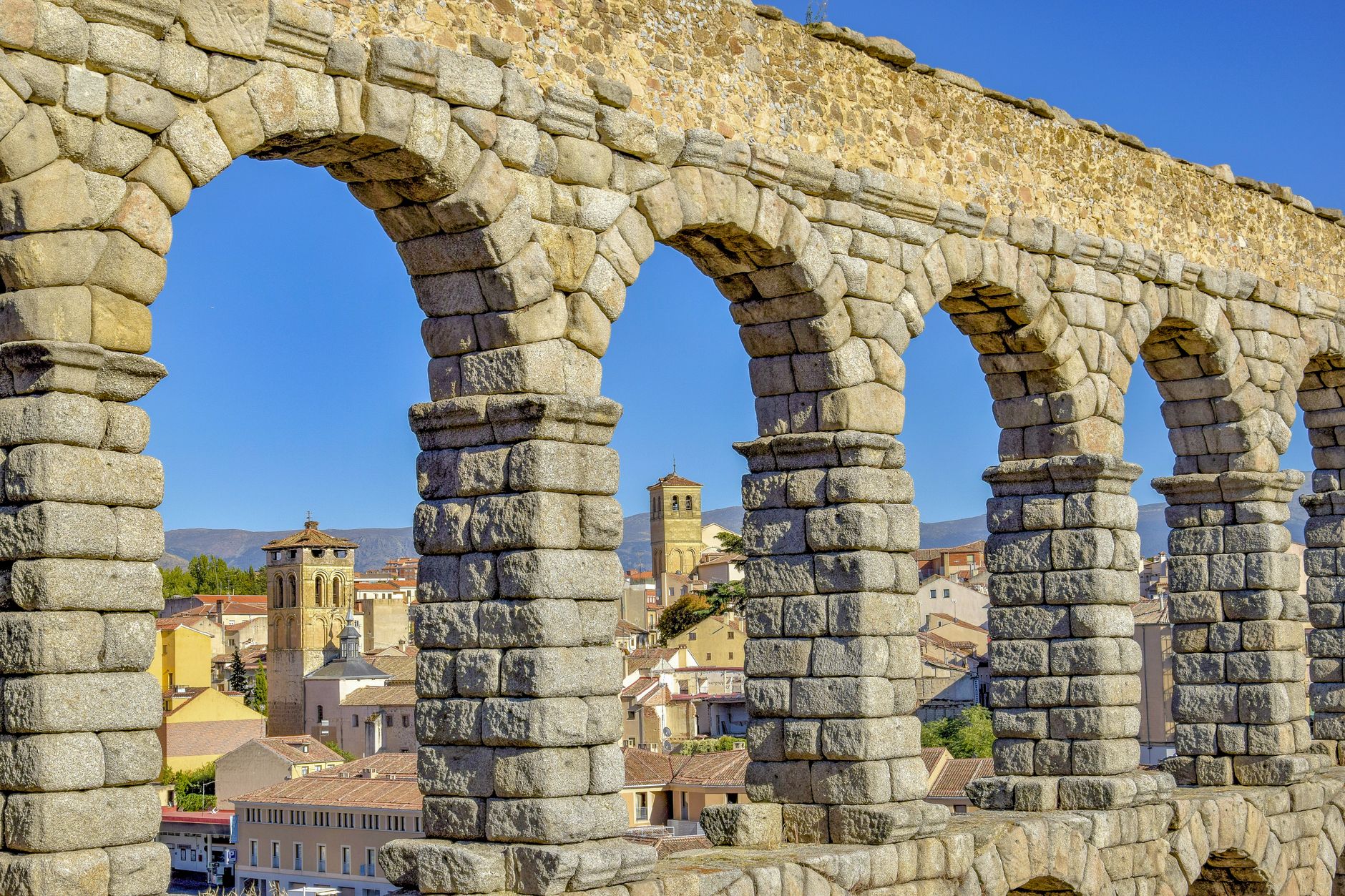
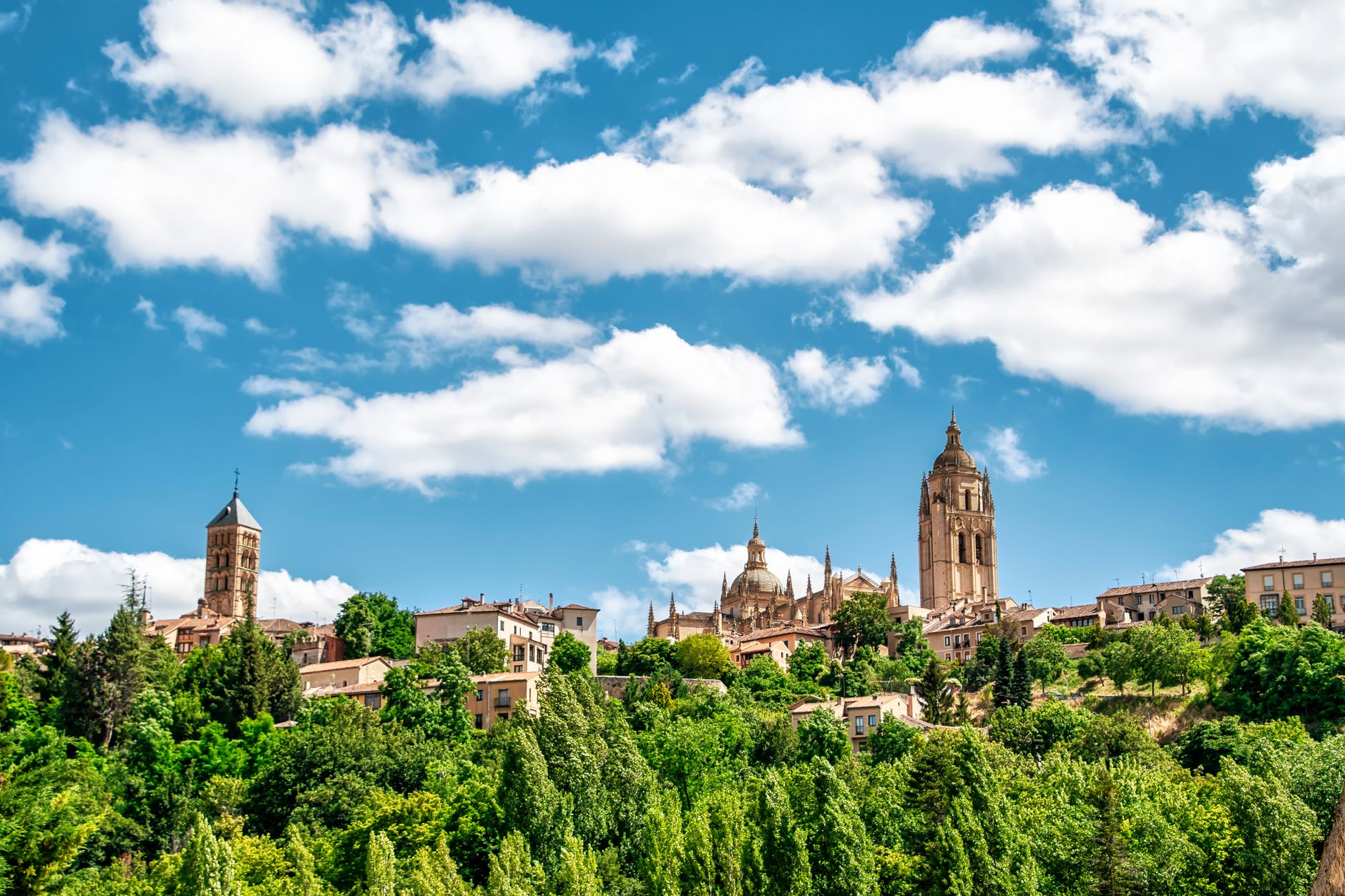


Segovia rises above the windswept Castilian meseta like a ship of pale limestone, flanked by the Eresma and Clamores valleys. You arrive under the dry mountain chill of the Guadarrama range, confronted immediately by the sheer scale of the first-century Roman aqueduct. Down Calle Real, wood smoke and rendered pork fat drift from tavern ovens roasting suckling pig, while the Alcázar anchors the ridge like a fortress built to outlast the weather and several dynasties.
Last updated 22 Aug 2026
Build a Segovia itinerary.
Choose up to 4 threads that pull you in. Your plan arrives organised around them.
We'll craft a 3-lens plan for Segovia, one collapsible strand per lens.
Roman Engineering
Examine the unmortared granite blocks of the first-century Roman aqueduct spanning Plaza del Azoguejo, best appreciated from the stone steps of the Postigo del Consuelo.
Roman Engineering
Examine the unmortared granite blocks of the first-century Roman aqueduct spanning Plaza del Azoguejo, best appreciated from the stone steps of the Postigo del Consuelo.
Tracing the Roman Aqueduct
Aqueduct of Segovia
Start at Plaza del Azoguejo to see the tallest pillars, then climb the stairs up the postigo for the ridge view. Free to view, unguided, and requires forty-five minutes of steady footing.
Editor TipBuilt around the first century AD under Trajan or Domitian, its twenty thousand Guadarrama granite blocks hold together entirely without mortar, carrying water from the Rio Frio for miles. Look closely at the blocks to spot the original Roman lewis holes used by crane tongs during construction.
Walking the Monumental Roman Aqueduct
Acueducto de Segovia
Climb the stone steps beside Plaza del Azoguejo to the Postigo del Consuelo viewpoint for close-up views of the upper tier. It is free, open continuously and takes thirty unhurried minutes.
Editor TipBuilt around the first century AD under Emperor Trajan, roughly 25,000 Guadarrama granite blocks stand balance-locked without a single drop of mortar across 167 arches. Look for the crane-lifting indentations still visible on the lower pillars; Roman masonry at eye level is humbling.
Tracing the Roman Watercourse
Desarenador de San Gabriel
Walk fifteen minutes east from the Plaza del Azoguejo along Calle Fernán García to find the ancient stone sand-trap tower where the unmortared granite begins.
Editor TipEngineers under Emperor Trajan routed water nine miles from the Fuenfría river, using these stone settling tanks to strip mountain grit without a drop of mortar. Follow the paved brass plaques in the sidewalk heading east; it keeps you on the channel path without checking a phone.
Tracing the Roman Intake
Azud del Acueducto de Segovia
Follow the pine-lined gravel trail from Revenga to the headworks at Puente Alta. The path is flat, free to access, and takes ninety minutes.
Editor TipFirst-century Roman hydraulic engineers built this masonry weir on the Río Acebeda to decant silt before channeling mountain runoff fifteen kilometers down to Segovia. Wear sturdy trail shoes; the gravel near the silt trap gets slick where the mountain stream breaches the verge.
Walking Ancient Roman Pavement
Calzada Romana de la Fuenfria
Hike the stone road built under Emperor Augustus from Valsaín. Wear sturdy shoes for the steep granite grade; access is free and unguided year-round.
Editor TipSecond-century Roman legions laid these granite slabs across the Guadarrama range to connect Segovia to Titulcia, engineering drainage channels that still divert mountain runoff. Park near the Boca del Asno visitor center to bypass the steepest roadside tarmac.
Local Pastries
Pick up a slice of ponche segoviano, a rich sponge cake soaked in syrup, layered with pastry cream, and blanketed in patterned toasted marzipan from Pastelería Limón.
Local Pastries
Pick up a slice of ponche segoviano, a rich sponge cake soaked in syrup, layered with pastry cream, and blanketed in patterned toasted marzipan from Pastelería Limón.
Tasting Traditional Ponche Segoviano
Confitería El Alcázar
Grab a marble table inside this 1926 shop on Plaza Mayor. Order a slice of ponche segoviano with a cafe con leche at the counter; expect to spend under six euros and stay thirty minutes.
Editor TipCreated by confectioner Frutos Garcia Martin, this municipal obsession layers sponge soaked in syrup with rich custard cream, wrapped entirely in hand-scorched marzipan with a signature crosshatch. It is intensely sweet, so take it with an unsweetened cafe solo to cut through the sugar and marzipan.
Tasting Judiones in San Lorenzo
Taberna López
Reserve an evening table for 20:30, order the slow-stewed judiones beans and a local red from Valtiendas, and spend roughly thirty euros per person.
Editor TipSet in the working-class square of San Lorenzo, this neighbourhood dining room serves the valley's large white runner beans simmered with cured pork, chorizo, and paprika. Walk down through the river path past the old mills instead of taking a cab; it puts some iron in your appetite.
Fresh Torta de Valsaín
Pastelería Dioni
Walk in for a hot espresso and a slice of brioche-like torta dusted with sugar and aniseed. Expect no fuss and change from five euros.
Editor TipWoodcutters in the pine forests of Valsaín relied on this dense, lard-enriched flatbread for energy, baked across the Guadarrama valleys since the eighteenth century. Order a slice of ponche segoviano to pack in your bag for later; the marzipan shell keeps it intact on the trail.
Note from the Editor
“The tour buses from Madrid arrive by eleven, turning the Plaza del Azoguejo into a sea of selfie sticks. Catch the aqueduct at eight thirty when the sweepers are out, then head uphill toward the cathedral before the pack catches up.”
The Bed
Where to stay in Segovia
Which part of town to book, and what each one costs you in walking, noise or quiet.
The Comparison
Segovia, or somewhere near it
The places you are realistically choosing between, and the honest case for each.
The Local Record
Where to read more about Segovia
The blogs, boards, guides and operators worth bookmarking.
What to do in Segovia Castilla y León Spain
Segovia is compact, steep, and built along a limestone ridge between two river gorges. Days here naturally follow the sun, from the morning light hitting the aqueduct to long, deliberate lunches anchored by roast pork and afternoon strolls through the quiet Judería. It suits travellers who appreciate walkable medieval streets, austere Romanesque churches, and serious rustic cooking without the frantic rush of a larger capital.
24 hours in Segovia Castilla y León Spain
Start early at the Roman aqueduct before tour buses arrive, then climb Calle Real to the cathedral. Book lunch at two for cochinillo asado, take a slow post-meal walk down to the Alcázar, and finish with a cold glass of Verdejo in Plaza Mayor. Select 1 Day above to see it.
2 days in Segovia Castilla y León Spain
Dedicate your second day to the Eresma valley path below the ramparts and the mysterious twelve-sided Church of the Vera Cruz. For lunch, leave the centre for a bowl of judiones de La Granja and roasted lamb in the quiet San Lorenzo neighbourhood. Choose 2 Days to expand the plan.
3 days in Segovia Castilla y León Spain
A third day allows an easy morning excursion to the royal palace and fountains of La Granja de San Ildefonso, followed by an afternoon walking the medieval walls from Puerta de San Andrés, stopping at local bakeries for a slab of sweet ponche segoviano.
Segovia Castilla y León Spain itineraries by interest
Roast Meats in Segovia Castilla y León Spain
Order cochinillo asado at Mesón de Cándido or Restaurante José María, where tender suckling pig is roasted in wood-fired brick ovens until the skin crackles.
Roman Engineering in Segovia Castilla y León Spain
Examine the unmortared granite blocks of the first-century Roman aqueduct spanning Plaza del Azoguejo, best appreciated from the stone steps of the Postigo del Consuelo.
Sacred Architecture in Segovia Castilla y León Spain
Explore the late Gothic cathedral in Plaza Mayor, noted for its soaring ribbed vaults and cloister salvaged from an earlier church destroyed during the Comunero revolt.
Medieval Fortifications in Segovia Castilla y León Spain
Climb the tower of Juan II at the Alcázar, an eleventh-century royal fortress flanked by sheer cliffs dropping toward the confluence of the Eresma and Clamores rivers.
Jewish Heritage in Segovia Castilla y León Spain
Walk the quiet alleys of the old Judería along Calle de la Judería Vieja, visiting the Centro Didáctico and the former main synagogue now preserved as Corpus Christi.
Regional Wine in Segovia Castilla y León Spain
Drink crisp Verdejo whites from nearby Rueda and bold Tempranillo reds from the Valtiendas and Ribera del Duero denominations at the wine bars around Plaza del Salvador.
Hearty Stews in Segovia Castilla y León Spain
Start lunch with judiones de La Granja, large white kidney beans simmered with chorizo, morcilla, ear and trotters into a thick broth designed for cold Castilian winters.
Day Trips in Segovia Castilla y León Spain
Take the short bus ride to the royal palace and formal fountain gardens of La Granja de San Ildefonso, built in the eighteenth century beneath the Peñalara peak.
Historic Walking in Segovia Castilla y León Spain
Follow the medieval city walls from Puerta de San Andrés to Puerta de Santiago, taking in panoramic views across the arid plateau and surrounding pine forests.
Local Pastries in Segovia Castilla y León Spain
Pick up a slice of ponche segoviano, a rich sponge cake soaked in syrup, layered with pastry cream, and blanketed in patterned toasted marzipan from Pastelería Limón.
Valley Walks in Segovia Castilla y León Spain
Descend into the Eresma River valley along the Camino Natural to view the Alcázar from the grassy meadows beside the medieval Church of the Vera Cruz.
Craft Traditions in Segovia Castilla y León Spain
Search the workshops near Plaza Mayor for hand-beaten copper goods and Segovian sgraffito plasterwork, the distinct geometric wall decoration covering local facades.