

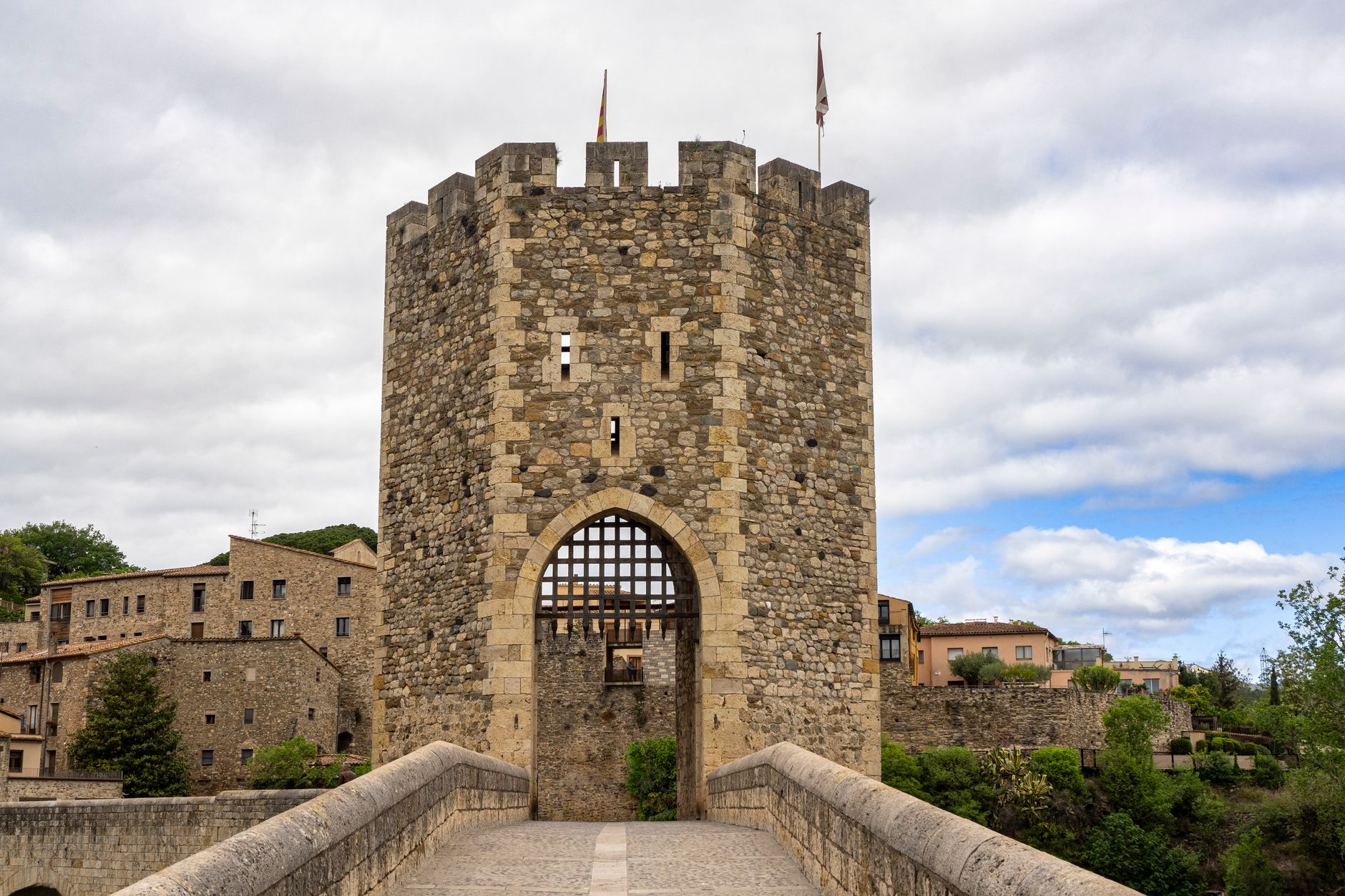
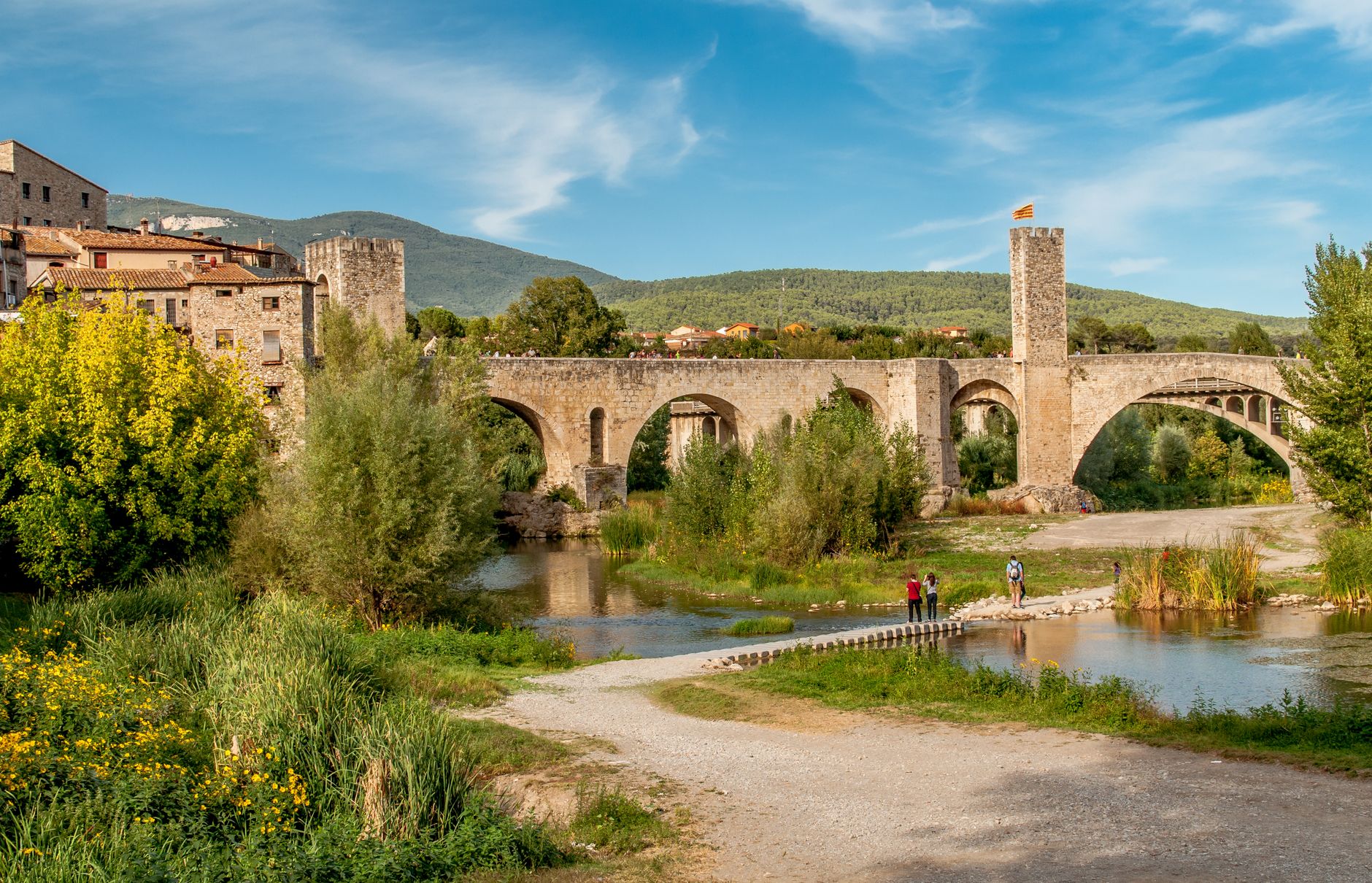
You cross the River Fluvià on an angular twelfth-century bridge that looks like a fortress having second thoughts about straight lines. Beneath the volcanic stone arches, water runs cold from the Garrotxa hills. Inside the walls, river mist hangs in narrow alleys paved with rounded cobblestones that test your ankles before lunch. Besalú earned its keep through iron and trade; today it offers quiet stone plazas, Catalan roast duck with pears, and a subterranean Romanesque mikveh by the riverbank.
Last updated 22 Aug 2026
Build a Besalú itinerary.
Choose up to 4 threads that pull you in. Your plan arrives organised around them.
We'll craft a 3-lens plan for Besalú, one collapsible strand per lens.
Catalan Cuisine
Order ànec amb peres (duck stewed with sweet pears) or peus de porc alongside Garrotxa white beans, finished with dense crema catalana under burnt sugar.
Catalan Cuisine
Order ànec amb peres (duck stewed with sweet pears) or peus de porc alongside Garrotxa white beans, finished with dense crema catalana under burnt sugar.
Riverfront Catalan Braised Duck
Restaurant Pont Vell
Reserve a terrace table overlooking the bridge. Order the slow-cooked duck with pears or the rabbit with ratafia liqueur, paired with an Empordà red wine.
Editor TipCatalan mar i muntanya philosophy stretches inland here, leaning on mountain game, forest mushrooms, and sweet dried fruits stewed patiently in heavy clay cazuelas. Dinner service starts promptly at eight; arrive fifteen minutes early to watch the bridge floodlights click on.
Morning Coca and Carajillo
Pastisseria Pagès
Order a slice of savory coca with roasted peppers or a sugared anis coca at the counter. Budget four euros; no reservations needed, just grab a stool.
Editor TipCatalan bakers have fired flatbread coca across the Garrotxa since the Middle Ages, balancing lard, pine nuts, and garden vegetables. Ask for a carajillo with local ratafia herb liqueur if they have a bottle behind the bar.
Tasting Volcanic Pork and Beans
Restaurant Cal Sastre
Book a terrace table ahead for the weekday lunch menu. Expect rich pork trotters with tiny DOP Santa Pau beans and local red wine from Empordà. Allow ninety minutes.
Editor TipGarrotxa volcanic soil yields exceptionally tender, sweet haricot beans that local families have stewed with wild boar and butifarra sausage since the fourteenth century. Park in the lower village lot and walk up the cobbles; your rental clutch will thank you.
Jewish Heritage
Descend thirty-six steps beside the Fluvià to the twelfth-century mikveh, a Romanesque ritual bath discovered in 1964 and fed by natural subterranean river water.
Jewish Heritage
Descend thirty-six steps beside the Fluvià to the twelfth-century mikveh, a Romanesque ritual bath discovered in 1964 and fed by natural subterranean river water.
Crossing the Romanesque Bridge
Pont Vell de Besalú
Walk across the eleventh-century bridge into the walled quarter. Free access all day; take thirty minutes to explore the gravel banks of the Fluvià river below.
Editor TipBuilt on natural riverbed boulders, this seven-arch fortified bridge collected medieval tolls for the independent counts of Besalú and shaped all local commerce. Head down to the gravel path beneath the arches early for clear sightlines before coaches pull into the main lot.
Descending to the Medieval Mikveh
Micvé de Besalú
Join the tourist office guided visit on Plaça dels Jueus for under five euros. Thirty minutes covers the underground bath and the excavated synagogue foundations.
Editor TipDiscovered by chance in 1964, this twelfth-century stone purification chamber fed by Fluvià groundwater is one of only four preserved Romanesque mikvaot in Europe. Book your entry slot online the morning before; the humid stone staircase holds only a dozen people at once.
Tracing Medieval River Mills
Passeig Fluvial del Fluvià
Follow the unpaved path down from Carrer del Pont along the Fluvià riverbank. It takes forty easy minutes on flat gravel beneath the old ramparts.
Editor TipBesalú's twelfth-century Jewish quarter relied on this river for dye vats and water mills, concentrating everyday industrial labor below the residential bluff. Wear shoes with rubber soles; the morning dampness makes the lower cobblestones slick.
Fluvià Riverbank Heritage Walk
Passeig Fluvial de Besalú
Drop down to the riverbank path below the lower wall. The loop takes forty minutes at an easy stroll on flat gravel, with stone benches facing the weir. No fees.
Editor TipMedieval leather tanners and textile dyers worked along this bank of the Fluvià, directly beneath the call, the hillside quarter where Jewish artisans shaped the town's commerce. Wear sturdy flats; the river pebbles are smooth, and the afternoon light bouncing off the water is sharp.
Morning Walk Around Lake Banyoles
Estany de Banyoles
Park at Parc de la Draga and walk the flat four-mile loop along the shore. It takes ninety minutes at an easy pace. Grab an espresso at the rowing club terrace before the morning scullers pack up.
Editor TipFed by subterranean aquifers from the Pyrenees, this natural basin supported medieval fisheries and grain mills that once supplied flour along the Fluvià trade corridor to Besalú. Stay on the western gravel path to pass the late nineteenth-century wooden pesqueres without dodging racing bikes.
Walking the Medieval Jewish Call
Museu d'Història dels Jueus
Walk up Carrer de la Força to the old synagogue complex. Entry is four euros at the desk. Spend an hour in the courtyard examining the medieval Hebrew gravestones salvaged from Montjuïc.
Editor TipDuring the twelfth century, this dense quarter fostered renowned Kabbalistic scholars whose legal and theological rulings guided Jewish life across Catalonia, including the community in Besalú. Look closely at the right-hand stone doorframes on Carrer de Sant Llorenç for the original diagonal mezuzah cutouts.
River Walks
Follow the dirt path skirting the Fluvià riverbed for unobstructed views of the bridge abutments and the wild fig trees growing out of ancient masonry.
River Walks
Follow the dirt path skirting the Fluvià riverbed for unobstructed views of the bridge abutments and the wild fig trees growing out of ancient masonry.
Walking the Fluvià Basalt Trail
Ruta del Fluvià Castellfollit de la Roca
Follow the signposted dirt path down from the footbridge to the riverbank. The circuit takes forty-five minutes on level gravel; sturdy walking shoes are sufficient.
Editor TipFor centuries, the confluence of the Fluvià and Toronell rivers carved out this fifty-metre basalt cliff, which served as a natural defensive refuge during medieval conflicts. Arrive just before sunset when late golden light hits the basalt columns above the water.
Note from the Editor
“Cross the bridge before nine while river mist clings to the volcanic stone. Day-trippers roll in from Girona by ten-thirty, so claim your morning quiet early.”
The Bed
Where to stay in Besalú
Which part of town to book, and what each one costs you in walking, noise or quiet.
The Comparison
Besalú, or somewhere near it
The places you are realistically choosing between, and the honest case for each.
The Local Record
Where to read more about Besalú
The blogs, boards, guides and operators worth bookmarking.
What to do in Besalú Catalonia Spain
Besalú is compact, built around a bend in the River Fluvià and anchored by Plaça de la Llibertat. The town rewards a relaxed walking pace: mornings exploring Romanesque stonework and the medieval Jewish quarter, long lunches over plates of slow-braised pork and Garrotxa beans, and unhurried afternoons wandering arcaded streets. It suits travellers who appreciate preserved medieval urban design and regional cooking over hurried checklist touring.
24 hours in Besalú Catalonia Spain
Start by crossing the Pont Vell before tourist buses arrive, then book the morning tour of the twelfth-century mikveh. For lunch, take a table on Plaça de Sant Pere for roasted duck with pears. Spend the afternoon browsing olive-wood workshops along Carrer del Pont, then watch twilight settle over the Fluvià with a small glass of chilled Ratafia. Select 1 Day above to see it.
2 days in Besalú Catalonia Spain
Use your second day to explore the Garrotxa volcanic park just ten miles west. Walk the paths through the Fageda d'en Jordà beech wood and hike down into the dormant Santa Margarida crater. Return to Besalú for dinner at a stone tavern, ordering grilled mountain lamb, local goat cheese, and a robust red wine from the neighbouring Empordà plains. Choose 2 Days to expand the plan.
3 days in Besalú Catalonia Spain
A third day allows a scenic loop through the basalt-cliff village of Castellfollit de la Roca and the quiet medieval square of Santa Pau. Spend the late afternoon back in Besalú walking along the southern bank of the Fluvià, where kingfishers dart under the bridge arches and the town shows its quietest residential corners.
Besalú Catalonia Spain itineraries by interest
Medieval Architecture in Besalú Catalonia Spain
Walk the fortified Pont Vell, built in the eleventh and twelfth centuries, then inspect the portal carvings and stone hospital at the church of Sant Pere in Plaça Major.
Jewish Heritage in Besalú Catalonia Spain
Descend thirty-six steps beside the Fluvià to the twelfth-century mikveh, a Romanesque ritual bath discovered in 1964 and fed by natural subterranean river water.
Catalan Cuisine in Besalú Catalonia Spain
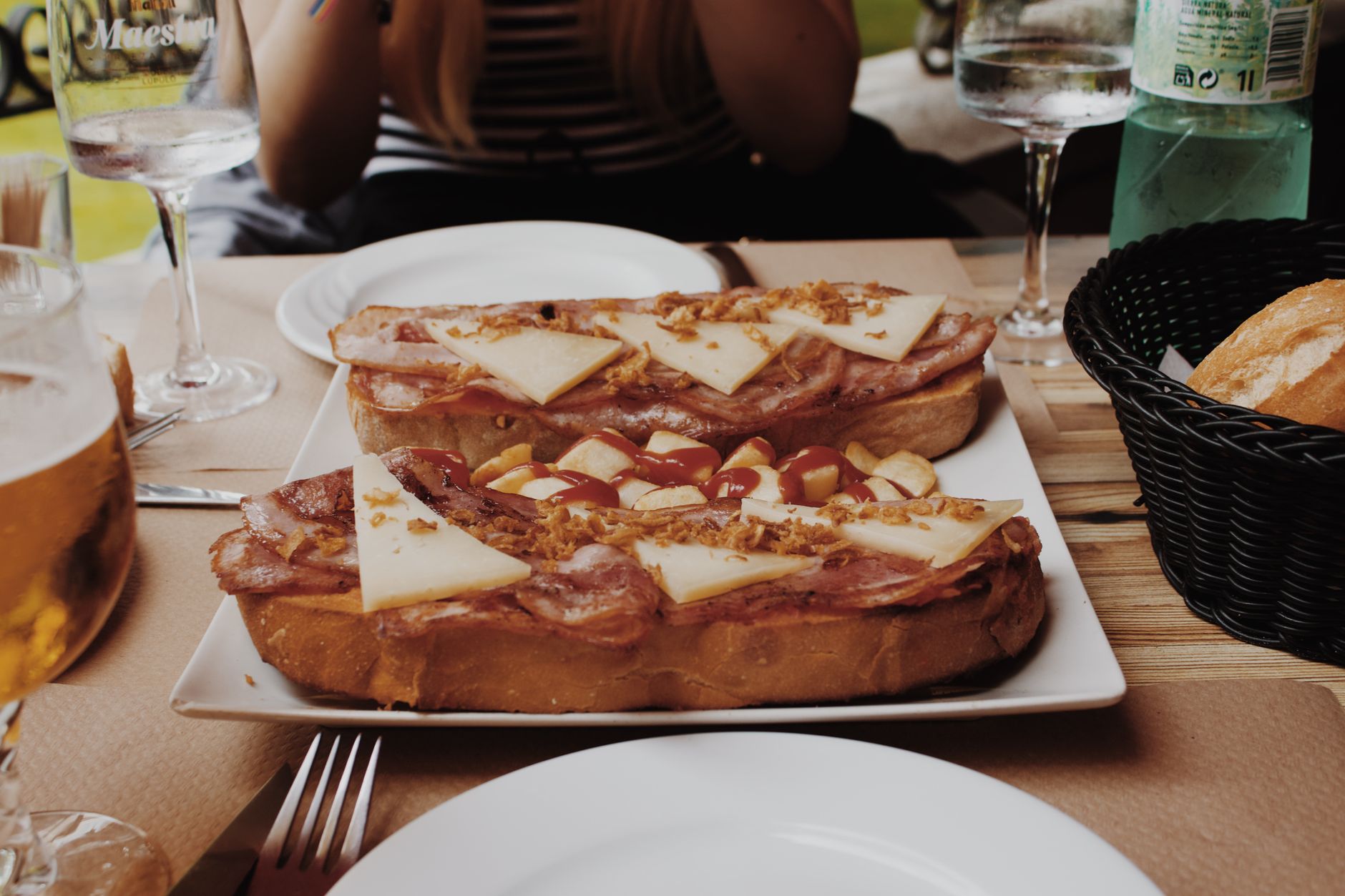
Order ànec amb peres (duck stewed with sweet pears) or peus de porc alongside Garrotxa white beans, finished with dense crema catalana under burnt sugar.
Local Spirits in Besalú Catalonia Spain
Drink a glass of herbal Ratafia liqueur, macerated with green walnuts, nutmeg, and regional herbs, brewed every autumn across Garrotxa cellars and homes.
Sacred Art in Besalú Catalonia Spain
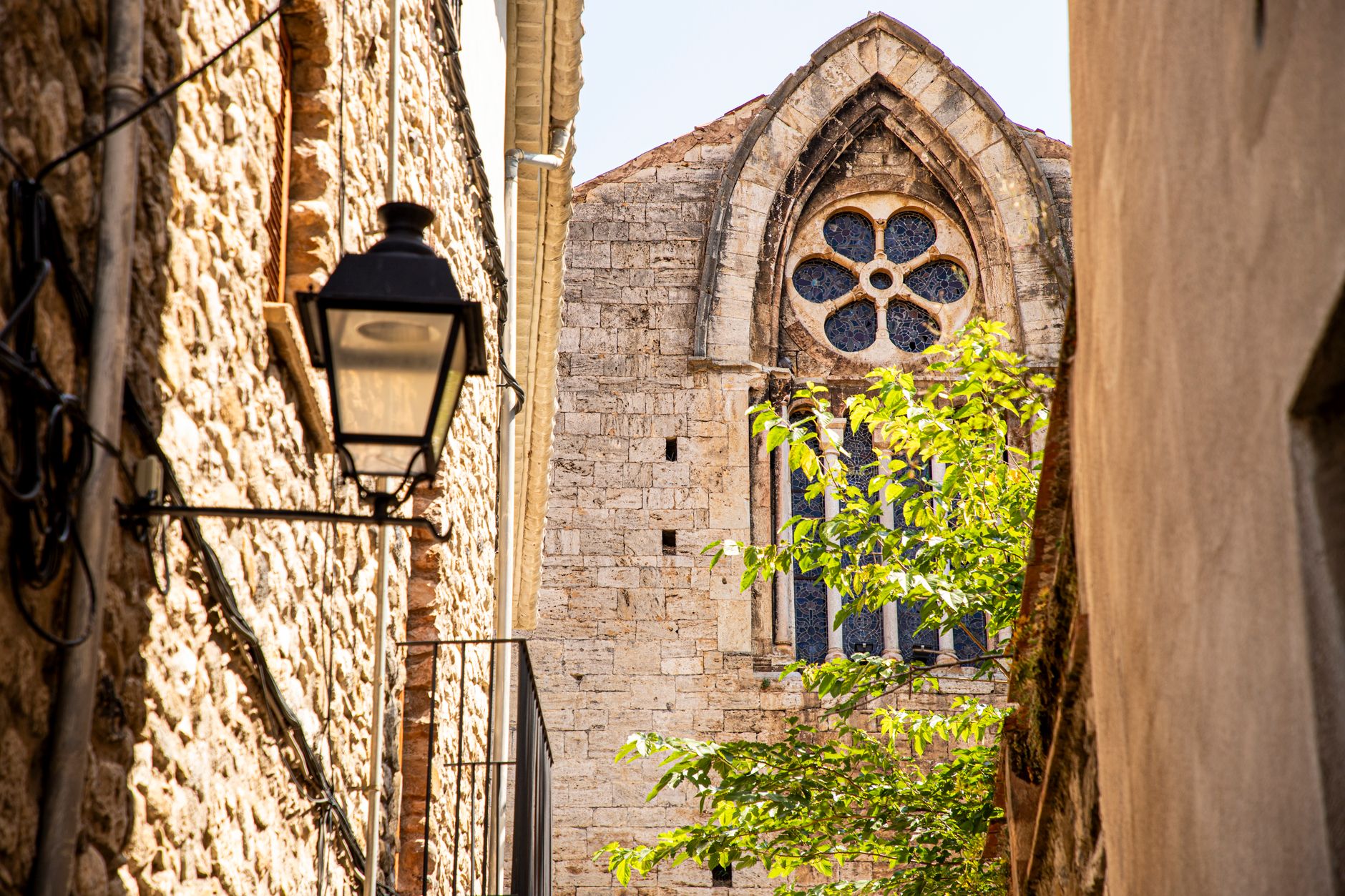
Step into the Benedictine monastery church of Sant Pere, consecrated in 1003, noted for its carved ambulatory capitals depicting lions and biblical figures.
Cured Meats in Besalú Catalonia Spain
Seek out village charcutiers for dried fuet, peppered llonganissa, and botifarra negra, dry-cured in the cool mountain drafts blowing off the Pyrenean foothills.
Artisan Crafts in Besalú Catalonia Spain
Browse workshops along Carrer Major where local woodworkers turn olive root into kitchen boards and wrought-iron smiths maintain medieval forging traditions.
River Walks in Besalú Catalonia Spain
Follow the dirt path skirting the Fluvià riverbed for unobstructed views of the bridge abutments and the wild fig trees growing out of ancient masonry.
Volcanic Landscapes in Besalú Catalonia Spain
Drive fifteen minutes west into the Garrotxa Volcanic Zone to walk through beech forests at Fageda d'en Jordà and hike the rim of Santa Margarida crater.
Regional Cheese in Besalú Catalonia Spain
Sample semi-hard Garrotxa goat cheese, coated in natural grey mould and aged in mountain cellars, served with crusty pa amb tomàquet and olive oil.
Village Day Trips in Besalú Catalonia Spain
Head twenty minutes up the road to Castellfollit de la Roca, perched on a basalt cliff, or the quiet stone hamlet of Santa Pau within the volcanic park.
Market Days in Besalú Catalonia Spain
Visit the Tuesday morning market at Plaça de la Llibertat for seasonal wild mushrooms, Empordà orchard apples, and wheels of farmhouse sheep cheese.