



Comporta sits on the northern edge of the Alentejo coast, roughly an hour and twenty minutes south of Lisbon by car via the A2 and Alcácer do Sal. The village is known for its sprawling Atlantic pine forests, flat green rice paddies, and stilt-built fishing harbours. Comporta is worth visiting if you want wild coastal sand, fresh grilled sea bass, and unhurried days along empty salt air roads. Look elsewhere if you want walkable historic monuments, budget hostels, or nightlife that runs past midnight.
Last updated 15 Sept 2026
Build a Comporta itinerary.
Choose up to 4 threads that pull you in. Your plan arrives organised around them.
The Bed
Where to stay in Comporta
Which part of town to book, and what each one costs you in walking, noise or quiet.
The Comparison
Comporta, or somewhere near it
The places you are realistically choosing between, and the honest case for each.
The Local Record
Where to read more about Comporta
The blogs, boards, guides and operators worth bookmarking.
What to do in Comporta Alentejo Portugal
Comporta is less a dense town and more a quiet collection of whitewashed hamlets, rice paddies, and pine woods strung along the Sado Estuary. Days here orbit the Atlantic tides, afternoon lunches of grilled fish, and slow bicycle rides past storks nesting atop telephone poles. It suits independent travellers who value open horizon, salt wind, and quiet evenings over packed resort promenades.
24 hours in Comporta Alentejo Portugal
Start with bica and warm pastéis at a village café before driving five minutes to Praia da Comporta. Order grilled sea bream for lunch near the dunes, then spend late afternoon wandering the wooden stilt docks at Carrasqueira as the tide retreats. Finish with local Castelão wine at a simple village tavern. Select 1 Day above to see it.
2 days in Comporta Alentejo Portugal
A second day lets you head south toward Praia do Carvalhal and Pego for morning surf and quiet dune paths. After a lunch of arroz de marisco, drive inland to the pine forests and sand tracks of Brejos da Carregueira, ending with a chilled glass of local white wine overlooking the flooded rice fields. Choose 2 Days to expand the plan.
3 days in Comporta Alentejo Portugal
With three days, take the 25-minute drive to Alcácer do Sal to climb the medieval castle walls and eat fried cuttlefish along the river promenade. Return through the Sado Nature Reserve to watch flamingos feeding in the shallow salt pans before a final sunset dinner in Possanco.
Comporta Alentejo Portugal itineraries by interest
Local Seafood in Comporta Alentejo Portugal
Order grilled robalo, ameijoas à Bulhão Pato, and cuttlefish choco frito hauled in by Sines boats and served simply with boiled potatoes and lemon.
Regional Wine in Comporta Alentejo Portugal
Sip crisp Antão Vaz and earthy Castelão reds produced along sandy soils at Herdade da Comporta, paired with sheep cheese from neighboring Azeitão.
Coastal Walks in Comporta Alentejo Portugal
Follow wooden boardwalks through pine woods across the high dunes at Praia do Carvalhal and Praia do Pego toward crashing Atlantic surf.
Maritime Heritage in Comporta Alentejo Portugal
Visit the Porto Palafítico da Carrasqueira to see centuries-old wood stilts driven into the Sado Estuary mudflats by local oyster fishers.
Birdwatching in Comporta Alentejo Portugal
Bring binoculars to the Sado Estuary Nature Reserve mudbanks to spot migrating flamingos, white storks nesting on poles, and grey herons.
Rice Farming in Comporta Alentejo Portugal
Explore the Museu do Arroz housed in a 1952 husking mill, tracing how Carolino grain shaped the village irrigation canals and seasonal menus.
Horse Riding in Comporta Alentejo Portugal
Mount Lusitano horses for guided trails led across rice dykes, umbrella pine groves, and empty stretches of the ocean shoreline.
Market Produce in Comporta Alentejo Portugal
Pick up sun-ripened tomatoes, regional Alentejo bread, honey, and cured chouriço from village grocers along the Rua do Secador.
Beaches in Comporta Alentejo Portugal
Stake a spot on the wide sands of Praia da Comporta, where ocean winds keep summer temperatures manageable and surf breaks roll in clean.
Day Trips in Comporta Alentejo Portugal
Drive twenty minutes east to Alcácer do Sal to walk moorish ramparts above the Sado river and eat river shrimp in quiet riverbank tascas.
Surfing in Comporta Alentejo Portugal
Rent boards or take lessons on the uncrowded beach breaks of Praia da Torre and Praia da Galé, where Atlantic swells hit outer sandbars.
Architecture in Comporta Alentejo Portugal
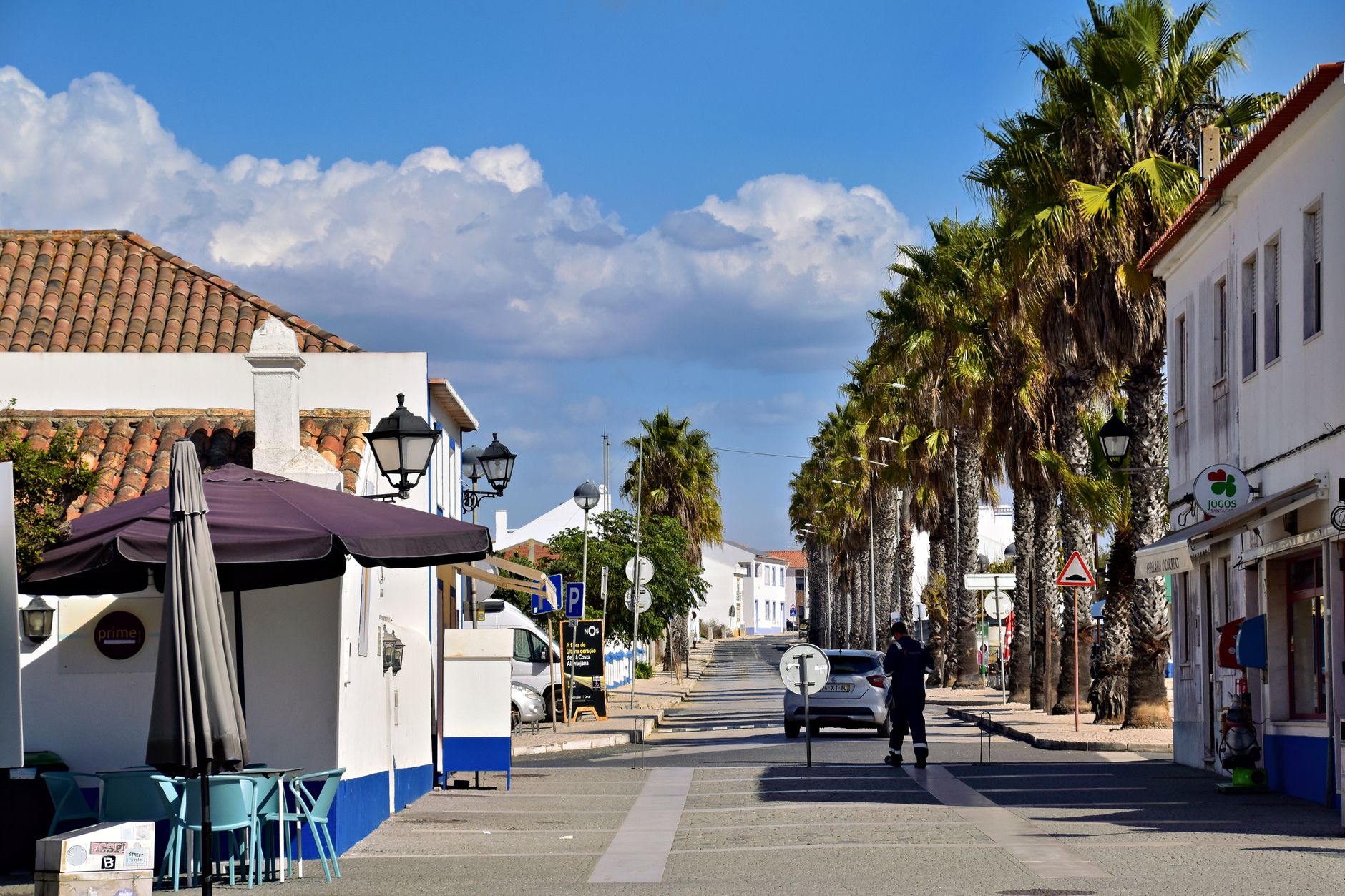
Note the traditional choupanas, thatched fishermen huts with white plaster and cobalt blue borders adapted for quiet coastal living.