

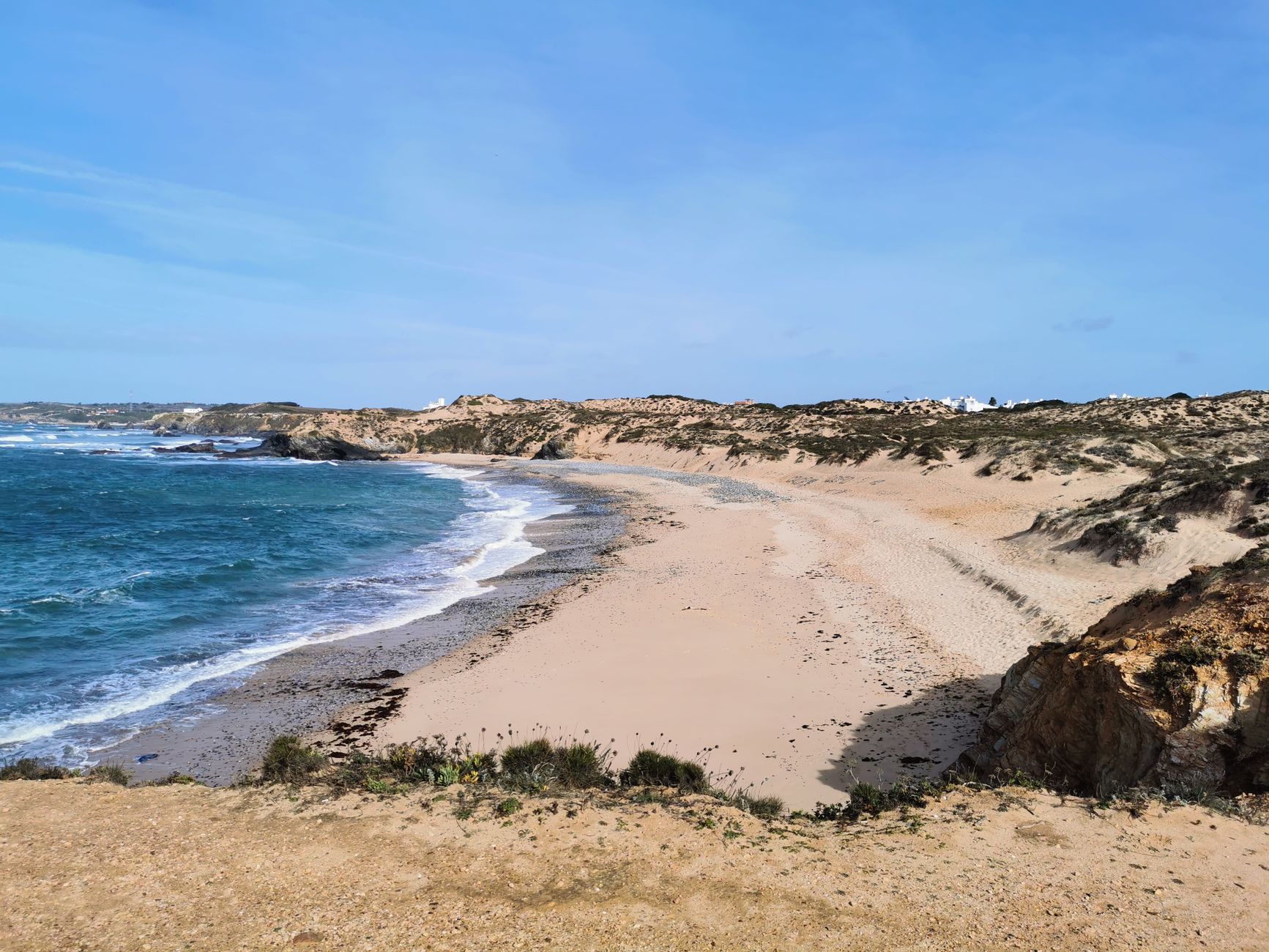
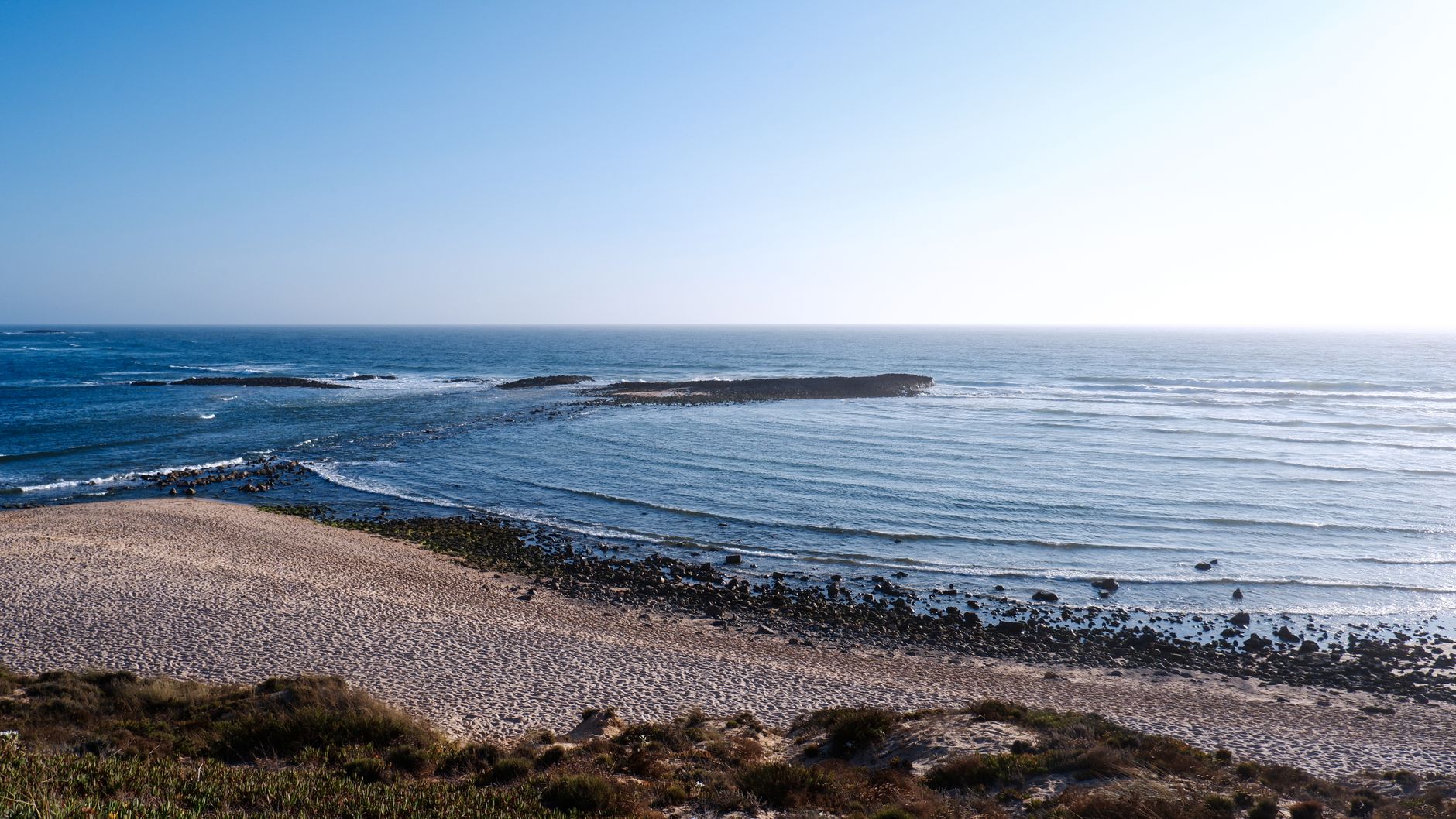
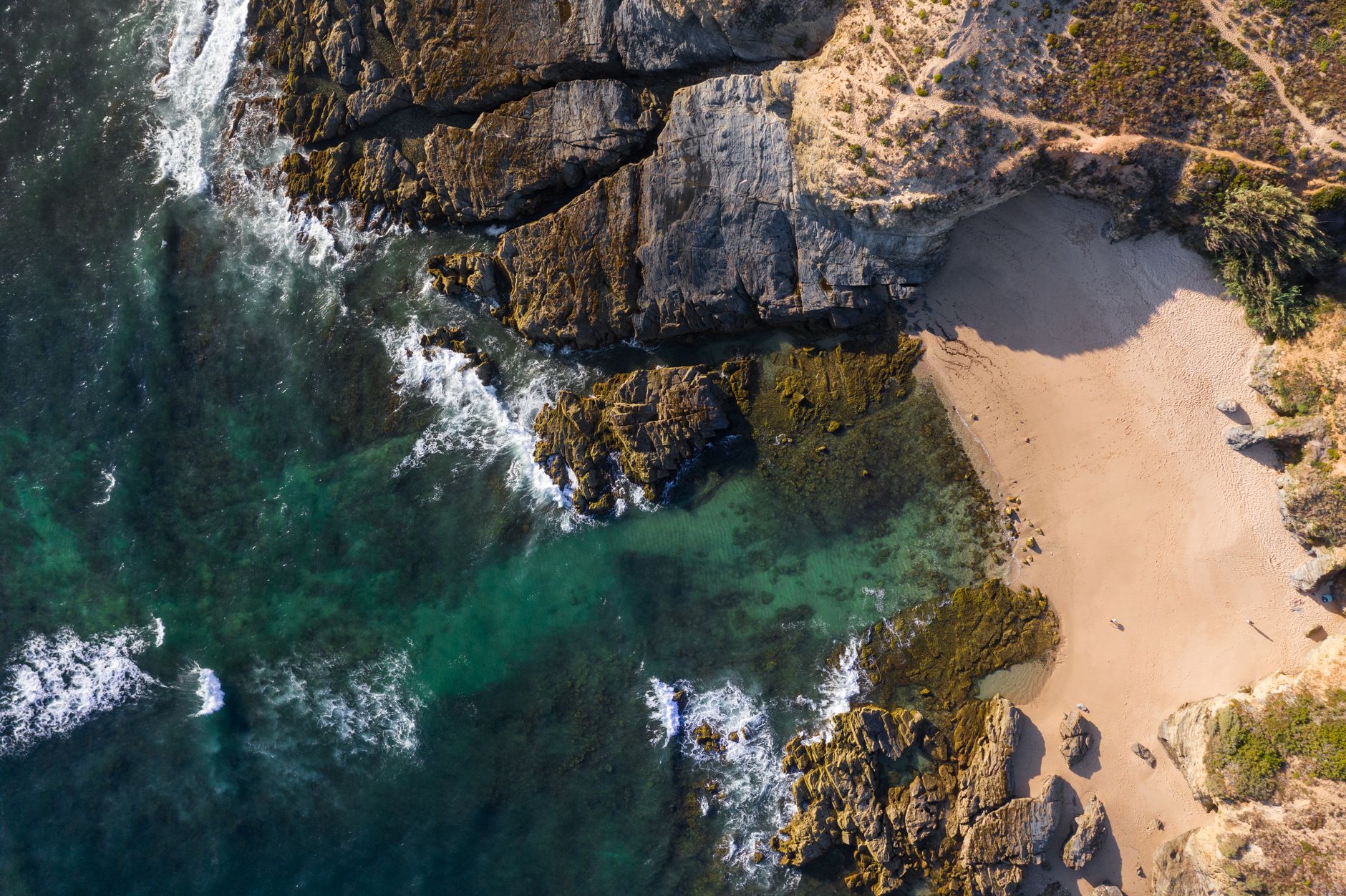
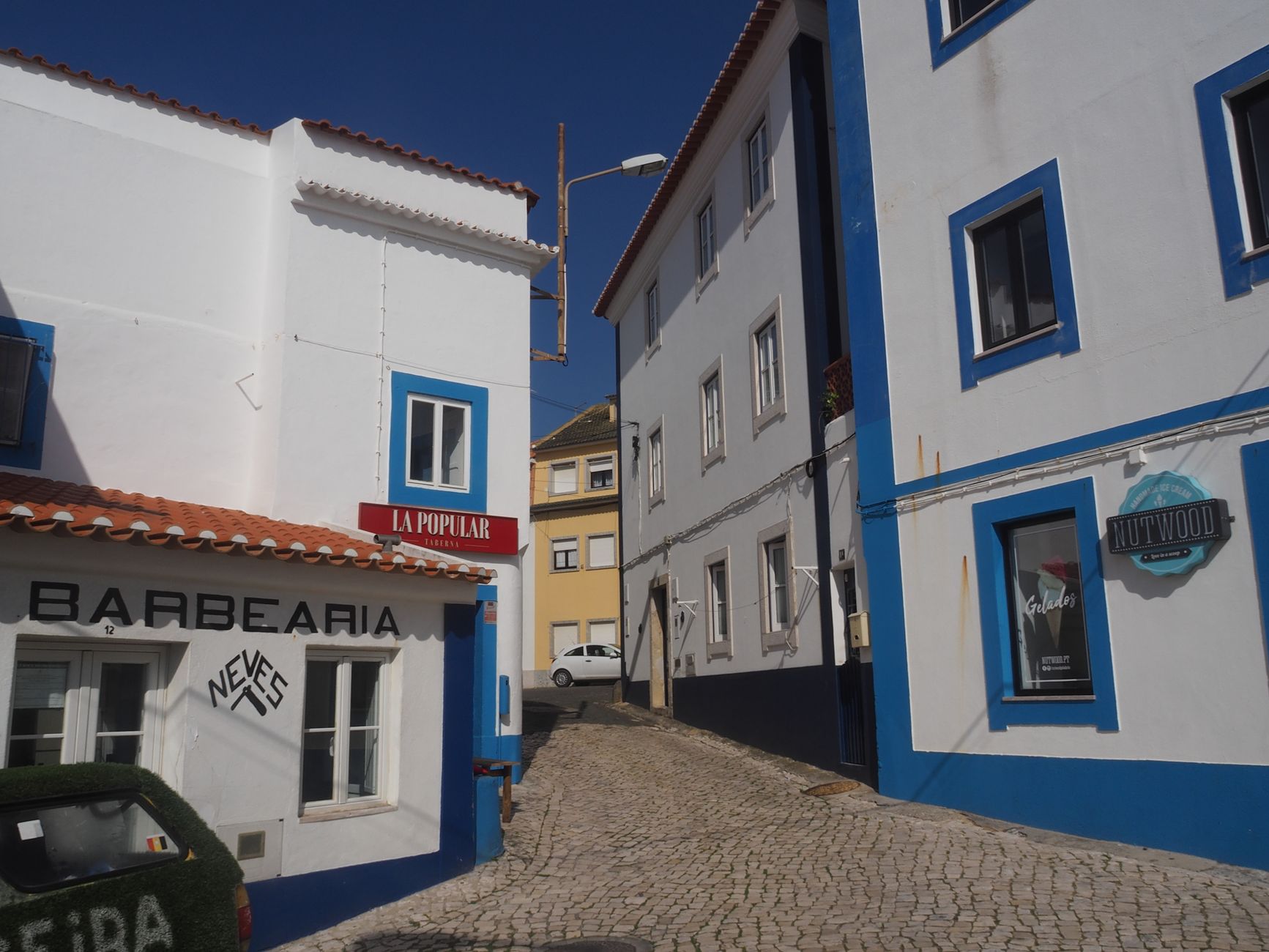
Sitting two hours south of Lisbon along the Alentejo coast, Vila Nova de Milfontes anchors where the River Mira empties into the Atlantic. It is known for rugged headlands, quiet estuary waters, and charcoal-grilled coastal fish. Vila Nova de Milfontes is worth visiting if you want to hike Atlantic cliff paths by morning and eat fresh sea bass beside tidal shallows at dusk. Look elsewhere if you expect direct rail connections, large resort hotels, or pulsing late-night club scenes.
Last updated 15 Sept 2026
Build a Vila Nova de Milfontes itinerary.
Choose up to 4 threads that pull you in. Your plan arrives organised around them.
We'll craft a 1-lens plan for Vila Nova de Milfontes, one collapsible strand per lens.
Local Seafood
Order grilled robalo, percebes scraped off headland rocks, and rich amêijoas à Bulhão Pato simmered in garlic, olive oil, and fresh coriander.
Local Seafood
Order grilled robalo, percebes scraped off headland rocks, and rich amêijoas à Bulhão Pato simmered in garlic, olive oil, and fresh coriander.
Inspecting the Morning Catch
Mercado Municipal de Vila Nova de Milfontes
Walk the central hall between eight and ten. Bring small euro notes, watch fishmongers scale sea bass with practiced speed, and take a strong bica at the corner stand.
Editor TipMilfontes relies on the wild Atlantic shelf off Cabo Sardão. The sargo and robalo landed here feed on crustaceans along jagged schist reefs, which gives their flesh a clean, sweet firmness. Check for bright, unclouded eyes on the red mullet. If the gills are pale brick rather than deep ruby, move along.
Riverbank Clams and Goose Barnacles
Restaurante A Fateixa
Secure an outside table overlooking the Mira estuary at noon sharp. Order a platter of percebes and local clams sautéed in olive oil, garlic and fresh coriander.
Editor TipHarvesters risk their lives prying goose barnacles from wave-battered sea stacks at low tide. In coastal Alentejo, boiling them briefly in sea water is treated as an essential rite of passage. Pinch the leathery skin and twist downward away from your collar to avoid spraying brine across the table.
Goose Barnacles by the Atlantic
Restaurante Choupana
Walk onto the deck above Praia do Farol. Order percebes by weight and grilled sardines if the coals are hot. Expect to spend around twenty-five euros per person; cash is preferred.
Editor TipPercebes are scraped off wave-battered rocks along the Costa Vicentina at great personal peril. They taste fiercely of pure ocean surge, requiring nothing more than fingers and a paper napkin. Pinch the leathery tube below the claw and twist gently, unless you fancy wearing sea brine down your shirt.
Seafood Cataplana and Local White
Tasca do Celso
Book several days ahead for a table near the open grill. Order the fish and shellfish cataplana or the grilled robalo, paired with an Antão Vaz white from Vidigueira. Around forty euros.
Editor TipThe hinged copper cataplana steams clams, monkfish, and coriander together, locking in the Atlantic humidity. Celso's crew treats every fish with the solemnity usually reserved for state funerals. Do not arrive before seven-thirty; the grill is barely awake, and you will just look overly eager in an empty room.
Tracking Cliffside Fishermen
Cabo Sardão
Follow the wooden boardwalk north of the 1912 lighthouse. Watch local anglers cast lines from 50-metre sea cliffs into foaming Atlantic gullies. Free access, 90 minutes.
Editor TipAlentejo cliff fishermen and percebeiros risk their lives scaling these sheer schist walls to pry goose barnacles and sea bass from the surge, an artisanal practice unchanged for centuries. Wear rubber-soled shoes and keep back from the edge. The wind gusts suddenly, and there are no guardrails on the outer rocks.
Cracking Fresh Goose Barnacles
Restaurante A Azenha do Mar
Arrive right at noon to secure a table overlooking the natural ramp. Order percebes by weight and a cold imperial of Sagres before the fishing crews pack the room. Budget 25 euros.
Editor TipPercebes feed exclusively in violent tidal surf, giving their meat a concentrated ocean sweetness that cannot be farmed. Azenha do Mar's fleet unloads directly beneath the dining terrace. Pinch the leathery sleeve, twist gently, and pull the claw to avoid squirting seawater across your shirt.
Tasting Cliff-Harvested Percebes
Restaurante O Sacas
Drive twenty minutes south to the fishing inlet. Order a plate of boiled percebes by weight alongside chilled Antão Vaz white; budget forty euros and spend ninety minutes here.
Editor TipPercebeiros risk their lives scaling wet, surging Atlantic rock faces to harvest these goose barnacles, yielding a concentrated burst of pure, salty ocean with every pinch and twist. Pinch the leathery sleeve firmly and twist away from you, unless you fancy wearing sea brine on your shirt.
Alentejo Coastal Skate and Ray
Restaurante Lamelas
Head north to Porto Covo's cobbles. Book an indoor table ahead, order the ray in coriander broth with bread, and allow two relaxed hours for dinner at around forty-five euros per person.
Editor TipChef Ana Moura reimagines deep-rooted Alentejo littoral recipes, pairing daily catch from Sines fishers with traditional açorda-style herb broths that have sustained coastal families for generations. Park at the village edge and walk in; the central square gets tight around sunset.
Wildcards
Worth your time whatever brought you here.
Wildcards
Worth your time whatever brought you here.
Artisanal Dockside Net Mending
Portinho do Canal
Stroll down the paved slipway to the working harbour. Watch skippers sort squid pots and untangle lines before the afternoon tide; free access, budget an hour.
Editor TipTucked inside the river mouth, this natural cove has sheltered wooden artisanal boats since the nineteenth century, avoiding the brutal Atlantic surf just past the bar. Wear rubber-soled shoes for the damp stones. Step around laid nets so you do not snag the monofilament gear.
Note from the Editor
“Fishermen dictate the morning tempo here, not tour operators. Arrive at the municipal fish counters before nine if you want to inspect the silver sea bream before local cooks claim them.”
Routes Through Vila Nova de Milfontes
Trips readers have saved that pass through here — the well-worn ones first.
- 01LisboaSesimbraVila Nova de MilfontesLagosTaviraSanlúcar de BarramedaJerez de la FronteraEstepona
- 02Vila Nova de MilfontesOdeceixeLagos
The Bed
Where to stay in Vila Nova de Milfontes
Which part of town to book, and what each one costs you in walking, noise or quiet.
The Comparison
Vila Nova de Milfontes, or somewhere near it
The places you are realistically choosing between, and the honest case for each.
The Local Record
Where to read more about Vila Nova de Milfontes
The blogs, boards, guides and operators worth bookmarking.
What to do in Vila Nova de Milfontes Alentejo Portugal
Life here arranges itself between the river and the sea. Mornings start with bica at a bakery on Rua Custódio Brás Pacheco, afternoons drift between the sheltered river beaches and breezy headlands, and evenings belong to the fish grills. It suits independent walkers, slow eaters, and travellers who appreciate salty air, whitewashed houses, and honest cooking without polished pretensions.
24 hours in Vila Nova de Milfontes Alentejo Portugal
Start early with coffee and a pastel de nata, then follow the wooden boardwalks past Praia do Farol. Spend midday on the quiet sands of Praia da Franquia before taking an evening table near Forte de São Clemente for whole robalo grilled over hot charcoal, finishing with a slow digestif of medronho. Select 1 Day above to see it.
2 days in Vila Nova de Milfontes Alentejo Portugal
Dedicate your second morning to hiking the Fishermen's Trail section of the Rota Vicentina south toward Almograve, crossing dunes and dramatic shale cliffs. Head inland for lunch to eat carne de porco à alentejana at a rustic tavern, then catch sunset over the open Atlantic surf at Praia do Malhão. Choose 2 Days to expand the plan.
3 days in Vila Nova de Milfontes Alentejo Portugal
A third day allows a relaxed drive south to Cabo Sardão, where storks nest directly on the sea cliffs. Continue to Zambujeira do Mar for a lunch of percebes and cold white wine, or rent a kayak to paddle upstream into the peaceful nature reserve of the Mira valley before dinner back in the village.
Vila Nova de Milfontes Alentejo Portugal itineraries by interest
Local Seafood in Vila Nova de Milfontes Alentejo Portugal
Order grilled robalo, percebes scraped off headland rocks, and rich amêijoas à Bulhão Pato simmered in garlic, olive oil, and fresh coriander.
Coastal Walks in Vila Nova de Milfontes Alentejo Portugal
Tackle sections of the Rota Vicentina along the cliffs from Praia do Farol south to Almograve, navigating sandy tracks and Atlantic wind.
River Activities in Vila Nova de Milfontes Alentejo Portugal
Rent a kayak or stand-up paddleboard on the calm Mira estuary, paddling inland from Praia da Franquia past reed beds and wading herons.
Beaches in Vila Nova de Milfontes Alentejo Portugal
Choose between sheltered river bathing at Praia da Franquia and the open Atlantic surf breaks at Praia do Malhão just north of the village.
Regional Wine in Vila Nova de Milfontes Alentejo Portugal
Sample crisp whites from the Alentejo coast made with Antão Vaz and Arinto grapes, poured chilled alongside salted lupin beans at local tascas.
Village History in Vila Nova de Milfontes Alentejo Portugal
Visit the sixteenth-century Forte de São Clemente, built on the waterfront in 1599 to defend the Mira rivermouth from Barbary pirate raids.
Markets & Produce in Vila Nova de Milfontes Alentejo Portugal
Browse the municipal market on Rua Dom Luís de Castro e Almeida for regional honey, fresh sheep cheese, figs, and line-caught sea bream.
Day Trips in Vila Nova de Milfontes Alentejo Portugal
Drive fifteen minutes north to Porto Covo for cobbled lanes, or head twenty minutes south to the dramatic lighthouse at Cabo Sardão.
Baked Goods in Vila Nova de Milfontes Alentejo Portugal
Stop at local pastelarias for morning galão, warm pastéis de nata, and traditional Alentejo honey-and-cinnamon cakes known as popias.
Traditional Dining in Vila Nova de Milfontes Alentejo Portugal
Settle into wooden-chaired adegas for hearty carne de porco à alentejana, pairing tender pork with clams, coriander, and fried potatoes.
Birdwatching in Vila Nova de Milfontes Alentejo Portugal
Scan the Mira estuary mudflats and salt marshes for ospreys, white storks nesting on sea cliffs, and migrating waders during autumn tides.
Sunset Views in Vila Nova de Milfontes Alentejo Portugal
Walk out to the lighthouse at Praia do Farol with a cold Sagres beer to watch the Atlantic swell break against the southern river bar.