

The rush of the Sella River hits you before the bus engine cuts out. High limestone peaks hem in a compact grid where waiters pour natural cider from shoulder height, splashing glasses with brisk confidence. Cangas served as the eighth-century seat of the Asturian kingdom, though today it runs on smoky Gamoneu cheese, thick mountain stews, and boots laced for the high crags.
Last updated 26 Aug 2026
Build a Cangas de Onís itinerary.
Choose up to 4 threads that pull you in. Your plan arrives organised around them.
The Bed
Where to stay in Cangas de Onís
Which part of town to book, and what each one costs you in walking, noise or quiet.
Places to stay
Central, well-rated and easy to find again. Distances are from the middle of town.
These links go to Booking.com and earn us a commission. They cost you nothing extra.
The Comparison
Cangas de Onís, or somewhere near it
The places you are realistically choosing between, and the honest case for each.
The Local Record
Where to read more about Cangas de Onís
The blogs, boards, guides and operators worth bookmarking.
What to do in Cangas de Onís Asturias Spain
Life here is structured around the mountains and the table. Mornings belong to boots and rain shells, afternoons to slow lunches of fabada and roasted kid goat, and evenings to sidra on Calle San Pelayo. It is an unpretentious town built for walkers, hearty eaters, and anyone who prefers cool green valleys to scorched southern plazas.
24 hours in Cangas de Onís Asturias Spain
Start under the Roman Bridge before catching the early morning shuttle to the high glacial Lakes of Covadonga. Return to town for a late, cider-fuelled lunch of cachopo, browse the cheese shops along Avenida de Covadonga, and wind down on a quiet bench by the Sella River. Select 1 Day above to see it.
2 days in Cangas de Onís Asturias Spain
Dedicate your second day to the dramatic limestone chasm of the Desfiladero de los Beyos. Stop in tiny riverside hamlets for rustic mountain fare, then return to Cangas to sample dark Gamonéu cheese paired with local sourdough at an old tavern off the main plaza. Choose 2 Days to expand the plan.
3 days in Cangas de Onís Asturias Spain
With three days, head downriver to the coast at Ribadesella for line-caught hake and Atlantic air, or hike the dramatic cliff path of the Cares Gorge near Poncebos. You will have time to linger over coffee without fretting about bus schedules or mountain mist.
Cangas de Onís Asturias Spain itineraries by interest
Local Cheese in Cangas de Onís Asturias Spain
Track down raw-milk Queso Gamonéu del Puerto and blue Cabrales cured in limestone caves, sold directly by mongers around Plaza del Mercado.
Cider Culture in Cangas de Onís Asturias Spain
Learn the proper sideways stance at local sidrerías on Calle San Pelayo, where tart Asturian cider is poured from overhead into thin tumblers.
Mountain Hiking in Cangas de Onís Asturias Spain
Tackle the high limestone paths around Lakes Enol and Ercina, or follow the Cares Gorge trail carved directly into the sheer canyon wall.
Sacred Architecture in Cangas de Onís Asturias Spain
Visit the neo-Romanesque basilica and holy cave sanctuary at Covadonga, the eighth-century cradle of Christian resistance against Moorish rule.
Markets & Produce in Cangas de Onís Asturias Spain
Arrive early on Sunday morning for the traditional weekly market, loaded with cured chorizo, dried mountain beans, butter, and hazelnut loaves.
Hearty Stews in Cangas de Onís Asturias Spain
Order a clay dish of fabada asturiana, slow-simmered with white faba beans, blood sausage, pancetta, and local smoked paprika.
River Running in Cangas de Onís Asturias Spain
Paddle a rented canoe down the clear Sella River toward Ribadesella, a tranquil drift punctuated by small rapids and forested gravel bars.
Historic Bridges in Cangas de Onís Asturias Spain
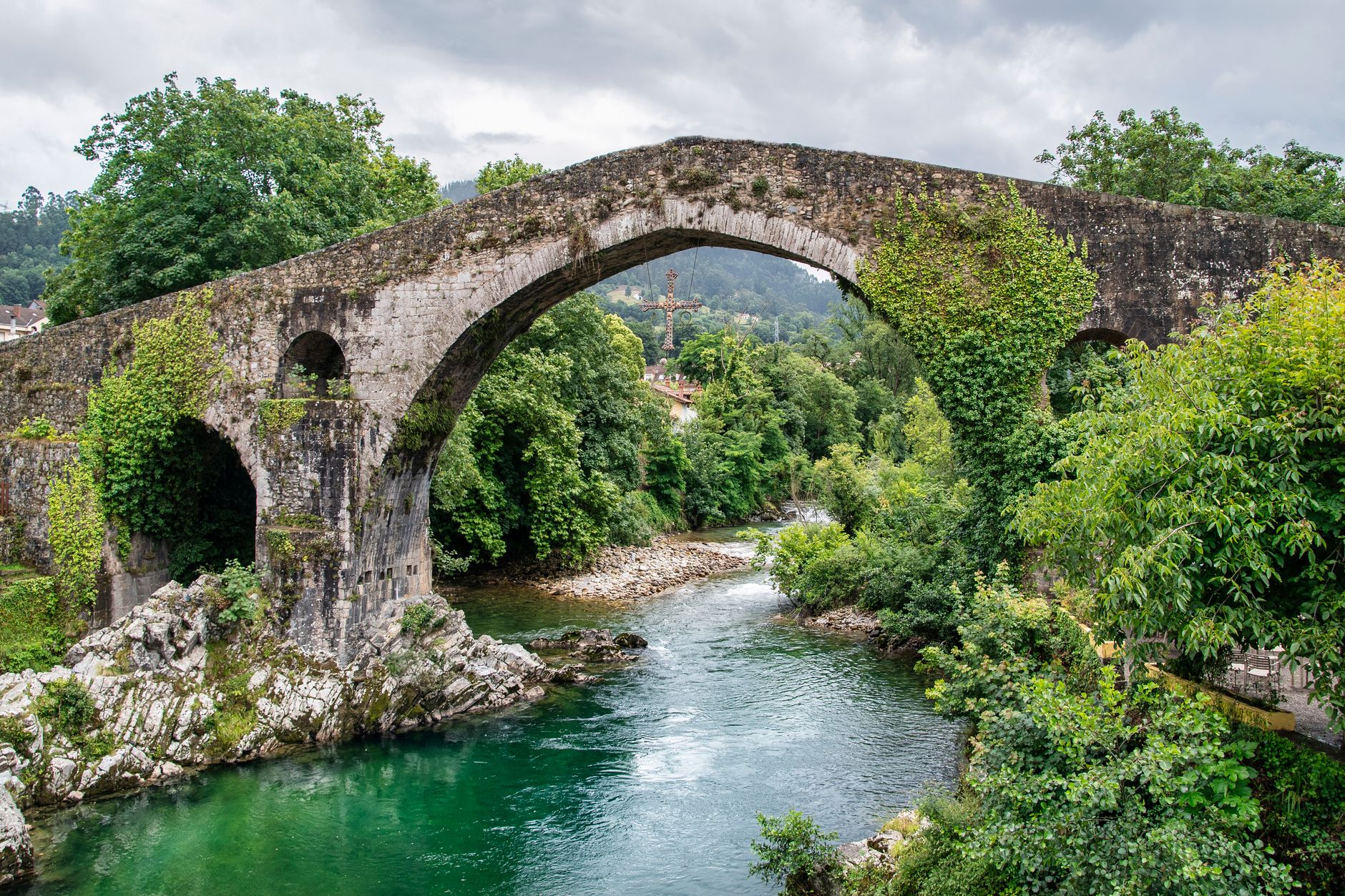
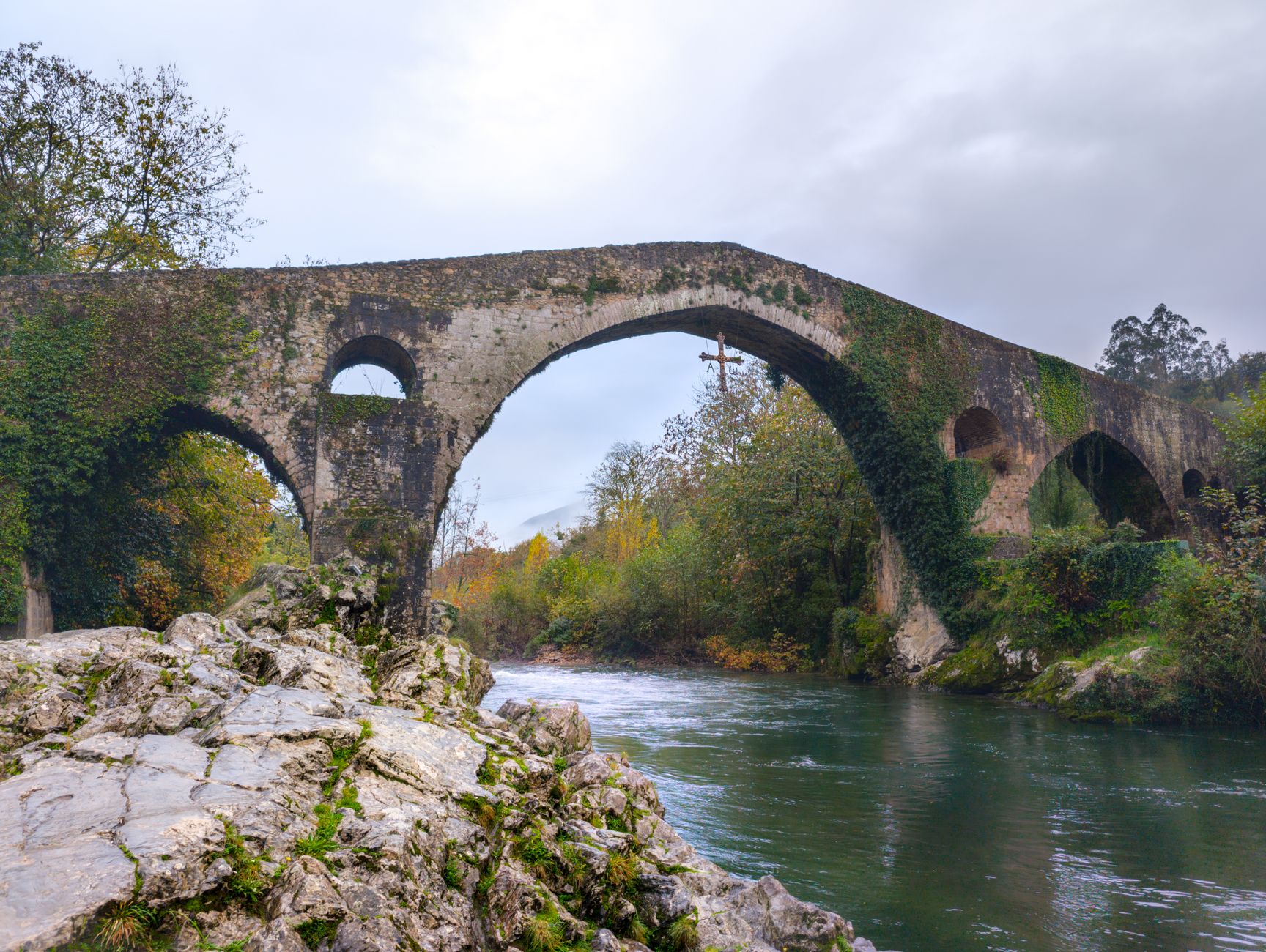
Cross the fourteenth-century humpbacked bridge over the Sella, where the replica Victory Cross hangs suspended above the rushing mountain water.
Prehistoric Caves in Cangas de Onís Asturias Spain
Book ahead for Cueva del Buxu, just outside town, to examine Solutrean horse and deer engravings sketched into the dark rock faces.
Valley Drives in Cangas de Onís Asturias Spain
Drive the steep switchbacks of the Beyos Gorge, an astonishing fissure cut by the Sella through vertical walls of pale mountain stone.
Bakery Traditions in Cangas de Onís Asturias Spain
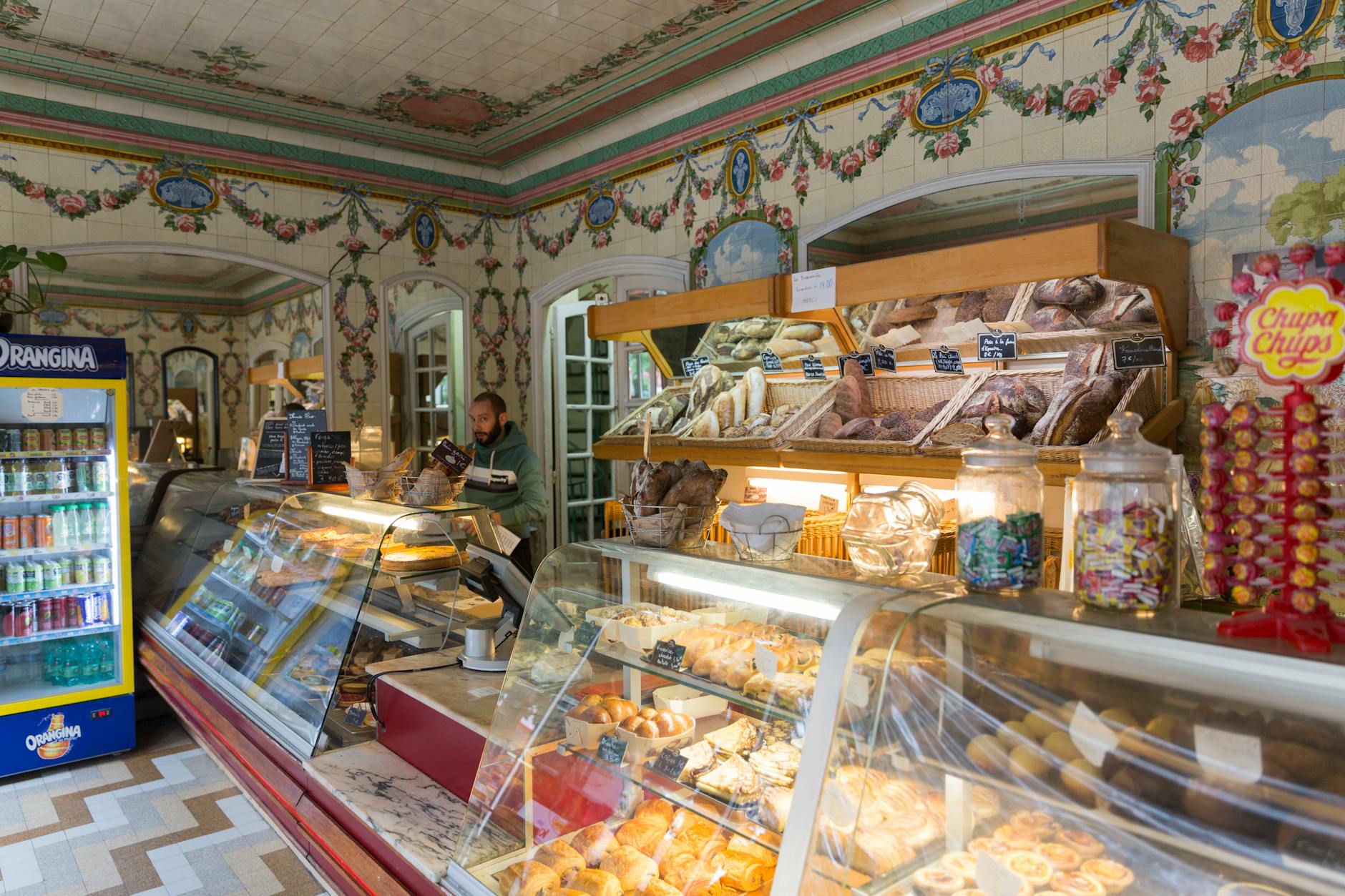
Sample carbayones and frixuelos fried thin like crepes, dusted with sugar and best eaten warm with strong coffee before morning departures.
Coastal Day Trips in Cangas de Onís Asturias Spain
Ride twenty minutes north to Ribadesella for grilled turbot, salty Atlantic breezes, and Paleolithic paintings inside Tito Bustillo cave.