

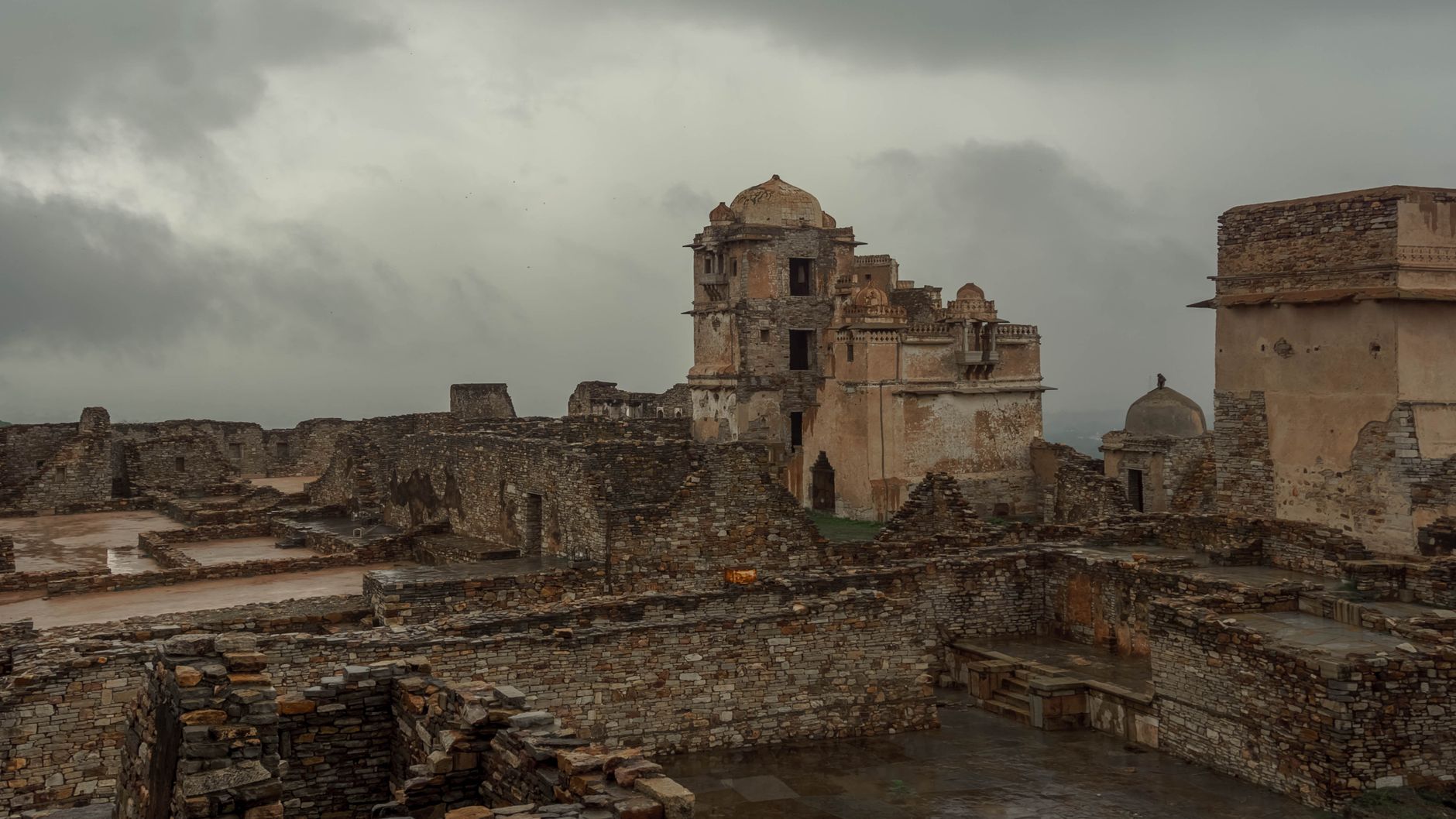


Chittorgarh sits two hours northeast of Udaipur by train or car, anchored by the massive seventh-century fortress that dominates the rocky ridge above the modern town. It is known for its sheer defensive ramparts, intricately carved victory towers, and deep water reservoirs carved directly into bedrock. Chittorgarh is worth visiting if you want to explore India's largest fort complex on foot and examine medieval Rajput military architecture. Look elsewhere if you want curated nightlife, luxury resort strips, or a walkable cafe scene.
Last updated 23 Nov 2026
Build a Chittorgarh itinerary.
Choose up to 4 threads that pull you in. Your plan arrives organised around them.
The Bed
Where to stay in Chittorgarh
Which part of town to book, and what each one costs you in walking, noise or quiet.
The Comparison
Chittorgarh, or somewhere near it
The places you are realistically choosing between, and the honest case for each.
The Local Record
Where to read more about Chittorgarh
The blogs, boards, guides and operators worth bookmarking.
What to do in Chittorgarh Rajasthan India
The modern town sits on the plains along the Gambhiri River, but your day revolves almost entirely around the plateau above. The fort is vast enough that you either hire an auto-rickshaw or bring strong walking shoes to cover its seven-kilometer ridge. It suits travellers who appreciate severe military architecture, layered Mewari history, and hearty local cooking over polished tourism infrastructure.
24 hours in Chittorgarh Rajasthan India
Pass through Padan Pol before the morning heat to inspect Kumbha Palace and Vijay Stambha. Break for dal baati churma at a roadside dhaba near Fort Road, then spend late afternoon around the quiet waters of Padmini Palace and Gaumukh Reservoir before watching dusk settle over the plains from the western ramparts. Select 1 Day above to see it.
2 days in Chittorgarh Rajasthan India
Spend your morning in Sadar Bazaar browsing leather goods and brassware, then drive thirty minutes east to Bassi to meet traditional woodcarvers making painted kavad shrines. Return for an evening meal of slow-cooked Mewari laal maas and fresh bajra roti at a family-run dining hall in the lower town. Choose 2 Days to expand the plan.
3 days in Chittorgarh Rajasthan India
Take a morning drive northeast to Menal gorge to explore its 11th-century Shiva temples, then continue to Akola village to watch dabu mud-resist textile printing in action. Wrap up the day with a quiet detour to the ancient Buddhist and Hindu excavations at Nagari along the Berach River.
Chittorgarh Rajasthan India itineraries by interest
Fortified Architecture in Chittorgarh Rajasthan India
Climb through seven stone gates including Ram Pol to reach the massive 700-acre fort walls, barracks, and the 15th-century Kumbha Palace.
Sacred Architecture in Chittorgarh Rajasthan India
Examine the 8th-century Kalika Mata Temple and the carved stone pavilions of the Meerabai Temple dedicated to the mystic poet-saint.
Monumental Towers in Chittorgarh Rajasthan India
Walk the interior stairs of the nine-story Vijay Stambha and the Jain Kirti Stambha, both covered in detailed Hindu and Jain iconography.
Water Engineering in Chittorgarh Rajasthan India
Visit the Gaumukh Reservoir, where a perennial natural spring emerges from a carved cow head into a deep stone tank along the cliff edge.
Regional Cuisine in Chittorgarh Rajasthan India
Order fiery Mewari laal maas, thick bajra rotis with garlic chutney, and fresh dal baati churma cooked over dried cow-dung embers.
Textile Traditions in Chittorgarh Rajasthan India
Watch local block-printers in Bassi and Akola use natural dabu mud-resist pastes and vegetable indigo dyes on handwoven cotton fabric.
Street Food in Chittorgarh Rajasthan India
Stop in the lower town near Fort Road for crisp pyaz kachoris, hot mirchi vadas fried in mustard oil, and clay cups of cardamom milk tea.
Woodcraft Traditions in Chittorgarh Rajasthan India
Travel to nearby Bassi village to see artisans carve traditional wooden kavad portable shrines and painted marionettes using seasoned mango wood.
Ancient Ruins in Chittorgarh Rajasthan India
Explore Nagari, an archaeological site ten miles away with 3rd-century BC punch-marked coins, stupas, and excavated Shiva temple foundations.
Local Markets in Chittorgarh Rajasthan India
Wander the Sadar Bazaar and Rana Sanga Market for locally pressed sesame oil, camel-leather footwear, hand-beaten brassware, and regional chilies.
Wildlife Reserves in Chittorgarh Rajasthan India
Drive to Bassi Wildlife Sanctuary on the Vindhyachal slopes to spot chinkara, panthers, wild boars, and migratory waterbirds around the reservoir.
Day Trips in Chittorgarh Rajasthan India
Head an hour north to Menal to view the 11th-century Mahanaleshvara Temple complex flanking a dramatic gorge and seasonal monsoon waterfall.