

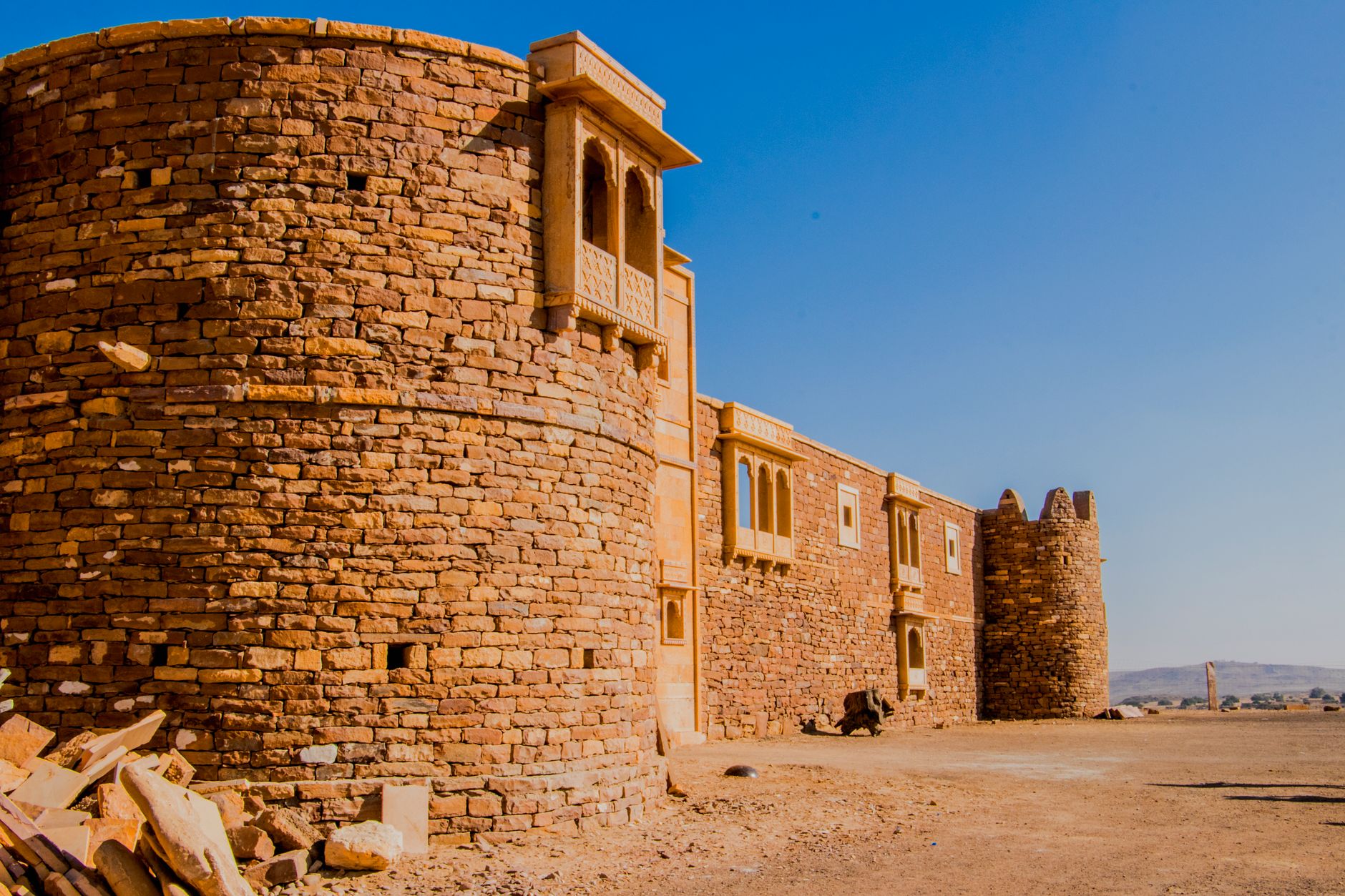
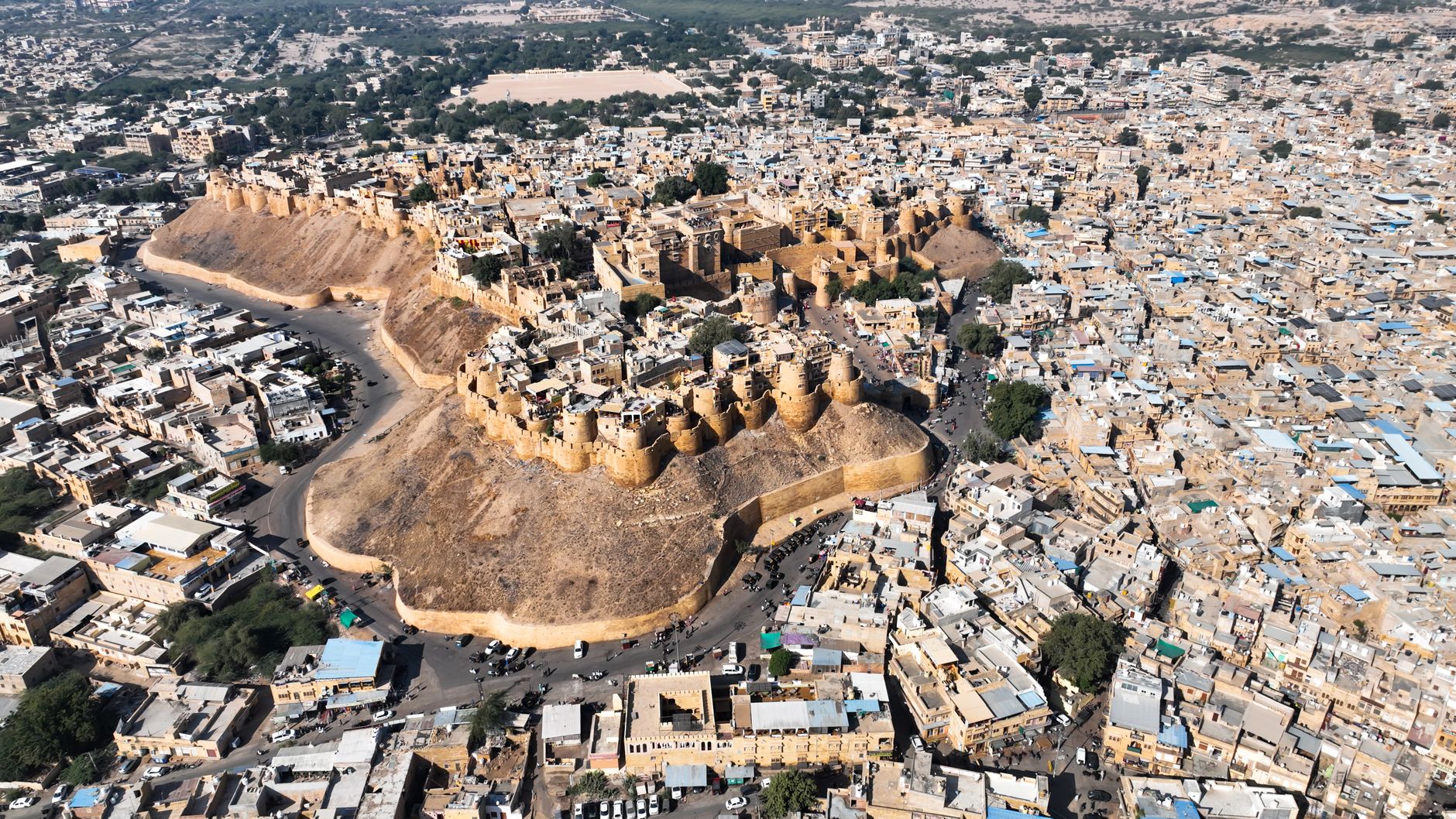
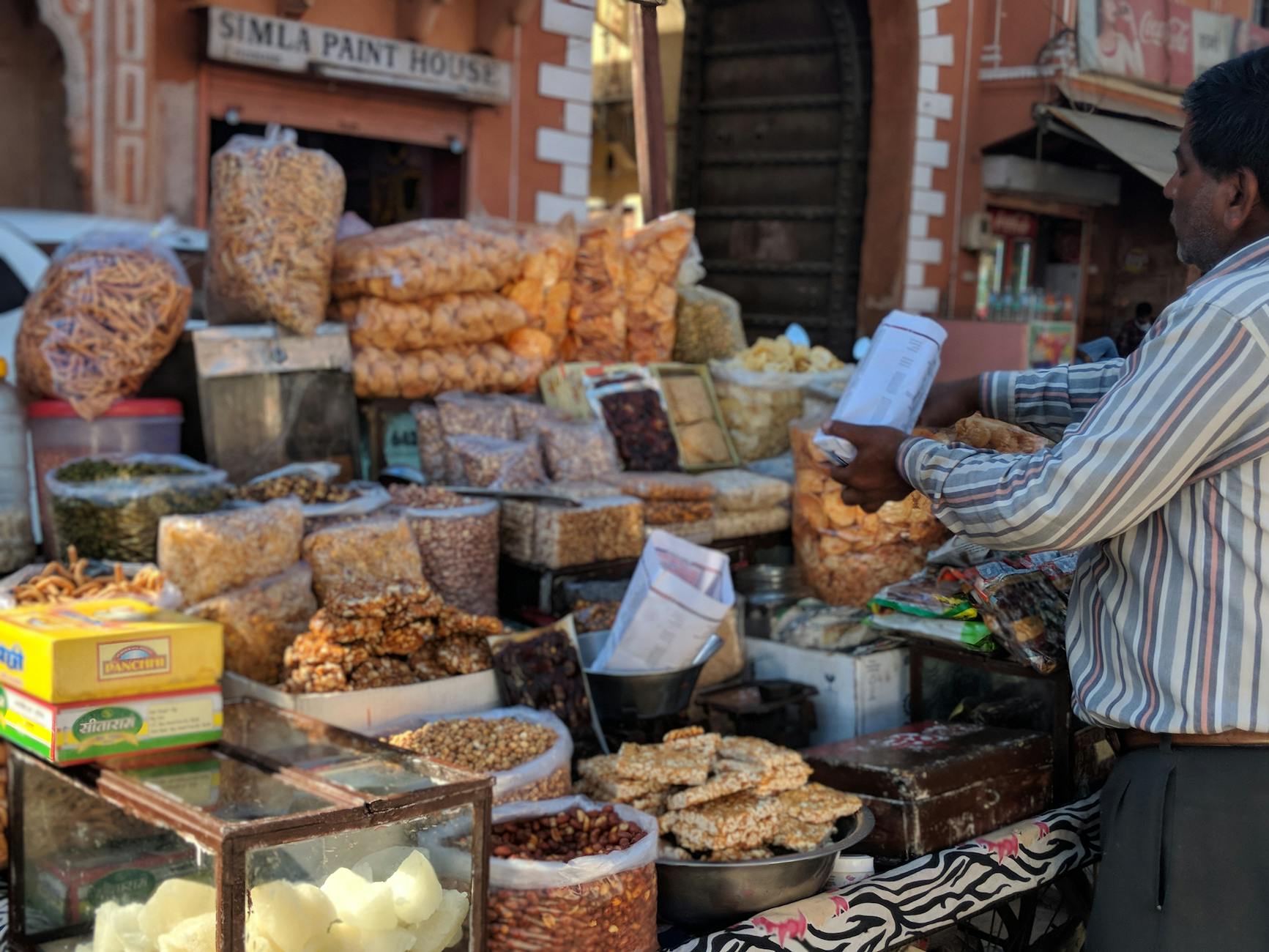

The desert sand scours the yellow sandstone walls of Sonar Qila until the whole ridge glows like burnt honey in late afternoon light. Inside, four thousand people still live, hang laundry, and fry spiced kachoris along alleys barely wider than a pack mule. It is an unvarnished, working fortress from 1156, dry as chalk and loudly alive. You will spend half your time ducking motorbikes and the other half staring at stone lattice carved like lace. Jaisalmer is worth visiting if you want to walk through an inhabited medieval citadel and eat desert stews deep in the Thar. Look elsewhere if you need quiet pedestrian-only streets, modern nightlife, lush greenery, or a break from dry heat and blowing dust.
Last updated 3 Sept 2026
Build a Jaisalmer itinerary.
Choose up to 4 threads that pull you in. Your plan arrives organised around them.
The Bed
Where to stay in Jaisalmer
Which part of town to book, and what each one costs you in walking, noise or quiet.
The Comparison
Jaisalmer, or somewhere near it
The places you are realistically choosing between, and the honest case for each.
The Local Record
Where to read more about Jaisalmer
The blogs, boards, guides and operators worth bookmarking.
What to do in Jaisalmer Rajasthan India
Life in Jaisalmer clusters around a golden hill fort and the flat merchant quarters below. Mornings belong to the cool stone corridors of Patwon Ki Haveli and the quiet ghats of Gadisar Lake before desert temperatures climb. Afternoons slow down over clay pots of curd and bajra flatbreads, while evenings bring the entire town out to rooftop terraces to watch the sandstone turn amber. It suits curious walkers who enjoy medieval architecture on foot.
24 hours in Jaisalmer Rajasthan India
Begin early at Sonar Qila before the tour groups arrive, visiting the Jain temples by nine. Head down to Bhatia Market for onion kachoris and tea, spend the midday heat exploring the five conjoined mansions of Patwon Ki Haveli, and reach the sandstone cenotaphs of Bada Bagh six kilometres north for late afternoon light. Select 1 Day above to see it.
2 days in Jaisalmer Rajasthan India
Dedicate morning two to wandering the quiet residential alleys of the lower old town, visiting the carved stone façades of Nathmal Ki Haveli. Eat a lunch of ker sangri and gatte ki sabzi, then hire an auto-rickshaw to Gadisar Lake for a peaceful walk along the water gates before heading out toward the Sam dunes for dusk. Choose 2 Days to expand the plan.
3 days in Jaisalmer Rajasthan India
A third day lets you leave the main hub for the eerie stone streetscapes of Kuldhara, abandoned in the 1800s, and the quieter village dunes of Khuri. In town, spend unhurried hours listening to Manganiyar musicians playing the bowed kamaicha in shaded haveli courtyards.
Jaisalmer Rajasthan India itineraries by interest
Fortified Heritage in Jaisalmer Rajasthan India
Walk the ramparts of Sonar Qila, where 99 bastions guard residential lanes, the royal palace complex, and views over the Thar.
Sacred Architecture in Jaisalmer Rajasthan India
Examine the seven interconnected 15th-century Jain temples carved from yellow marble with intricate friezes of dancing figures.
Historic Mansions in Jaisalmer Rajasthan India
Inspect the carved yellow sandstone screens and jharokhas at Patwon Ki Haveli, Salim Singh Ki Haveli, and Nathmal Ki Haveli.
Street Food in Jaisalmer Rajasthan India
Grab hot pyaz kachori and sweet mawa kachori from stalls near Amar Sagar Gate, paired with fresh cardamom chai in clay cups.
Desert Cuisine in Jaisalmer Rajasthan India
Eat ker sangri, gatte ki sabzi, and bajra roti brushed with ghee at modest family-run bhojanalayas behind the main bazaar.
Craft Traditions in Jaisalmer Rajasthan India
Watch artisans carve soft yellow sandstone and stitch leather jootis or mirror-work quilts along Sadar Bazaar.
Cenotaphs & Tombs in Jaisalmer Rajasthan India
Visit Bada Bagh at dusk to see the carved chhatris erected for the Bhatti rulers overlooking the scrub desert and windmills.
Folk Music in Jaisalmer Rajasthan India
Hear Manganiyar and Langa musicians play the bowed kamaicha and dholak at desert camps or courtyard performances.
Lakes & Reservoirs in Jaisalmer Rajasthan India
Wander the ghats and arched pavilions of Gadisar Lake, a 14th-century rainwater basin flanked by shrines and carved gateways.
Day Trips in Jaisalmer Rajasthan India
Ride out to the abandoned 13th-century Paliwal Brahmin ruins of Kuldhara and the fossil beds of Akal Wood Fossil Park.
Desert Landscapes in Jaisalmer Rajasthan India
Travel forty kilometres west to the sweeping wind-rippled dunes of Sam or Khuri for unpaved walks across the Thar.
Textiles & Weaving in Jaisalmer Rajasthan India
Browse hand-spun camel wool shawls, barmer-style appliqué work, and block-printed tie-dye fabrics in Bhatia Market.