.jpg)

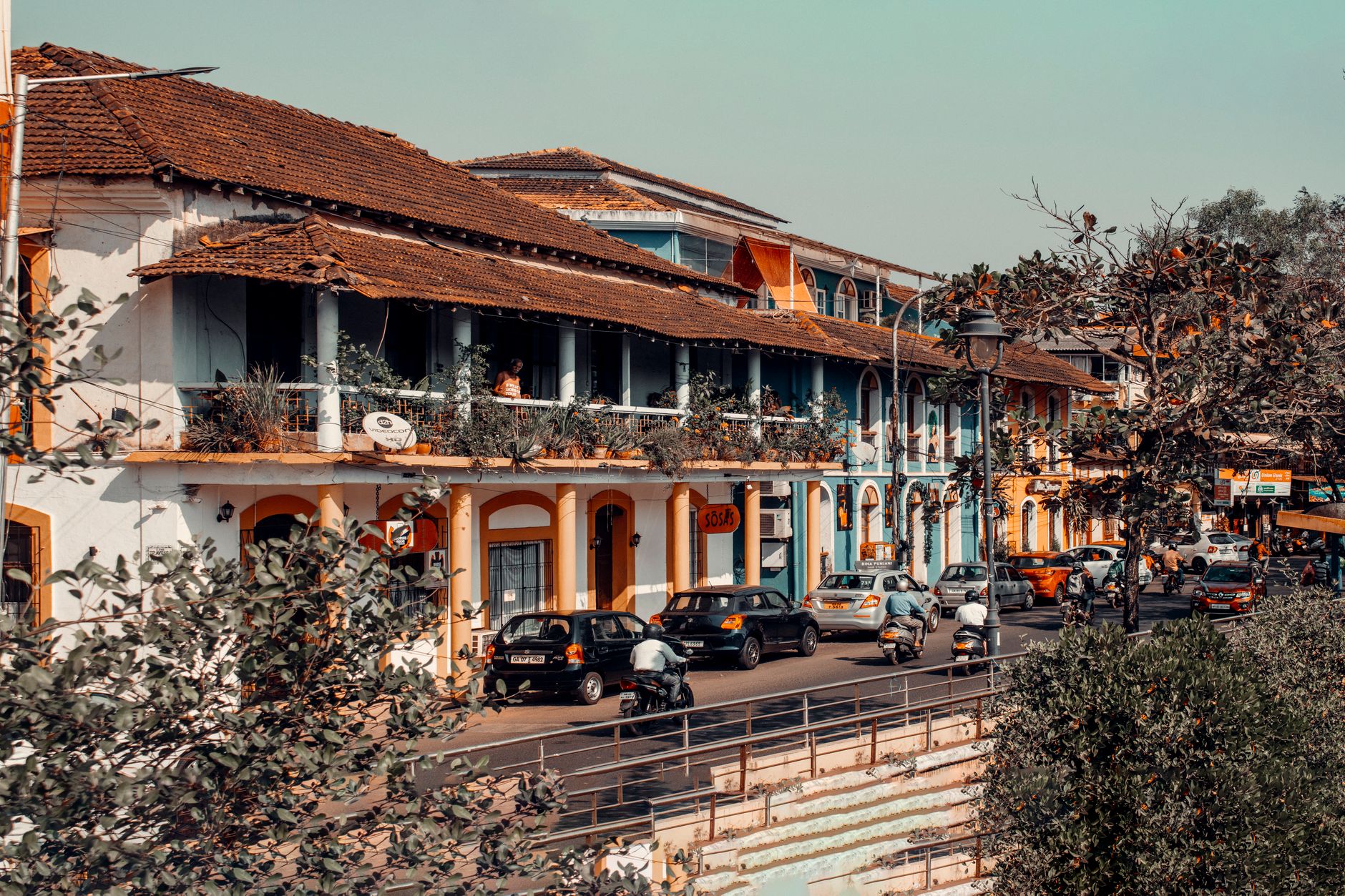


Salt air rolls up the Mandovi River while slow ceiling fans turn in pastel-washed taverns. Panaji became Goa's capital in 1843 after plague emptied Old Goa, trading grandiose cathedrals for manageable, tiled domestic scale. Walking through Fontainhas and Sao Tome feels unhurried; elderly residents lean over wooden balconies while cooks simmer kokum-heavy fish curries in tiny back rooms. You come here to walk shady alleys, drink cashew feni, and eat prawns pulled from the estuary that morning. Panaji is worth visiting if you want Portuguese-Goan domestic architecture and fierce home-style seafood away from the beach resorts. Look elsewhere if you want broad swimming beaches, late-night party strips, or self-contained coastal resorts.
Last updated 2 Sept 2026
Build a Panaji itinerary.
Choose up to 4 threads that pull you in. Your plan arrives organised around them.
The Bed
Where to stay in Panaji
Which part of town to book, and what each one costs you in walking, noise or quiet.
The Comparison
Panaji, or somewhere near it
The places you are realistically choosing between, and the honest case for each.
The Local Record
Where to read more about Panaji
The blogs, boards, guides and operators worth bookmarking.
What to do in Panaji Goa India
Panaji is compact and walkable, bounded by the Mandovi River on one side and the leafy hill of Altinho on the other. Life here revolves around midday meals of fish curry rice, slow afternoon rests, and evening strolls under the streetlamps of Fontainhas. It suits independent travellers who prefer historic walking lanes and neighbourhood taverns over package resorts and crowded beach parties.
24 hours in Panaji Goa India
Start at Church Square before the sun gets fierce, then lose two hours in the tiled alleys of Fontainhas. Have a kingfish thali at a local mess for lunch, browse the Municipal Market in the cooler afternoon, and spend your evening sipping cashew feni at Joseph Bar in Sao Tome. Select 1 Day above to see it.
2 days in Panaji Goa India
Head west on day two through the quiet villas of Campal toward Miramar Beach and Dona Paula viewpoint. In the evening, cross the Mandovi on the local ferry for dinner in a riverside tavern, ordering crab xec xec and fresh poee bread while watching the cargo barges pass. Choose 2 Days to expand the plan.
3 days in Panaji Goa India
A third day lets you hire a scooter or taxi ten kilometres east to the colossal 16th-century churches of Old Goa. Spend the afternoon taking the free car ferry across to quiet Divar Island, cycling along tidal channels and eating pork vindaloo in sleepy village squares.
Panaji Goa India itineraries by interest
Local Seafood in Panaji Goa India
Track down kingfish rava fry, crab xec xec with freshly grated coconut, and sour mackerel curry in family-run taverns.
Sacred Architecture in Panaji Goa India
Climb the whitewashed zigzag stairs of the 16th-century Church of Our Lady of the Immaculate Conception on Church Square.
Historic Quarters in Panaji Goa India
Wander Fontainhas and Sao Tome to inspect oyster-shell window panes, azulejo street plaques, and shaded balconies.
Markets & Produce in Panaji Goa India
Navigate the Panjim Municipal Market for smoked Goan pork sausages, triphala berries, cashew feni, and local kokum fruit.
River Ferries in Panaji Goa India
Take the cheap state-run roll-on ferry across the Mandovi River to Ribandar and the sleepy mangroves of Divar Island.
Bakeries & Cafes in Panaji Goa India
Sit for morning pao, sweet coconut bebinca, and caldo verde at long-standing neighbourhood bakeries around Campal.
Regional Spirits in Panaji Goa India
Sip rustic cashew and coconut feni poured alongside pickled chillies at decades-old corner bars like Joseph Bar.
Day Trips in Panaji Goa India
Take a short ten-kilometre bus ride upstream to Old Goa to inspect the massive Basilica of Bom Jesus and Se Cathedral.
Street Food in Panaji Goa India
Try Goan poee stuffed with spicy chorizo or potato chops from sunset vendors parked near Miramar Beach.
Colonial Mansions in Panaji Goa India
Examine 19th-century aristocratic residences and shady riverfront verandahs in the quiet Campal heritage precinct.
Modern Art in Panaji Goa India
Visit Sunaparanta Centre for the Arts in Altinho for modern Indian painting, photography, and quiet courtyard tea.
Coastal Walks in Panaji Goa India
Stroll along the river promenade toward the mouth of the Arabian Sea at Miramar Beach and the jetty at Dona Paula.