


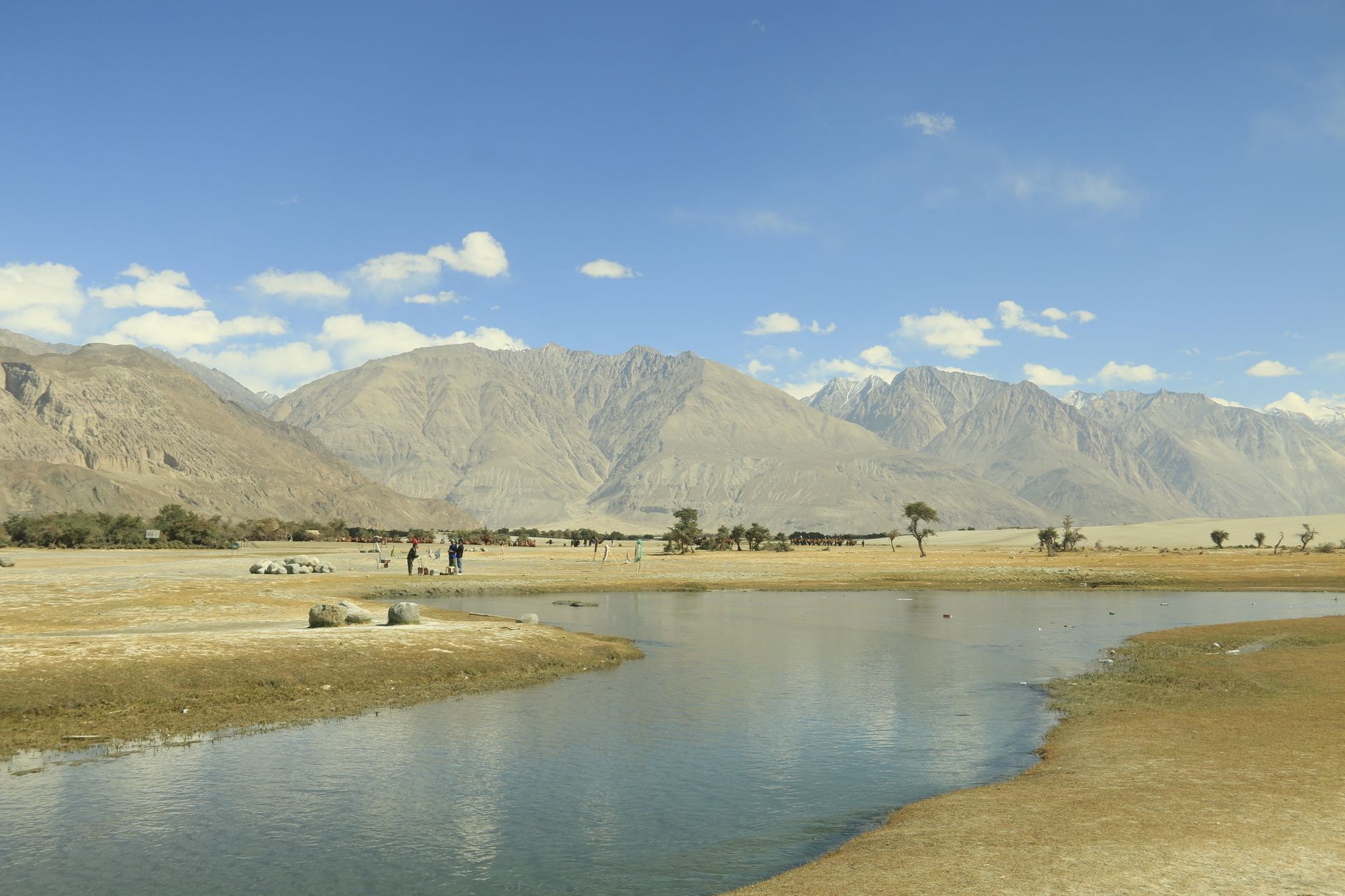


Diskit sits 115 kilometres north of Leh across the Khardung La pass, a five-hour mountain drive. It is Nubra Valley's administrative centre, known for its 14th-century Gelugpa monastery and a towering 32-metre Maitreya Buddha above the Shyok River. Diskit is worth visiting if you want ancient monastic rituals, stark high-desert topography, and quiet valley walking. Look elsewhere if you need reliable internet, polished luxury hotels, or evening entertainment.
Last updated 5 Nov 2026
Build a Diskit itinerary.
Choose up to 4 threads that pull you in. Your plan arrives organised around them.
The Bed
Where to stay in Diskit
Which part of town to book, and what each one costs you in walking, noise or quiet.
The Comparison
Diskit, or somewhere near it
The places you are realistically choosing between, and the honest case for each.
The Local Record
Where to read more about Diskit
The blogs, boards, guides and operators worth bookmarking.
What to do in Diskit Ladakh India
Diskit stretches along a gentle alluvial slope above the Shyok River, split between an upper monastic quarter clinging to red rock cliffs and a quiet farming village below. Days here follow the sun: early monastery visits, slow strolls along poplar-lined irrigation canals, and afternoons browsing the small market street. It suits deliberate travellers who appreciate silence, mountain geometry, and ancient Tibetan Buddhist heritage.
24 hours in Diskit Ladakh India
Start at dawn at Diskit Gompa for morning prayers and sweeping views from the Maitreya Buddha statue. Head down to the bazaar for hot thukpa and salted butter tea at lunchtime. In the late afternoon, drive ten minutes west to walk the white sand dunes near Hunder before twilight settles over the peaks. Select 1 Day above to see it.
2 days in Diskit Ladakh India
A second day lets you cross the Shyok River toward Sumur to explore the peaceful courtyards of Samstanling Gompa. Stop on the way back for handmade mutton momos and roasted tsampa in a village homestay, then spend the evening walking through Diskit's lower barley fields as farmers divert water through stone channels. Choose 2 Days to expand the plan.
3 days in Diskit Ladakh India
With three days, venture north along the Nubra River to the natural hot sulphur springs at Panamik, or push further northwest to the border hamlet of Turtuk for Balti-style apricot curries and stone-house architecture. You can take the long, winding valley roads at a calm pace without racing daylight.
Diskit Ladakh India itineraries by interest
Sacred Architecture in Diskit Ladakh India
Climb through the whitewashed tiers of Diskit Gompa, built in the 14th century, featuring ancient prayer halls and murals of protector deities.
Monastery Rituals in Diskit Ladakh India
Rise early for the 6:00 AM morning puja in the assembly hall, where monks chant mantras over butter lamps and copper-poured butter tea.
Desert Landscapes in Diskit Ladakh India
Walk the cold-desert silt flats where the Shyok and Nubra rivers converge, bordered by grey scree slopes and wind-swept buckthorn bushes.
Local Bread in Diskit Ladakh India
Try freshly baked khambir, a thick sourdough flatbread cooked on iron griddles in village kitchens, best eaten warm with local apricot jam.
Village Walks in Diskit Ladakh India
Wander the irrigation channels and poplar groves of lower Diskit, passing whitewashed chortens, barley plots, and mudbrick farmhouses.
Mountain Passes in Diskit Ladakh India
Cross the 5,359-metre Khardung La, checking brake temperatures and pausing briefly at the windy summit prayer flags before descending.
Cold Desert Wildlife in Diskit Ladakh India
Spot double-humped Bactrian camels grazing near Hunder's dunes and chukar partridges calling along the rocky gravel beds at dusk.
High-Altitude Produce in Diskit Ladakh India
Look for sun-dried Ladakhi apricots, small sweet apples, and roasted barley flour known as tsampa sold from small open sacks in the bazaar.
Noodle Soups in Diskit Ladakh India
Order thukpa or hand-pinched skyu stewed with root vegetables in small family-run dhabas along the town's compact main market road.
Stargazing in Diskit Ladakh India
Step outside after dark to see clear, unpolluted Himalayan skies, with the Milky Way visible over the sharp black silhouette of the Karakoram.
Day Trips in Diskit Ladakh India
Drive 30 kilometres north along the Shyok to Sumur and the peaceful, garden-lined grounds of Samstanling Gompa.
Hot Springs in Diskit Ladakh India
Travel north to the sulphur baths of Panamik, where hot mineral water channels down rock terraces above the wide riverbed.