

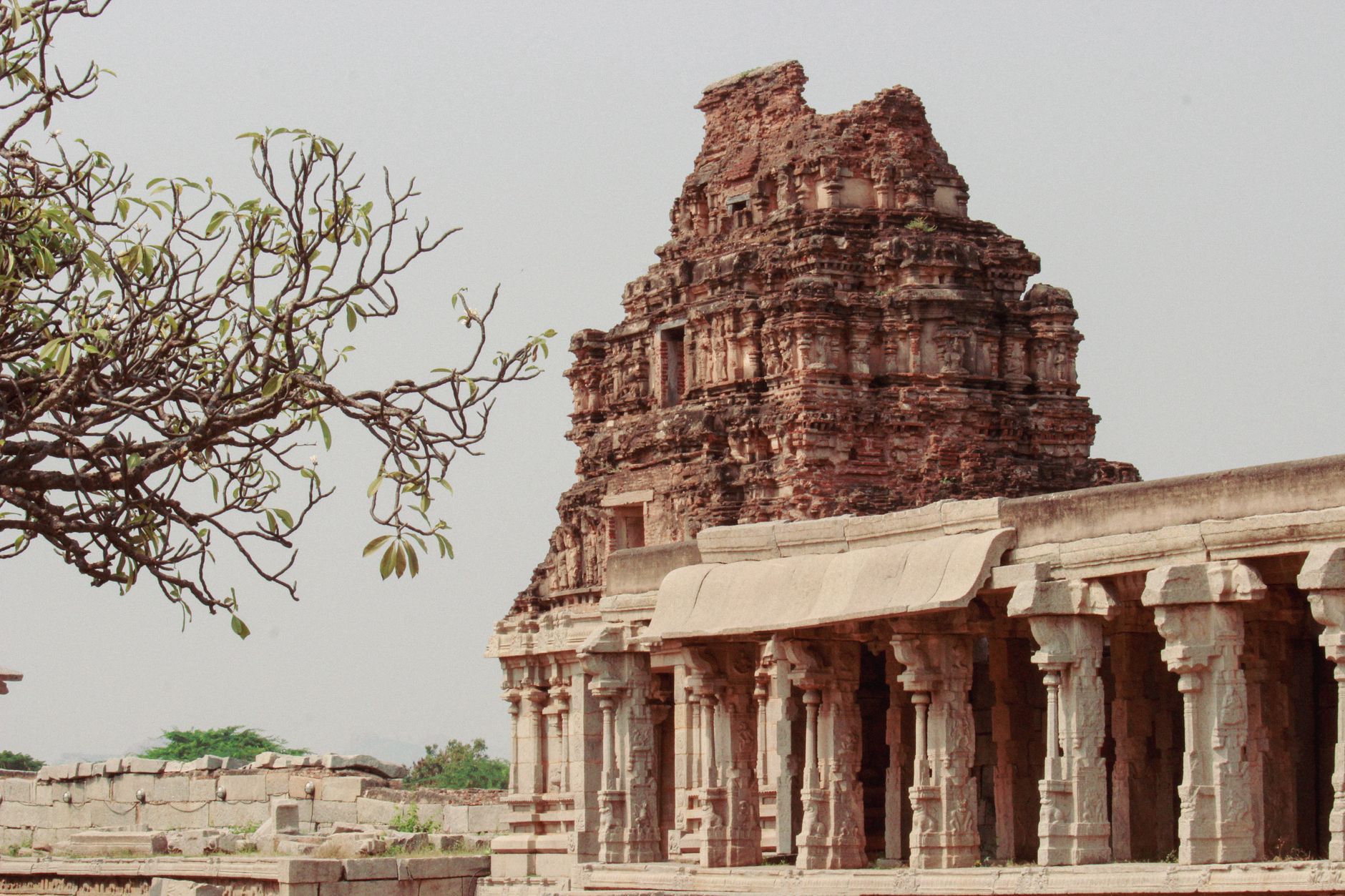
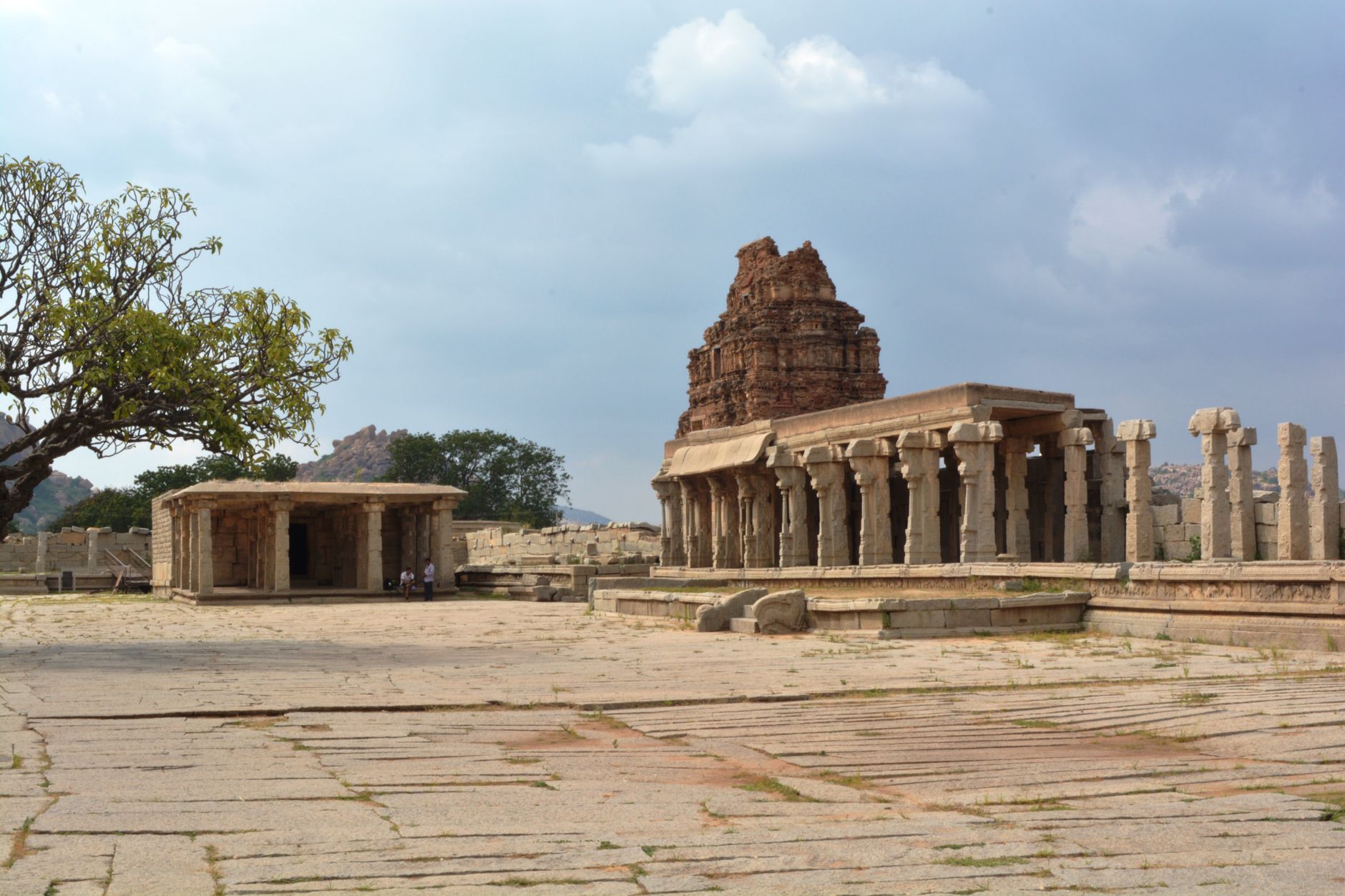
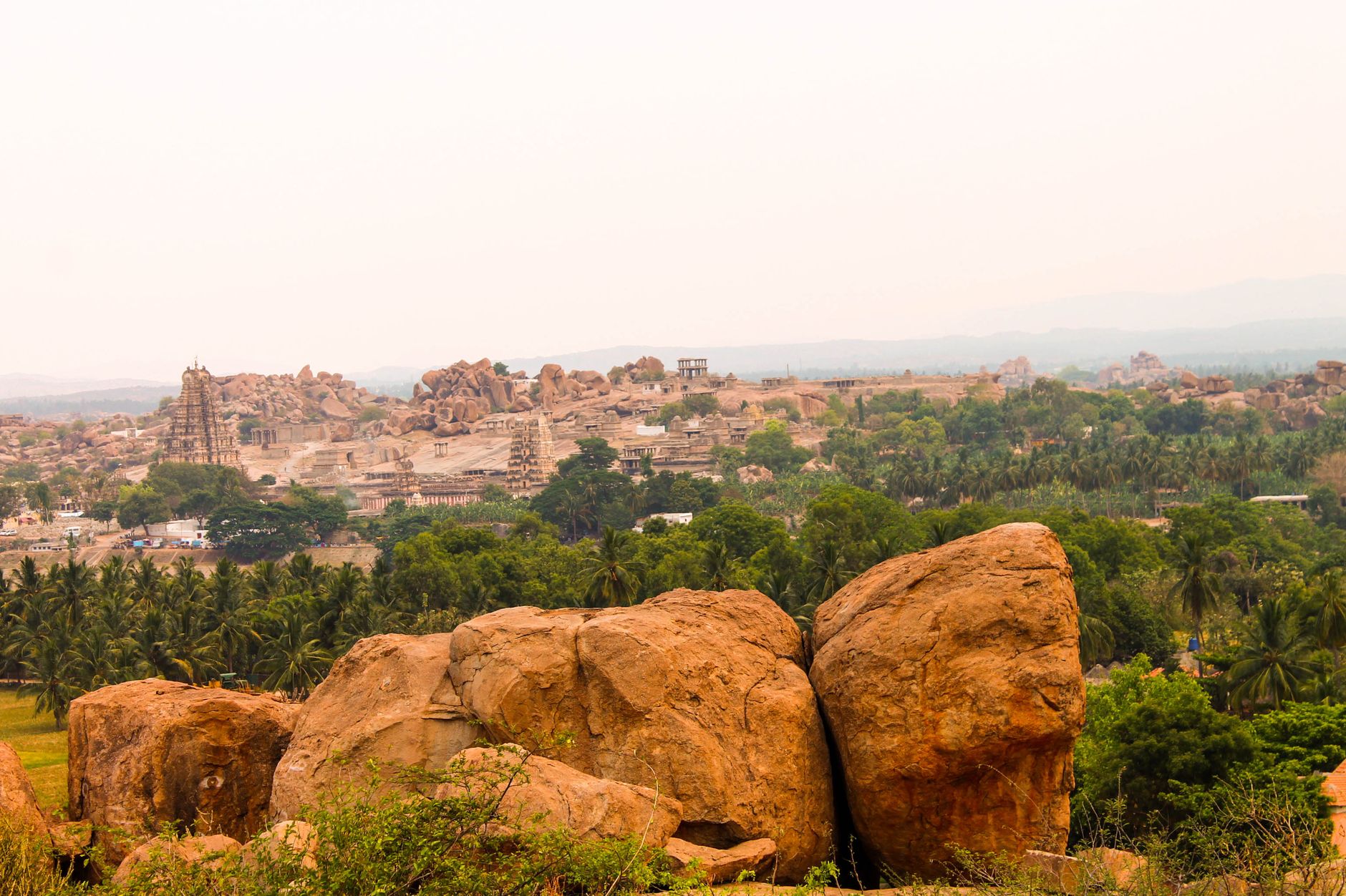

Hampi sits in central Karnataka, roughly 350 kilometres north of Bengaluru and a thirty-minute auto-rickshaw ride from the railhead at Hosapete. It is known for the sprawling granite ruins of the fourteenth-century Vijayanagara Empire and its surreal landscape of wind-worn boulders flanking the Tungabhadra River. Hampi is worth visiting if you want to scramble across medieval temple complexes, watch river life from stone ghats, and eat fiery banana-leaf meals. Look elsewhere if you want lively nightlife, high-end luxury hotels, air-conditioned indoor sights, or a compact town you can easily explore on foot.
Last updated 9 Sept 2026
Build a Hampi itinerary.
Choose up to 4 threads that pull you in. Your plan arrives organised around them.
The Bed
Where to stay in Hampi
Which part of town to book, and what each one costs you in walking, noise or quiet.
The Comparison
Hampi, or somewhere near it
The places you are realistically choosing between, and the honest case for each.
The Local Record
Where to read more about Hampi
The blogs, boards, guides and operators worth bookmarking.
What to do in Hampi Karnataka India
Hampi divides naturally across the Tungabhadra River: the sacred ruins and bustling bazaar on the south bank, and the relaxed rural rhythm of Anegundi on the north. Days revolve around dawn temple walks, midday respites with lime soda during peak heat, and late afternoons on the boulders. It suits independent travellers happy to trade modern polish for extraordinary stone architecture, rough terrain, and unhurried South Indian cooking.
24 hours in Hampi Karnataka India
Start at 6:30 AM at Virupaksha Temple before the crowds gather, then walk the stone path along the river to the stone chariot at Vittala Temple. Cool off over a Jolada rotti thali near the bazaar. Spend the late afternoon wandering the Royal Enclosure before catching the sunset light over the boulder fields from Hemakuta Hill. Select 1 Day above to see it.
2 days in Hampi Karnataka India
Cross the river by boat to the north bank for day two. Rent a scooter to explore the fortified medieval village of Anegundi and the quiet reservoir at Sanapur Lake. Climb Anjaneya Hill for vast panoramic views, then settle into a low-key open-air cafe for freshly rolled chapati and coconut chutney as the granite cools. Choose 2 Days to expand the plan.
3 days in Hampi Karnataka India
A third day allows for the outlying monuments without checking your watch. Explore the remote riverside ruins of Achyutaraya Temple and the stepped Pushkarani tank in deep morning light. Dedicate the afternoon to the craft workshops of Anegundi, or take a twenty-kilometre drive south to the massive nineteenth-century Tungabhadra Dam.
Hampi Karnataka India itineraries by interest
Sacred Architecture in Hampi Karnataka India
Examine the musical pillars of Vijaya Vittala Temple and the towering fifty-metre gopuram of seventh-century Virupaksha overlooking the river.
Bouldering & Climbing in Hampi Karnataka India
Rent crash pads on the northern bank around Sanapur and tackle granite problems mapped out across the arid red-rock plateau.
Riverside Walks in Hampi Karnataka India
Follow stone paths between Kodandarama Temple and the ancient bazaar, watching coracles navigate the Tungabhadra's granite eddies.
Regional Vegetarian in Hampi Karnataka India
Savour unlimited Karnataka thalis with jolada rotti, spiced brinjal curry, curd, and fiery gunpowder chutney on banana leaves.
Royal Palaces in Hampi Karnataka India
Inspect the Indo-Islamic arches of the Lotus Mahal and the massive domed stalls of the fifteenth-century Elephant Stables.
Hilltop Viewpoints in Hampi Karnataka India
Climb the 575 whitewashed stone steps of Anjaneya Hill at dawn for views stretching across green paddy fields to the river.
Rural Cycling in Hampi Karnataka India
Rent a single-speed bicycle by Hampi Bazaar to pedal quiet dirt tracks through sugarcane fields toward Anegundi village.
Monolithic Sculptures in Hampi Karnataka India
Study the monolithic Lakshmi Narasimha statue and the giant single-stone Badavilinga carved directly into granite bedrock.
Water Reservoirs in Hampi Karnataka India
Walk the stepped geometry of the Pushkarani tank and examine the stone aqueducts of the Royal Enclosure.
Street Food & Snacks in Hampi Karnataka India
Pick up hot mirchi bajji and crispy uddina vada from simple carts outside the main temple gates before morning prayers.
Ancient Trade Routes in Hampi Karnataka India
Pace the broad, kilometre-long colonnades of Sule Bazaar where Persian and Portuguese merchants once traded gems and Arabian horses.
Craft Traditions in Hampi Karnataka India
Watch local artisans in Anegundi weave baskets, rugs, and functional homewares from dried banana fibre stalks.