


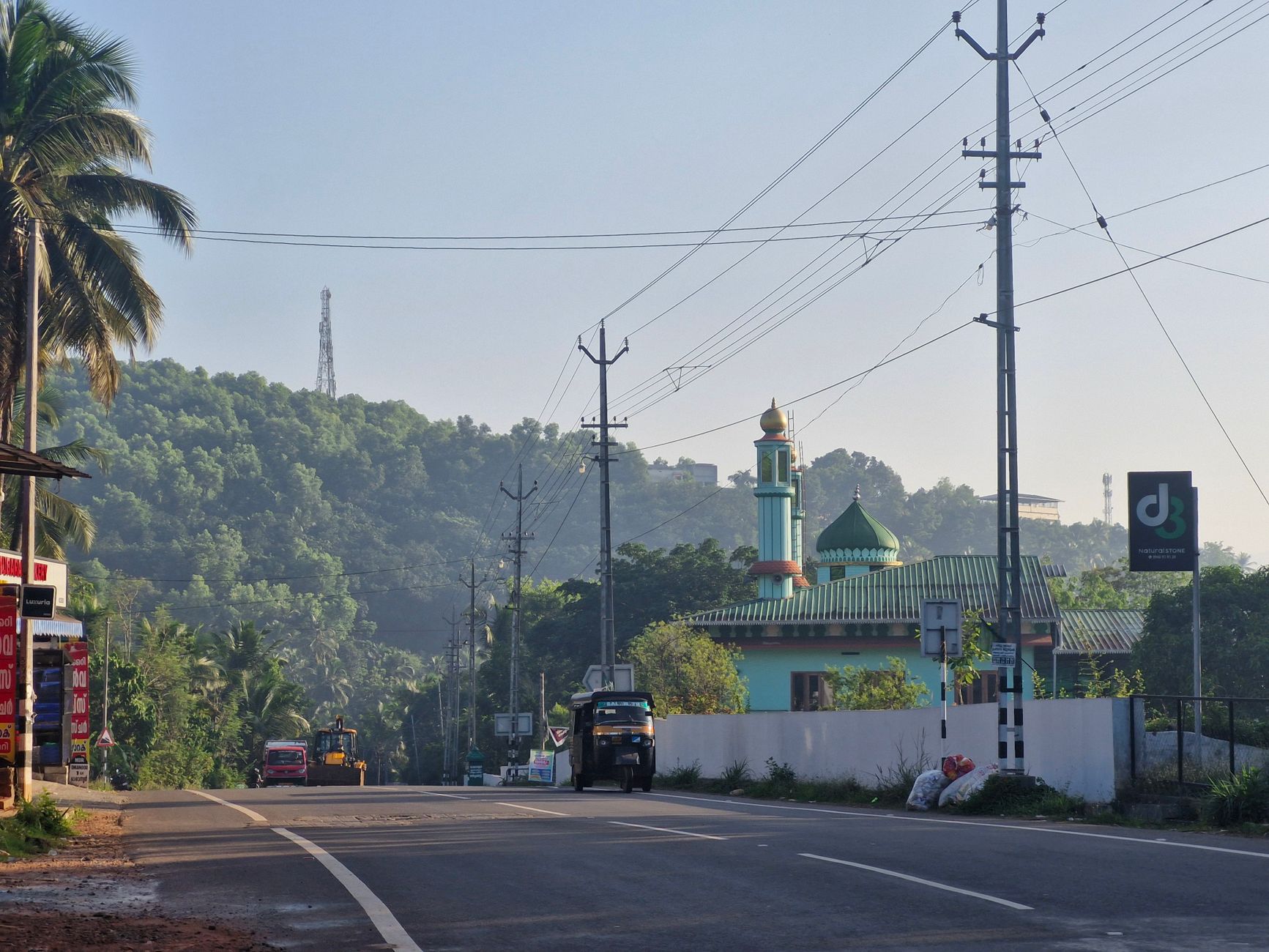
Kalpetta sits 72 kilometres northeast of Kozhikode, reached by a two-and-a-half-hour drive up the nine hairpin bends of the Thamarassery mountain pass. As the administrative hub of Wayanad, the town is known for robusta coffee processing, hill-market trading, and straightforward access to Chembra Peak. It works as an unpretentious base rather than a resort retreat. Kalpetta is worth visiting if you want highland hiking and traditional Malabar cooking without paying resort markups. Look elsewhere if you want quiet plantation seclusion, luxury resort amenities, a picturesque walkable centre, or evening nightlife.
Last updated 12 Sept 2026
Build a Kalpetta itinerary.
Choose up to 4 threads that pull you in. Your plan arrives organised around them.
We'll craft a 4-lens plan for Kalpetta, one collapsible strand per lens.
Indigenous Archaeology
Climb the stone steps at Edakkal Caves to examine prehistoric petroglyphs and Neolithic stone carvings cut into the granite rock face.
Indigenous Archaeology
Climb the stone steps at Edakkal Caves to examine prehistoric petroglyphs and Neolithic stone carvings cut into the granite rock face.
Neolithic Rock Art Ascent
Edakkal Caves
Buy your entry ticket at the base counter for fifty rupees. The steep climb up stone stairs takes forty minutes; queue early to secure one of the limited daily cave admissions.
Editor TipCarved into sheer rock faces on Ambukuthi Mala, these petroglyphs date back to 6000 BCE, preserving rare Neolithic anthropomorphic figures and symbols high above the valley. Wear sturdy shoes with solid grip. The steep damp stone path becomes slick from morning condensation.
Sacred Architecture
Inspect the granite pillars and ninth-century Jain carvings at the Ananthanatha Swami temple tucked behind the town’s main market lanes.
Sacred Architecture
Inspect the granite pillars and ninth-century Jain carvings at the Ananthanatha Swami temple tucked behind the town’s main market lanes.
Fourteenth-Century Jain Stone Devotion
Ananthnath Swami Temple, Puliyarmala
Remove your shoes at the outer courtyard. Open daily from 08:00 to 12:00 with free entry; allow forty-five minutes to view the carved granite pillars and sanctum brasswork.
Editor TipBuilt in the thirteenth century, this Dravidian complex marks the deep trading ties and spiritual presence of Jain merchants along the medieval Western Ghats trade routes. Arrive before nine to watch the morning oil lamps being lit in quiet reverence without tour groups.
Fourteenth Century Granite Contemplation
Ananthanatha Swami Jain Temple
Walk the quiet compound along the northern ridge off NH 766. Admission is free, shoes stay by the stone gate, and you will need thirty minutes to inspect the carved granite pillars.
Editor TipBuilt in the thirteenth century, this granite shrine marks the ancient Jain migration route through the Western Ghats, blending Dravidian carving with regional basalt masonry. Arrive before nine when the morning light hits the carved inner brass doors and the tour vans are still asleep.
Fourteenth Century Jain Carvings
Puliyarmala Jain Temple
Walk up the gentle slope north of the market. Entry is free, though modest dress covering shoulders and knees is strictly required before stepping onto the stone floor.
Editor TipBuilt in the fourteenth century under Hoysala architectural influence, this granite shrine remains an active spiritual anchor for Wayanad's historic Digambara Jain community. Leave your sandals at the outer gate. The carved granite flagstones stay comfortably cool even in the heat.
Exploring Medieval Jain Architecture
Bathery Jain Temple
Free entry and open until noon. Walk through the granite pillared hall, which later served as an ammunition battery in the eighteenth century.
Editor TipBuilt in the thirteenth century during the Hoysala era, the temple reflects the deep, quiet Jain monastic trading presence that once crossed the Western Ghats passes. Step inside the inner sanctum to cool down. The heavy stone slab roof drops the temperature by five degrees instantly.
Forest Wildlife
Book an open jeep through the moist deciduous forests of Muthanga sanctuary for wild Asian elephant herds, spotted deer, and gaur.
Forest Wildlife
Book an open jeep through the moist deciduous forests of Muthanga sanctuary for wild Asian elephant herds, spotted deer, and gaur.
Indigenous Bamboo Joinery Workshop
Uravu Eco Center
Join the workshop floor to watch artisans split indigenous reed bamboo into weave and furniture. Entry is nominal, and an hour on foot through the sheds lets you see every stage of cure.
Editor TipWayanad's tribal craft guilds turned endemic forest bamboo into a sustainable livelihood here, preserving traditional splitting techniques that resist tropical wood-borers without harsh chemicals. Pick up wild forest honey harvested by local Vedar communities at the adjoining micro-store before noon.
Wildcards
Worth your time whatever brought you here.
Wildcards
Worth your time whatever brought you here.
Clay Pot Fish Curry
1980's A Nostalgic Restaurant
Arrive along the bypass road by seven to secure a wooden bench. Order the ayala mackerel curry with layered flaky parottas; dinner costs under four hundred rupees.
Editor TipMalabar cooking balances coconut milk, native Tellicherry black pepper, and smoky kodampuli garcinia, simmered over flame in seasoned unglazed clay pots. Tear the parotta with your fingers to scoop the curry. Cutlery here will only slow you down.
Note from the Editor
“Start at dawn before the midday mist burns off and the tour coaches clog the ghat passes. Carry small rupee notes for forest department entry counters.”
The Bed
Where to stay in Kalpetta
Which part of town to book, and what each one costs you in walking, noise or quiet.
The Comparison
Kalpetta, or somewhere near it
The places you are realistically choosing between, and the honest case for each.
The Local Record
Where to read more about Kalpetta
The blogs, boards, guides and operators worth bookmarking.
What to do in Kalpetta Kerala India
Kalpetta stretches along the winding NH 766, functioning as the busy commercial spine of Wayanad. Daily life revolves around morning estate auctions, bustling spice merchants on Main Street, and shared jeeps departing for surrounding plantations. It is not an insulated hill retreat; the town suits independent travellers who prefer working eateries, genuine market prices, and easy bus links over manicured estate lawns.
24 hours in Kalpetta Kerala India
Start at 7:00 AM with puttu and kadala curry before driving 25 minutes to the forest checkpoint for Chembra Peak. Hike the ridge before the midday mist rolls in. Head back to town for beef roast and flaky porotta at Hotel 1980's, then spend the late afternoon browsing the co-op spice shops along Pinangode Road. Select 1 Day above to see it.
2 days in Kalpetta Kerala India
Head twelve kilometres east to the prehistoric rock etchings inside Edakkal Caves before midday tour groups arrive. Follow with lunch in Sultan Bathery for Malabar mutton biryani scented with kaima rice, then spend the afternoon inspecting ninth-century Jain stone reliefs in the quiet village of Thrikkaipetta. Choose 2 Days to expand the plan.
3 days in Kalpetta Kerala India
A third day allows an early morning drive south to Pozhuthana for a quiet river raft on the Vythiri waters, followed by a factory visit to the tea gardens of Achoor. End your stay with an unhurried evening walk through the cardamom undergrowth of private smallholder farms near Meppadi.
Kalpetta Kerala India itineraries by interest
Regional Curries in Kalpetta Kerala India
Eat Malabar beef fry paired with flaky layered porotta, or peppery Kozhi curry simmered in fresh coconut oil at roadside town joints.
Mountain Hiking in Kalpetta Kerala India
Register by 7:00 AM at the forest office for the steep ascent of Chembra Peak to reach the heart-shaped lake above the cloud line.
Sacred Architecture in Kalpetta Kerala India
Inspect the granite pillars and ninth-century Jain carvings at the Ananthanatha Swami temple tucked behind the town’s main market lanes.
Plantation Agriculture in Kalpetta Kerala India
Walk rows of robusta coffee bushes intercropped with black pepper vines and cardamom pods along the slopes leading out to Meppadi.
Indigenous Archaeology in Kalpetta Kerala India
Climb the stone steps at Edakkal Caves to examine prehistoric petroglyphs and Neolithic stone carvings cut into the granite rock face.
Market Produce in Kalpetta Kerala India
Buy dried Tellicherry black peppercorns, raw forest honey, and fragrant Wayanad wild turmeric directly from agricultural co-op stalls.
Breakfast Traditions in Kalpetta Kerala India
Order steaming cylindrical rice puttukal served with spicy kadala curry and freshly cracked local banana at unadorned morning tea stalls.
Bamboo Craft in Kalpetta Kerala India
Visit the Uravu craft collective in nearby Thrikkaipetta to see artisans split, season, and weave native bamboo into furniture and homewares.
Tea Culture in Kalpetta Kerala India
Tour the mid-century rolling mills at the Harrison Malayalam tea estates in Pozhuthana and drink single-estate orthodox black tea.
Forest Wildlife in Kalpetta Kerala India
Book an open jeep through the moist deciduous forests of Muthanga sanctuary for wild Asian elephant herds, spotted deer, and gaur.
Waterways in Kalpetta Kerala India
Board a slow bamboo raft guided by local polesmen across the quiet Kabini River to reach the dense canopy of Kuruva Island.
Sweet Baking in Kalpetta Kerala India
Stop by local town bakeries for hot unniyappam fried in ghee, sweet banana fritters, and dark jaggery-infused wheat halwa cut to order.