

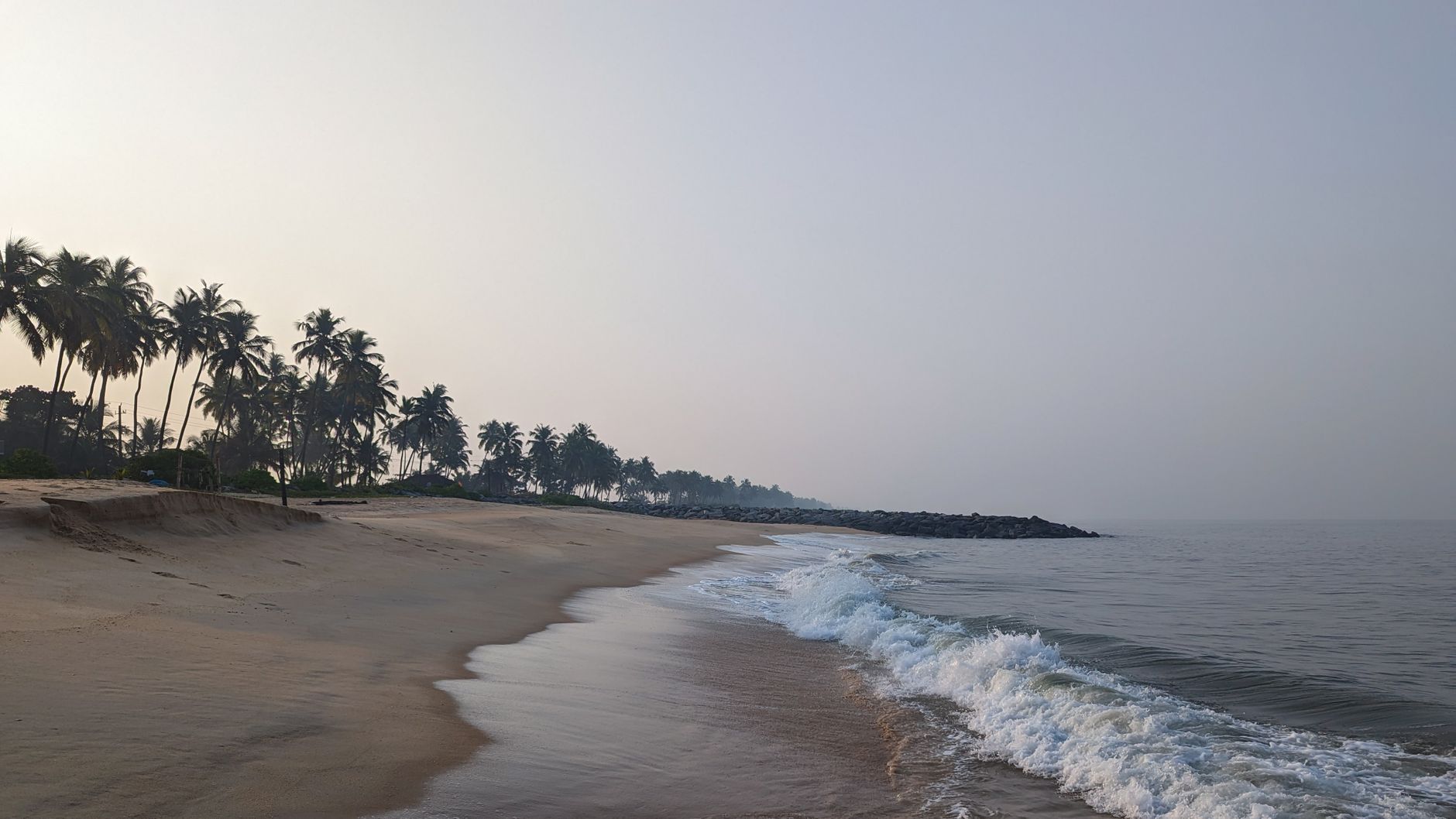
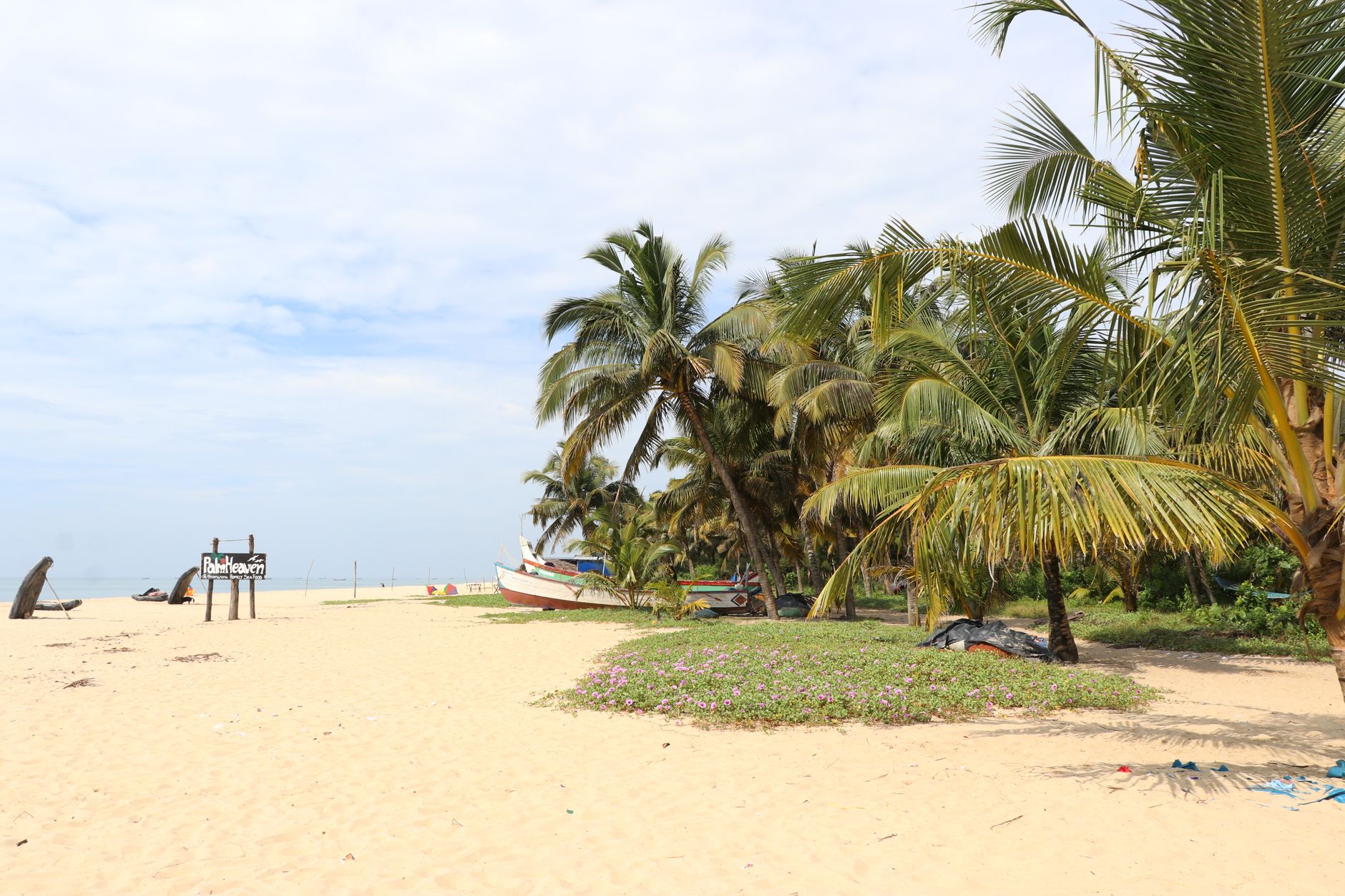
Mararikulam sits on Kerala's Malabar coast, fourteen kilometres north of Alappuzha and a ninety-minute taxi ride from Kochi. The village is known for its quiet expanse of sand and an active artisanal fishing fleet that hauls nets at dawn, alongside small coir-weaving cooperatives. Daily life moves to the rhythm of tides and temple bells rather than tour buses. Mararikulam is worth visiting if you want fresh karimeen pollichathu from a roadside shack and uncrowded coastal walking. Look elsewhere if you want nightlife, organized water sports, a walkable town centre with cafes, or indoor cultural attractions.
Last updated 12 Sept 2026
Build a Mararikulam itinerary.
Choose up to 4 threads that pull you in. Your plan arrives organised around them.
The Bed
Where to stay in Mararikulam
Which part of town to book, and what each one costs you in walking, noise or quiet.
The Comparison
Mararikulam, or somewhere near it
The places you are realistically choosing between, and the honest case for each.
The Local Record
Where to read more about Mararikulam
The blogs, boards, guides and operators worth bookmarking.
What to do in Mararikulam Alappuzha India
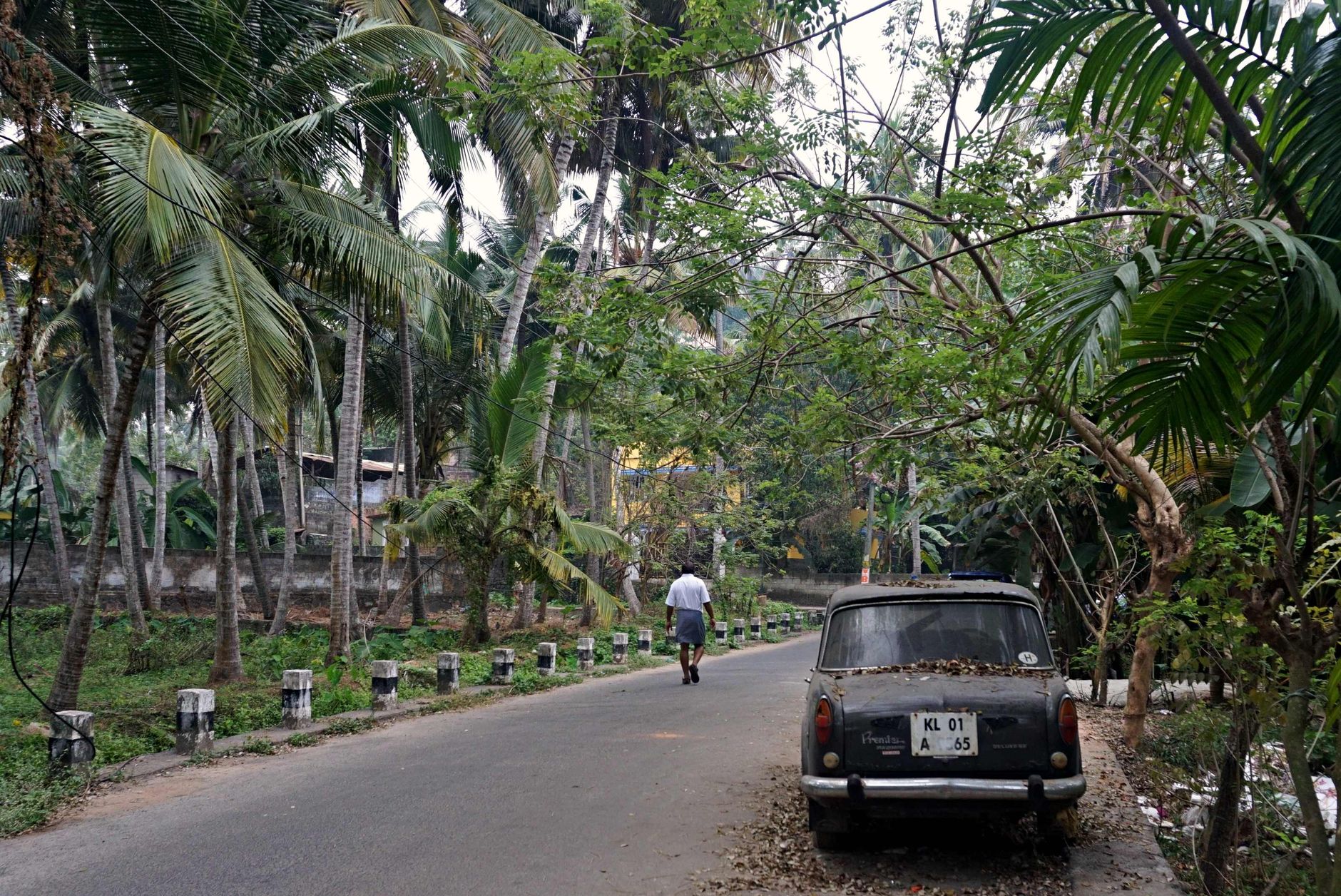
Life in Mararikulam centres on a long strip of working beach and shaded inland lanes lined with coconut palms. Mornings belong to the fishermen pulling heavy wooden craft through the surf; middays belong to a cold lime soda or fresh toddy; evenings settle quietly around tea stalls and temple courtyards. It suits travellers who prefer the calm pace of a working village to the organized commotion of larger resort towns.
24 hours in Mararikulam Alappuzha India
Start before dawn on Marari Beach to watch the fleet land their mackerel catch. By noon, head inland for fish curry meals and sour kudampuli at a local toddy shop. Spend the late afternoon walking the shaded lane toward the Mahadeva Temple, ending with fried plantain fritters at a village tea shop. Select 1 Day above to see it.
2 days in Mararikulam Alappuzha India
Spend your second morning cycling inland to Kanjikuzhi to see organic homestead farming and women spinning coir yarn from coconut fibre. In the afternoon, head fifteen minutes south to Pollathai for a spicy duck roast and kappa, finishing with an evening walk along the sea wall. Choose 2 Days to expand the plan.
3 days in Mararikulam Alappuzha India
A third day allows an easy morning excursion to Muhamma on the shores of Vembanad Lake, catching the public ferry to Pathiramanal island for water birds. Return to Mararikulam for an unhurried dinner of grilled kingfish, seasoned simply with turmeric, crushed pepper, and lime.
Mararikulam Alappuzha India itineraries by interest
Local Seafood in Mararikulam Alappuzha India
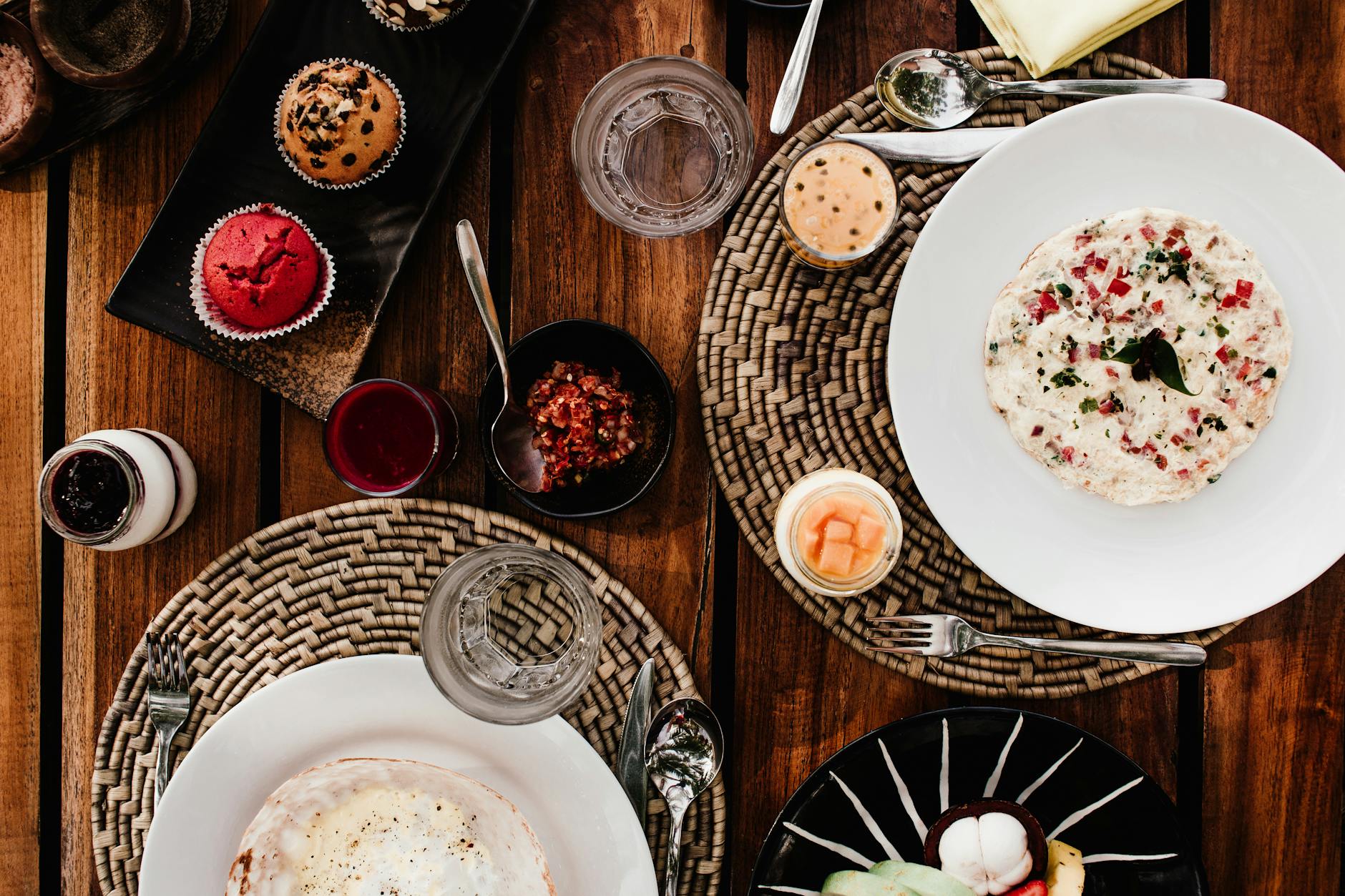
Taste karimeen pollichathu baked in banana leaves, sear-fried seer fish, and crab roast simmered with kudampuli and coconut oil at beachside shacks.
Village Life in Mararikulam Alappuzha India
Watch fishermen launch wooden thoni boats at dawn, mend nylon nets by hand, and sort mackerel and sardines straight on the morning sand.
Craft Traditions in Mararikulam Alappuzha India
Visit home workshops to see coconut husks retted in brackish water, beaten with wooden mallets, and spun into rough coir yarn on manual wheels.
Sacred Architecture in Mararikulam Alappuzha India
Walk to the ancient Mararikulam Mahadeva Temple, an eleventh-century shrine dedicated to Shiva and Parvati with wooden carvings and a vast tank.
Local Taverns in Mararikulam Alappuzha India
Pull up a plastic chair at a village toddy shop for mild fermented palm sap paired with fiery tapioca and peppery duck or beef roast.
Day Trips in Mararikulam Alappuzha India
Hire a wooden canoe through the quiet canals of Muhamma, or board a day boat across Vembanad Lake to explore the backwater villages.
Coastal Walks in Mararikulam Alappuzha India
Stroll the shoreline south toward Pollathai, past thatched beach shacks, coconut palms, sea walls, and solitary tea stalls serving hot chai.
Ayurveda & Wellness in Mararikulam Alappuzha India
Experience traditional Keralite oil therapies and warm herbal poultices prepared by local Vaidyas using medicinal plants grown on site.
Regional Produce in Mararikulam Alappuzha India
Sample fresh coconut water, small nendran bananas, black pepper berries, and sour dried gambooge sourced from backyard homestead plots.
Birdwatching in Mararikulam Alappuzha India
Spot kingfishers, brahminy kites, and migratory terns among the coastal scrub and the marshy inlet edges around the Pathiramanal island reserve.
Bicycle Touring in Mararikulam Alappuzha India
Pedal flat, shaded village lanes past primary schools, lotus ponds, and tile-roofed homesteads between Mararikulam and Kanjikuzhi.
Cooking Traditions in Mararikulam Alappuzha India
Learn to grind fresh coconut masala on an ammi kal stone and prepare avial and thoran alongside local home cooks in family kitchens.