


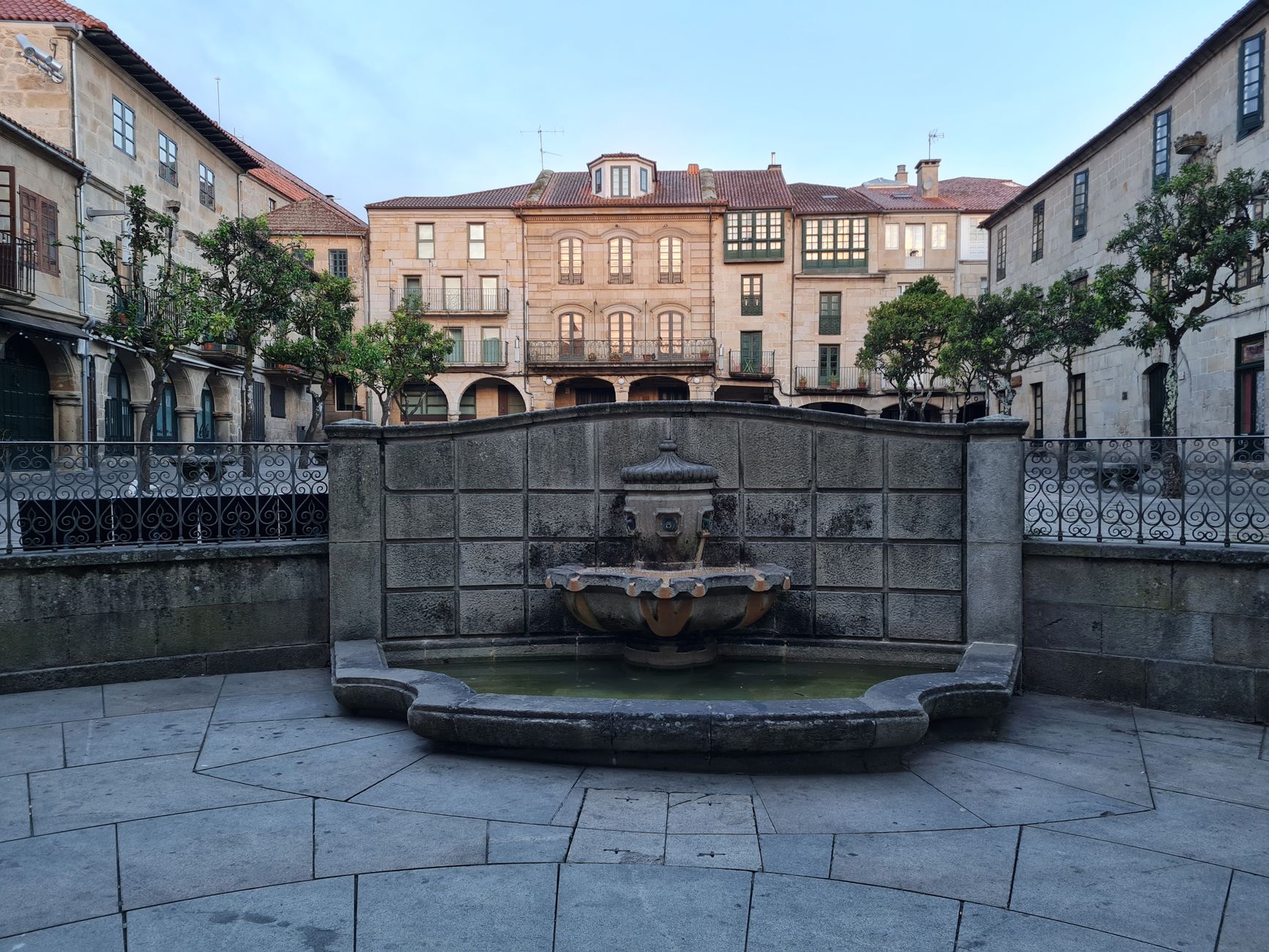


The first thing that strikes you is the sound of heels on damp granite rather than traffic. Pontevedra banishes cars from its medieval heart, leaving the squares—from Praza da Leña to Praza da Verdura—to children, dogs, and late-afternoon drinkers sharing cuncas of young red wine. Set where the Lérez river meets the ría, it is a city of arcaded stone, scallop-shell pilgrim motifs on church facades, and market stalls piled high with velvet crabs and goose barnacles.
Last updated 31 Aug 2026
Build a Pontevedra itinerary.
Choose up to 4 threads that pull you in. Your plan arrives organised around them.
We'll craft a 3-lens plan for Pontevedra, one collapsible strand per lens.
Local Seafood
Slurp steamed mejillones, crack boiled nécoras, and order navajas grilled with garlic at taverns around Praza da Leña.
Local Seafood
Slurp steamed mejillones, crack boiled nécoras, and order navajas grilled with garlic at taverns around Praza da Leña.
Inspecting the Atlantic Catch
Mercado Municipal de Pontevedra
Head straight to the ground-floor fish hall by 09:00. Bring small euro coins for a café solo upstairs once you have seen the goose barnacles and hake.
Editor TipThe Rías Baixas supply Spain with its prized shellfish, landed before dawn and sorted by women whose families have worked these granite benches for generations. Do not touch the seafood on the ice. The fishmongers are swift, fair, and possess zero patience for prodding tourists.
Market Octopus and Albariño
Casa Fidel O Pulpeiro
Claim a wooden table by two o'clock. Order the pulpo á feira sliced warm over boiled potatoes, paired with a chilled ceramic bowl of local Albariño.
Editor TipMule drivers historically carried dried Atlantic octopus inland across Galicia, boiling it in copper cauldrons with paprika and sea salt on livestock market days. Drink the house white from the traditional porcelain bowl; asking for stemware here is missing the point entirely.
Inspecting the Morning Catch
Mercado de Abastos de Pontevedra
Head straight upstairs to the ground floor seafood hall. Spend forty-five minutes walking the marble benches; bring small euro coins if you want fresh percebes wrapped in brown paper.
Editor TipRía de Pontevedra delivers turbot, razor clams, and spider crabs daily. Galician fishmongers, mostly women from nearby coastal villages, have run these same stalls across generations. Wear rubber-soled shoes. The granite floors are hosed down constantly and will test your dignity.
Griddled Navajas by the Water
Bodega O Bocoi
Arrive around two for a table overlooking the Ría de Pontevedra. Order the navajas and grilled octopus with a cold Albariño. Expect to spend around twenty-five euros per person.
Editor TipCombarro anchors its eighteenth-century stone hórreos directly on the tidal waterline, built to cure maize and sardines while keeping rats out and Atlantic salt in. Ask for the terrace tables set directly over the sea wall, and wear flat shoes for the slick granite cobbles.
Evening Stroll on Praza de Fefiñáns
Praza de Fefiñáns
Walk the perimeter of this sixteenth-century square before stepping into Igrexa de San Bieito. The bodegas inside the pazo pour fresh Albariño until eight in the evening.
Editor TipCambados built this monumental granite enclosure in the sixteenth century, anchoring regional trade around the baroque towers of San Bieito and the aristocratic Pazo de Fefiñáns. Sit by the northern arcade with a glass from the local harvest to watch the evening light hit the yellow lichen on the stone.
Sacred Architecture
Inspect the scallop-shaped plan of Santuario da Peregrina and Gothic rib vaulting inside 16th-century Basílica de Santa María Mayor.
Sacred Architecture
Inspect the scallop-shaped plan of Santuario da Peregrina and Gothic rib vaulting inside 16th-century Basílica de Santa María Mayor.
Scallop-Shaped Pilgrim Sanctum
Capela da Virxe da Peregrina
Entry costs two euros at the door. Climb the narrow staircase to the upper choir for an overhead look at the curved floor plan before sitting in the square.
Editor TipBuilt in 1778, this late-baroque chapel was designed on the footprint of a Portuguese scallop shell to shelter pilgrims walking the Camino Português to Santiago. Sit on the stone bench opposite the facade around noon to watch the Camino walkers arrive in the square.
Baroque Cloister and Giant Hórreo
Mosteiro de San Xoán de Poio
Buy the entry ticket at the porter lodge for four euros. Give yourself an hour to walk the seventeenth-century cloister and examine the hundred-foot stone grain store in the gardens.
Editor TipFounded in the seventh century by Saint Fructuosus, this Benedictine redoubt anchored monastic power across the estuary through centuries of tithes collected in its monumental stone hórreo. Head straight to the Camino mosaic in the lower cloister before coach tours turn up at ten.
Historic Squares
Wander car-free arcades between Praza da Ferrería and Praza da Verdura, resting on granite benches as evening tapas begin.
Historic Squares
Wander car-free arcades between Praza da Ferrería and Praza da Verdura, resting on granite benches as evening tapas begin.
Tracing Baroque Stone Ribs
Igrexa de San Bartolomeu
Enter through the side door on Rúa Sarmiento. Entry is free; leave twenty minutes to walk the nave and admire the Italianate baroque carvings carved from dense local granite.
Editor TipBuilt by the Jesuits between 1695 and 1714, this temple balances austere Counter-Reformation geometry with Galicia's stubborn obsession with weathered gray stone. Sit on the fourth wooden pew on the left for the best angle on the vaulted ceiling.
Gothic Cloisters and Granite Light
Convento de San Francisco
Walk through the north portal off Praza da Ferrería; admission is free, and forty minutes gives you quiet access to the high Gothic apse.
Editor TipFounded in the fourteenth century, this Mendicant monastery sheltered seafaring guilds and houses the carved tomb of noble poet Paio Gómez Chariño. Sit on the low stone bench near the chancel; the granite echo softens any noise drifting from the square.
Tideline Hórreos and Estuary Clams
Praza de San Roque
Wander down Rúa do Mar to the square. Pull up an outdoor barrel seat for a ration of steamed clams or cockles paired with a glass of crisp Albariño from the Val do Salnés sub-zone.
Editor TipGranite grain silos perch directly over the high-tide mark in Combarro, built here so fishermen and tenant farmers could unload maize and dry net hauls straight from skiffs. Wear flat rubber-soled shoes; wet coastal granite will make short work of slippery footwear.
Note from the Editor
“Pontevedra banned cars from its core twenty years ago, leaving the granite streets blissfully quiet. Hit the market before ten to see the real trade before the cafes fill.”
The Bed
Where to stay in Pontevedra
Which part of town to book, and what each one costs you in walking, noise or quiet.
The Comparison
Pontevedra, or somewhere near it
The places you are realistically choosing between, and the honest case for each.
The Local Record
Where to read more about Pontevedra
The blogs, boards, guides and operators worth bookmarking.
What to do in Pontevedra Galicia Spain
Pontevedra is built for walking, revolving around a calm, car-free rhythm of morning market visits, leisurely museum afternoons, and evening tapeo under stone arcades. Days fall into a simple pattern of strolling between Praza da Ferrería and Praza da Verdura, lingering over fresh shellfish, and exploring Galician heritage. It suits travellers who prefer walkable towns and quiet regional pride over hurried sightseeing.
24 hours in Pontevedra Galicia Spain
Start early at the Mercado de Abastos to see the morning catch. Tour the circular Santuario da Peregrina and the Museo de Pontevedra's Castro gold collection. By late afternoon, join locals for Albariño and octopus around Praza da Leña, where everything sits within a five-minute walk. Select 1 Day above to see it.
2 days in Pontevedra Galicia Spain
Spend morning two crossing the Lérez to the Illa das Esculturas park. Afterwards, take a ten-minute bus to Combarro to admire stone granaries hanging directly over the tide, followed by a lunch of grilled sardines and baked empanada at a harbour tavern. Choose 2 Days to expand the plan.
3 days in Pontevedra Galicia Spain
A third day allows an unhurried excursion into the O Salnés wine subzone for Albariño bodega tastings, or a scenic ferry ride across the ría to the pristine sand dunes of the protected Illas Cíes in the Atlantic Islands National Park.
Pontevedra Galicia Spain itineraries by interest
Local Seafood in Pontevedra Galicia Spain
Slurp steamed mejillones, crack boiled nécoras, and order navajas grilled with garlic at taverns around Praza da Leña.
Historic Squares in Pontevedra Galicia Spain
Wander car-free arcades between Praza da Ferrería and Praza da Verdura, resting on granite benches as evening tapas begin.
Sacred Architecture in Pontevedra Galicia Spain
Inspect the scallop-shaped plan of Santuario da Peregrina and Gothic rib vaulting inside 16th-century Basílica de Santa María Mayor.
Wine & Vineyards in Pontevedra Galicia Spain
Sip crisp Albariño from the surrounding Val do Salnés, served chilled in traditional ceramic bowls alongside salty pimientos.
Markets & Produce in Pontevedra Galicia Spain
Browse the ground floor of Mercado de Abastos at eight in the morning for live spider crabs, hake, and fresh Tetilla cheese.
River Walks in Pontevedra Galicia Spain
Follow the Lérez riverbank path past the Illa das Esculturas to see contemporary stone installations in an open tidal park.
Museums & Relics in Pontevedra Galicia Spain
Examine Bronze Age Celtic gold torcs and naval artifacts across the six historic buildings of the Museo de Pontevedra.
Pilgrimage Routes in Pontevedra Galicia Spain
Follow bronze shell markers along the Camino Portugués through the old town toward the bridges crossing the Lérez into Caldas.
Tapas & Taverns in Pontevedra Galicia Spain
Order empanada de zamburiñas and fried pementos de Padrón at bustling granite bars tucked along Rúa dos Soportais.
Coastal Day Trips in Pontevedra Galicia Spain
Drive twenty minutes along the ría to Combarro to see seaside hórreos, or board a ferry to Parque Nacional das Illas Atlánticas.
Monastic Heritage in Pontevedra Galicia Spain
Visit nearby Mosteiro de San Xoán de Poio to view Baroque granite cloisters and massive mosaic murals depicting Camino life.
City Parks in Pontevedra Galicia Spain
Stroll beneath century-old camellias and palms in the Alameda, an easy ten-minute walk from the central railway station.