

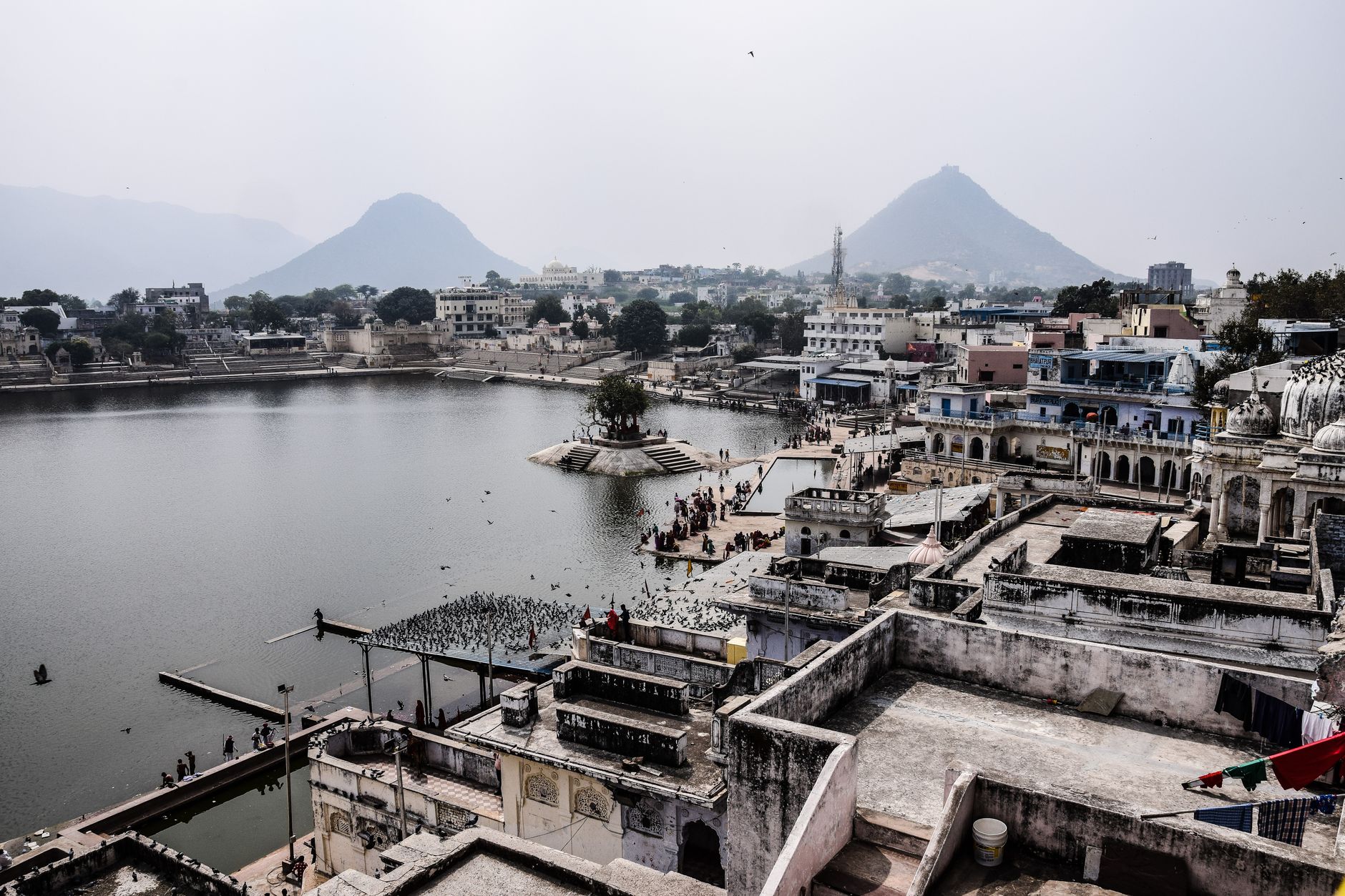


Pushkar sits 14 kilometres west of Ajmer railway junction, a forty-minute taxi ride over the Nag Pahar pass. The town borders the Thar Desert around a sacred lake flanked by 52 bathing ghats, known for its 14th-century Brahma temple and strictly vegetarian street food. Pushkar is worth visiting if you want to observe centuries-old Hindu lakeside rituals and eat hot regional sweets on foot. Look elsewhere if you expect meat dishes, alcohol, late-night clubs, or relief from persistent market vendors.
Last updated 16 Oct 2026
Build a Pushkar itinerary.
Choose up to 4 threads that pull you in. Your plan arrives organised around them.
The Bed
Where to stay in Pushkar
Which part of town to book, and what each one costs you in walking, noise or quiet.
The Comparison
Pushkar, or somewhere near it
The places you are realistically choosing between, and the honest case for each.
The Local Record
Where to read more about Pushkar
The blogs, boards, guides and operators worth bookmarking.
What to do in Pushkar Rajasthan India
Pushkar is a compact pilgrimage town wrapped around a small natural lake, bordered by desert scrub and the rocky Aravalli hills. Daily life follows the rhythm of morning bathing rituals, quiet afternoon tea on rooftop terraces, and evening bell ceremonies at the water's edge. It suits travellers who enjoy navigating narrow lanes on foot, sampling hot street snacks, and exploring centuries of religious architecture at an unhurried, observant pace.
24 hours in Pushkar Rajasthan India
Start before dawn with the 45-minute climb to Savitri Temple on Ratnagiri Hill. Descend for breakfast kachori on Sadar Bazaar, tour the 14th-century Brahma Temple by mid-morning, and spend the afternoon wandering the ghats. At dusk, take a seat at Varaha Ghat for the evening aarti, followed by a plate of hot malpua in Halwai Gali. Select 1 Day above to see it.
2 days in Pushkar Rajasthan India
A second day allows a morning walk through the pink rose fields of Ganahera, where local farmers harvest blooms for rosewater. Head back into town to study the Dravidian-style gopuram tower at New Rangji Temple, take a lazy thali lunch near Brahma Chowk, and climb the gentler hill to Pap Mochani Temple for wide evening views across the desert. Choose 2 Days to expand the plan.
3 days in Pushkar Rajasthan India
With three days, take the 40-minute drive down the pass to Ajmer to explore the marble courtyards of the Dargah Sharif and the 12th-century Arhai Din Ka Jhonpra mosque. Spend your final afternoon back in Pushkar renting a bicycle for the flat back roads to Kothaj, or watching camel traders and desert musicians gather around the sandy outer mela grounds.
Pushkar Rajasthan India itineraries by interest
Sacred Architecture in Pushkar Rajasthan India
Visit the 14th-century Jagatpita Brahma Temple and the white spires of the 19th-century southern-style Rangji Temple near the bazaar.
Street Food in Pushkar Rajasthan India
Eat crisp dal kachori at Ugam's stall and syrupy malpua fried in desi ghee at the Halwai Gali confectioners around Varaha Ghat.
Lake Walks in Pushkar Rajasthan India
Remove your shoes to walk the stone steps of Brahma Ghat and Varaha Ghat during the 7:00 pm evening aarti brass bell ceremonies.
Desert Hiking in Pushkar Rajasthan India
Climb the steep stepped trail up Ratnagiri Hill before sunrise to reach the Savitri Devi Temple overlooking the desert valley.
Markets & Bazaars in Pushkar Rajasthan India
Browse Sadar Bazaar for rosewater distillations, handmade camel-leather mojari slippers, block-printed cotton, and brass puja lamps.
Rose Farming in Pushkar Rajasthan India
Walk the fields of Ganahera village at dawn where farmers harvest pink Chaitri roses for attar perfume, gulkand jam, and export.
Day Trips in Pushkar Rajasthan India
Take a 40-minute taxi to Ajmer to visit the 13th-century Dargah Sharif of Moinuddin Chishti and the Mughal red-sandstone Taragarh Fort.
Craft Traditions in Pushkar Rajasthan India
Observe local leatherworkers tooling camel-hide bags and jewellers setting raw semi-precious stones along Main Market Street.
Local Sweets in Pushkar Rajasthan India
Taste cardamom-scented rabdi poured over freshly griddled malpua at Sarveshwar or Radhey Radhey stalls in the old quarter.
Sunrise Views in Pushkar Rajasthan India
Trek the northern ridge toward Pap Mochani Temple at dawn for panoramic views of the water tanks, whitewashed town, and sand dunes.
Folk Music in Pushkar Rajasthan India
Listen to desert musicians playing the bowed ravanhatha and dholak drums during sunset gatherings outside the mela ground perimeter.
Cycling in Pushkar Rajasthan India
Rent a single-speed bicycle to ride the quiet back roads past rose nurseries and date palms toward rural villages like Kothaj.