


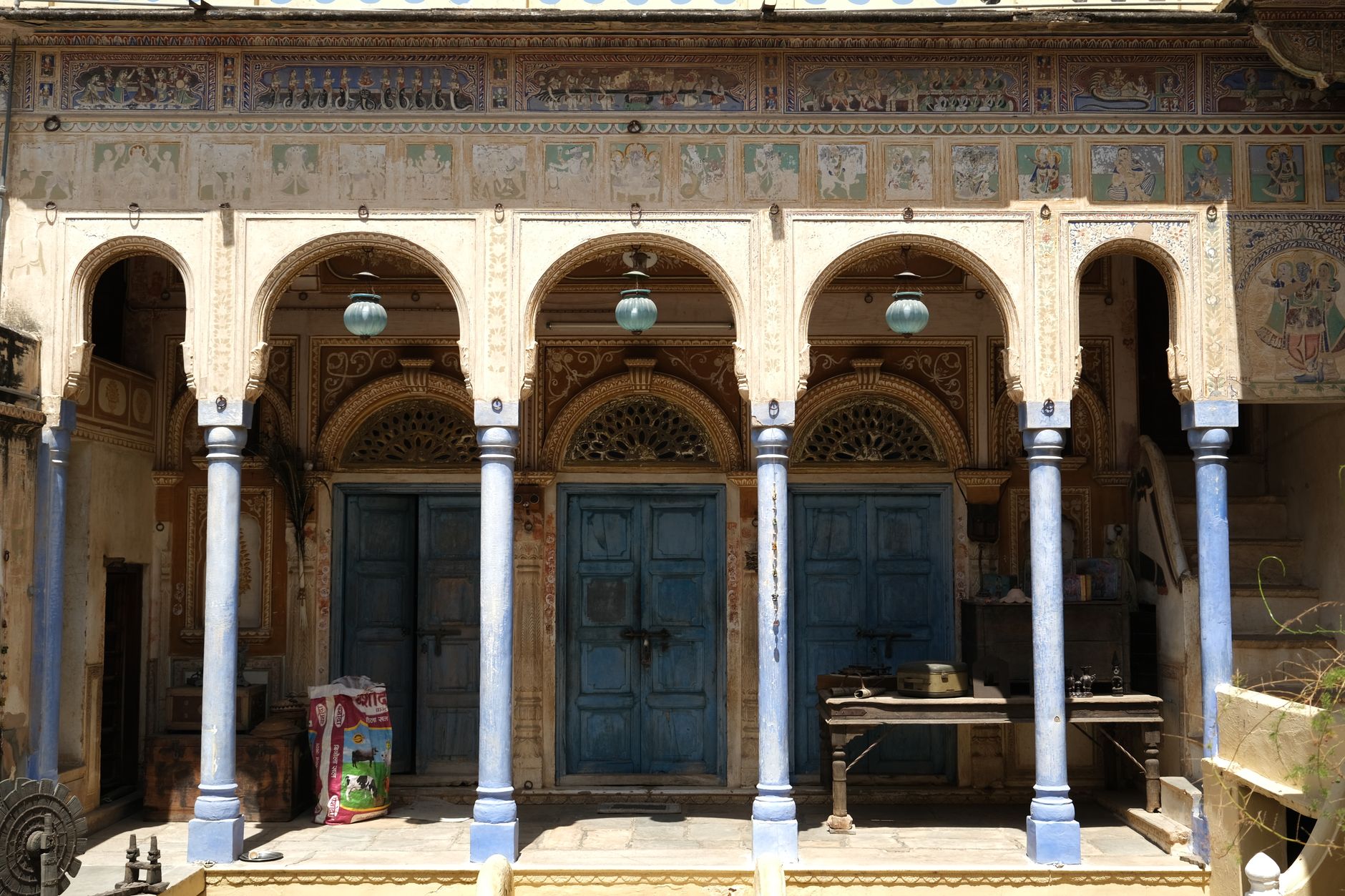


Shekhawati sits three to four hours northwest of Jaipur by car, scattered across a semi-arid belt of towns known for hundreds of painted merchant havelis covered in nineteenth-century frescoes. The region trades palace grandiosity for quiet courtyard architecture and open desert roads. Shekhawati is worth visiting if you want to inspect intricate lime-plaster murals on foot and stay in working market towns. Look elsewhere if you want slick nightlife, resort pampering, or fast travel between major tourist hubs.
Last updated 1 Nov 2026
Build a Shekhawati itinerary.
Choose up to 4 threads that pull you in. Your plan arrives organised around them.
The Bed
Where to stay in Shekhawati
Which part of town to book, and what each one costs you in walking, noise or quiet.
The Comparison
Shekhawati, or somewhere near it
The places you are realistically choosing between, and the honest case for each.
The Local Record
Where to read more about Shekhawati
The blogs, boards, guides and operators worth bookmarking.
What to do in Shekhawati Rajasthan India
Days here follow a relaxed rhythm anchored by morning walks through dusty market lanes before the afternoon heat settles over the desert. You spend your hours looking upward at faded lime plaster, ducking through carved timber doorways, and sipping cardamom chai while shopkeepers unlock back courtyards. It suits travellers who enjoy unscripted wandering, architectural decay, and hearty Marwari food over choreographed tour buses.
24 hours in Shekhawati Rajasthan India
Base yourself in Nawalgarh. Spend the morning examining the Poddar and Morarka havelis, break for pyaaz kachori and tea at a station stall, and drive twenty minutes to Mandawa by mid-afternoon. Climb to the fort ramparts before sunset, then settle into a courtyard dinner of ker sangri and fresh rotis. Select 1 Day above to see it.
2 days in Shekhawati Rajasthan India
Drive north to Fatehpur to see the intricate French-restored Nadine Le Prince mansion and the forgotten frescoes along the back alleys. Head east toward Mahansar for a midday thali and a taste of local spiced heritage liquor, finishing with a walk around the quiet cenotaphs of Ramgarh Sethan. Choose 2 Days to expand the plan.
3 days in Shekhawati Rajasthan India
A third day allows you to venture to Churu on the northern edge of the desert. Explore its six-storey Surana Haveli with hundreds of timber windows, visit the shaded reservoir of Sethani Ka Johara, and spend an unhurried afternoon poking through dusty antique timber yards around Jhunjhunu.
Shekhawati Rajasthan India itineraries by interest
Fresco Art in Shekhawati Rajasthan India
Inspect detailed fresco-buono murals depicting railway engines, mythology, and merchants at the Poddar and Murmuria havelis in Nawalgarh.
Heritage Architecture in Shekhawati Rajasthan India
Wander courtyards, carved wooden doorways, and mirrored bedrooms inside Mandawa fort and the sprawling Nadine Le Prince cultural centre.
Regional Cuisine in Shekhawati Rajasthan India
Order bajra roti with garlic chutney, ker sangri, and rich gatte ki sabzi served fresh with cold buttermilk at basic roadside dhabas.
Market Towns in Shekhawati Rajasthan India
Navigate the narrow lanes of Fatehpur and Churu to find crumbling facades, brassware shops, and century-old stepwells without tourist crowds.
Sacred Architecture in Shekhawati Rajasthan India
Step down into the cool stone tiers of Sethani Ka Johara reservoir and examine painted cenotaphs at the Ramgopal Poddar Chhatri.
Street Snacks in Shekhawati Rajasthan India
Stop at morning halwai stalls for crisp pyaaz kachoris, hot samosas fried in mustard oil, and syrupy jalebis straight out of the kadai.
Craft Traditions in Shekhawati Rajasthan India
Watch woodcarvers chisel sheesham doors in Nawalgarh and see local artisans stamp traditional block prints on handloom cotton.
Desert Landscapes in Shekhawati Rajasthan India
Walk the wind-rippled sand tracks around Mahansar and spot grazing nilgai under thorny khejri trees in the late afternoon sun.
Local Distilling in Shekhawati Rajasthan India
Sample traditional spiced heritage liqueurs infused with aniseed and herbs at Mahansar, bottled following old family distillery recipes.
Historic Stepwells in Shekhawati Rajasthan India
Descend into the geometric depth of the Mertani Baori in Jhunjhunu, built with cool shaded landings for travellers in the eighteenth century.
Village Life in Shekhawati Rajasthan India
Spend quiet afternoons in Alsisar wandering between mud-plastered huts, chai stalls, and painted gates where shopkeepers offer sweet tea.
Antiques & Salvage in Shekhawati Rajasthan India
Browse dusty salvage yards along the Mandawa-Mukundgarh road for carved lintels, brass door knockers, and iron-strapped timber chests.