


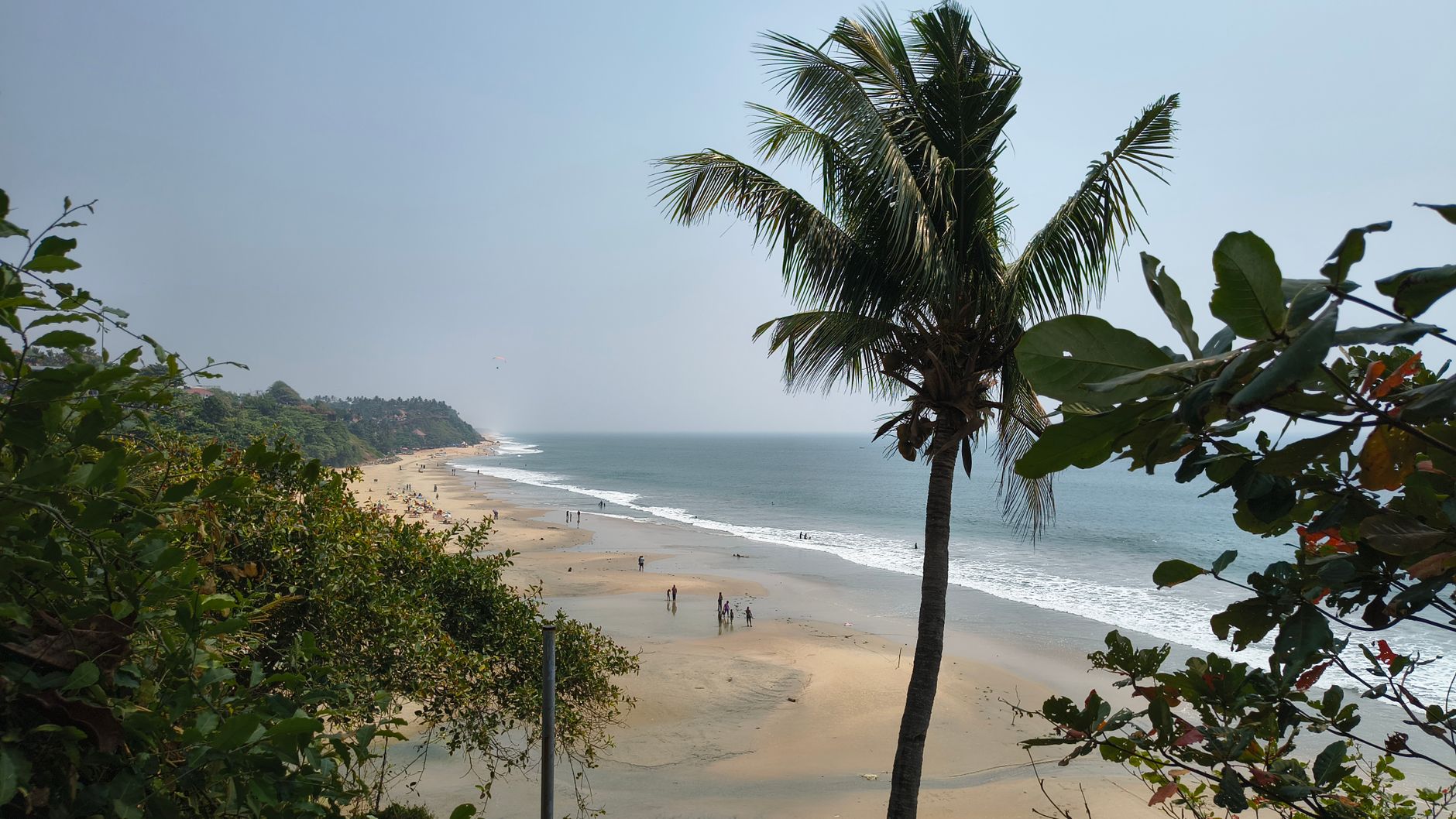
Varkala sits 45 kilometres north of Thiruvananthapuram, roughly an hour by train or taxi from the airport. It is defined by high red laterite cliffs dropping straight into the Arabian Sea and the ancient Janardhana Swami Temple. Varkala is worth visiting if you want fresh grilled seer fish along cliffside paths and quiet temple tanks rather than mega-resorts. Look elsewhere if you expect late-night clubbing, polished luxury promenades, or calm swimming water during the monsoon.
Last updated 29 Oct 2026
Build a Varkala itinerary.
Choose up to 4 threads that pull you in. Your plan arrives organised around them.
The Bed
Where to stay in Varkala
Which part of town to book, and what each one costs you in walking, noise or quiet.
The Comparison
Varkala, or somewhere near it
The places you are realistically choosing between, and the honest case for each.
The Local Record
Where to read more about Varkala
The blogs, boards, guides and operators worth bookmarking.
What to do in Varkala Kerala India
Varkala splits neatly into two worlds: the high red cliffs lined with breezy cafes and handicraft stalls above the sea, and the inland temple town clustered around the ancient tank. Days revolve around dawn walks along the sand, unhurried coastal breakfasts of appam and stew, afternoon shade, and evening fish curries. It suits independent travellers who value easy walking and authentic regional meals.
24 hours in Varkala Kerala India
Start at sunrise on Papanasam Beach watching temple offerings, then walk ten minutes up the cliff steps for appam and egg roast. Spend midday in the shade along Odayam Beach. By five, head to South Cliff for the sunset, finishing with pan-roasted karimeen fish at a North Cliff shack. Select 1 Day above to see it.
2 days in Varkala Kerala India
A second day lets you hire an auto-rickshaw inland to Sivagiri Mutt for quiet gardens and Kerala reform history. Afterwards, eat lunch at a Temple Road canteen serving meals on banana leaves, then head to Black Beach for an afternoon surf session or a relaxed coastal stroll. Choose 2 Days to expand the plan.
3 days in Varkala Kerala India
With three days, venture seven kilometres north to Kappil Lake, where backwater canals brush right against the ocean road. Rent a country canoe to drift past fishing stakes, then continue down the coast to the 1695 English fort and lighthouse at Anjengo before dinner.
Varkala Kerala India itineraries by interest
Local Seafood in Varkala Kerala India
Watch the evening catch land on North Cliff, then point to red snapper or kingfish pan-fried in coconut oil, curry leaves, and crushed black pepper.
Sacred Architecture in Varkala Kerala India
Visit the two-thousand-year-old Janardhana Swami Temple, noting the Dutch bell donated in 1757 and the quiet ablution rituals at Papanasam Beach.
Coastal Walks in Varkala Kerala India
Walk the dirt footpaths along North Cliff down to Odayam and Edava beaches, where the sandstone bluffs give way to quiet coconut groves and backwaters.
Traditional Wellness in Varkala Kerala India
Book authentic Ayurvedic consultations in town for herbal oil abhyanga and kizhi poultice treatments from clinics run by generational practitioners.
Backwater Cruises in Varkala Kerala India
Hire a small wooden country boat at Kappil Lake where the calm estuary meets the Arabian Sea sand spit, seven kilometres north of the main cliff.
Regional Cooking in Varkala Kerala India
Eat flaky Kerala porotta with spicy beef roast or vegetable stew at local shacks along Temple Road away from the tourist cliff strip.
Historic Forts in Varkala Kerala India
Explore the seventeenth-century East India Company ruins at Anjengo Fort and climb the nearby 130-foot lighthouse for wide views over the palm canopy.
Spiritual History in Varkala Kerala India
Climb the hill to Sivagiri Mutt, the 1904 ashram and tomb of social reformer Sree Narayana Guru, set in quiet wooded grounds two miles east.
Surfing in Varkala Kerala India
Rent a longboard at Black Sand Beach or take dawn lessons at Edava where sandbars create clean, gentle left-hand breaks from October through April.
Market Produce in Varkala Kerala India
Browse the morning stalls around Varkala Maidan for small red bananas, fresh coconuts, dried spices, and tapioca roots hauled in from rural farms.
Day Trips in Varkala Kerala India
Ride the local train 30 minutes north to Kollam to see Ashtamudi Lake and the historic Chinese fishing nets without the commercial crowds.
Sunset Viewing in Varkala Kerala India
Find a stone bench along South Cliff near the helipad around half past five as fishing skiffs motor out into the pink Arabian Sea glare.