


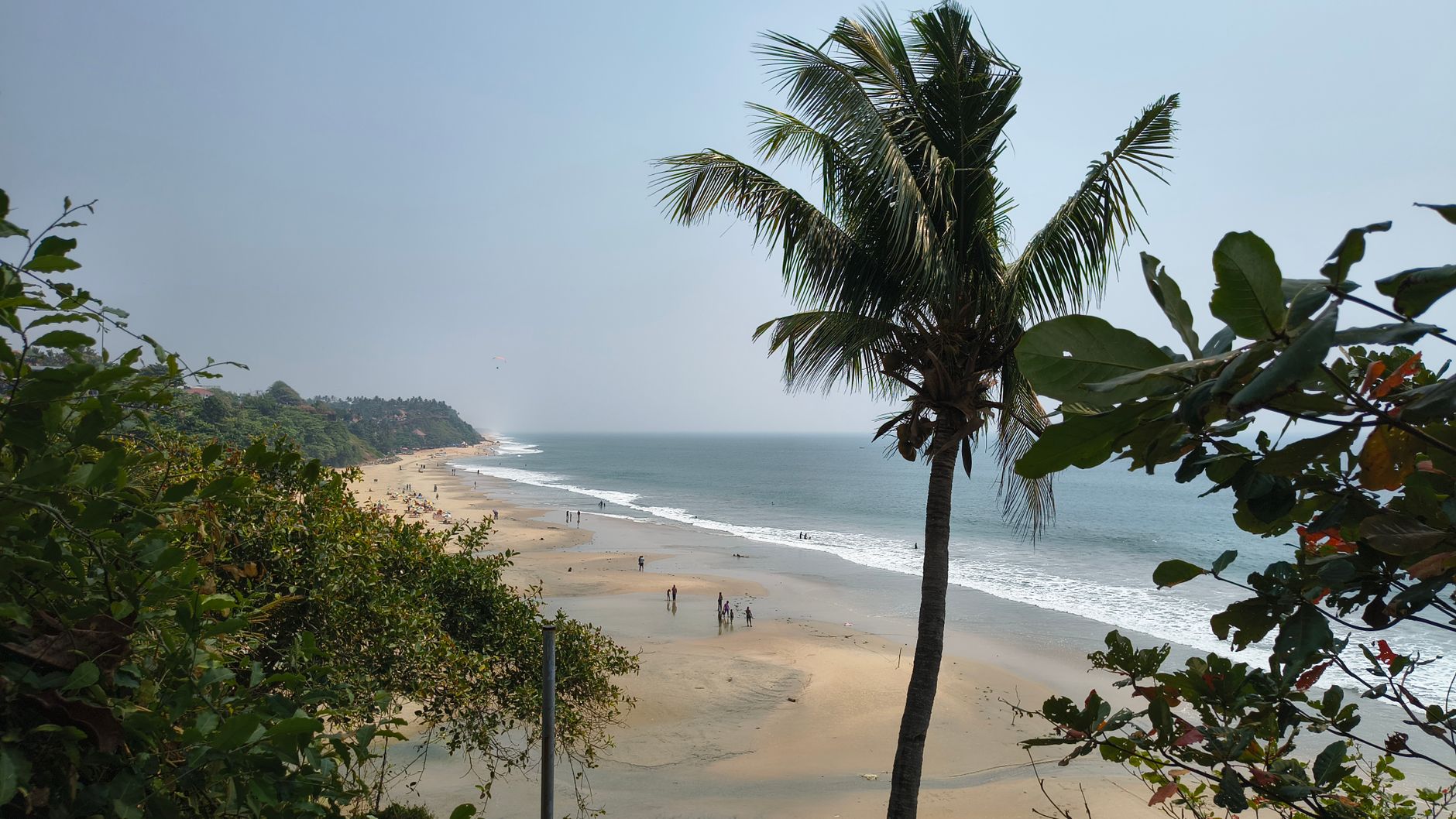

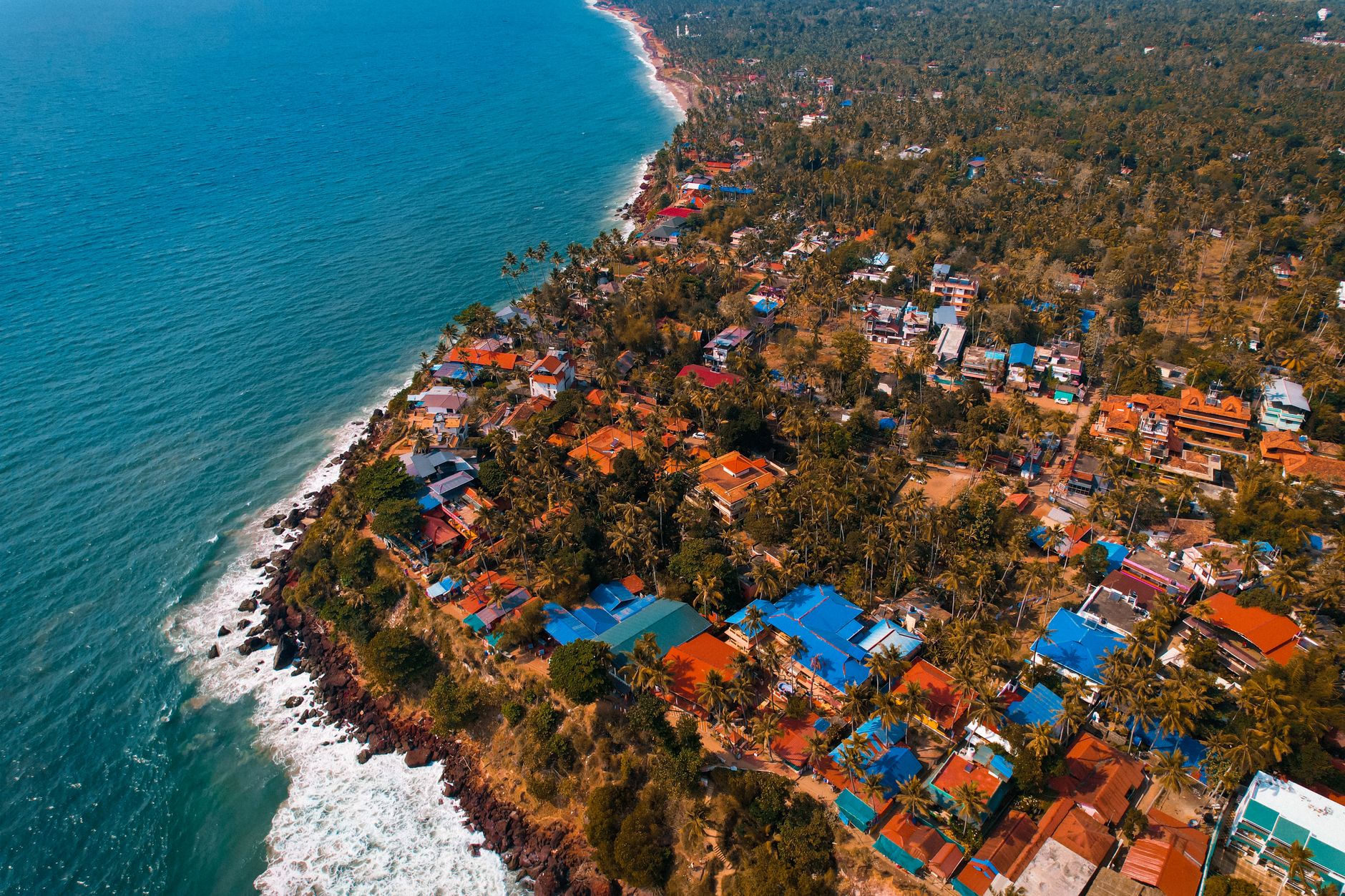
Varkala sits 45 kilometres north of Thiruvananthapuram, roughly an hour by train or taxi from the state capital. The town is defined by its red laterite cliffs rising directly above the Arabian Sea and the two-thousand-year-old Janardanaswamy Temple. Varkala is worth visiting if you want fresh kingfish roasted in banana leaves, cliffside ocean walks, and unvarnished temple ceremonies. Look elsewhere if you want polished resort strips, wild nightlife, or sheltered calm swimming bays.
Last updated 2 Nov 2026
Build a Varkala itinerary.
Choose up to 4 threads that pull you in. Your plan arrives organised around them.
The Bed
Where to stay in Varkala
Which part of town to book, and what each one costs you in walking, noise or quiet.
The Comparison
Varkala, or somewhere near it
The places you are realistically choosing between, and the honest case for each.
The Local Record
Where to read more about Varkala
The blogs, boards, guides and operators worth bookmarking.
What to do in Varkala Kerala India
Varkala divides neatly between the cliff paths overlooking the Arabian Sea and the busy working town surrounding Temple Junction. Days run on a simple rhythm of morning walks along the red cliffs, afternoons resting from the equatorial sun, and sunset meals of fresh seer fish. It suits independent travellers and walkers who prefer open coastal air to manicured hotel enclaves.
24 hours in Varkala Kerala India
Start early at Papanasam Beach watching ancestral puja ceremonies before the heat sets in. Walk the North Cliff path towards Odayam for lunch, ordering karimeen pollichathu at a family-run shack. Spend the late afternoon at the Janardanaswamy Temple grounds, finishing with freshly grilled snapper by the cliff edge as the sun drops. Select 1 Day above to see it.
2 days in Varkala Kerala India
A second day lets you escape the cliff path. Hire an auto-rickshaw inland to Sivagiri Mutt to explore its quiet gardens, then head north to Kappil Beach where the backwaters meet the sea. Eat traditional Kerala sadya served on a banana leaf at a town mess near the station, sampling avial and sambar cooked with freshly grated coconut. Choose 2 Days to expand the plan.
3 days in Varkala Kerala India
With three days, take a morning ride south to the seventeenth-century ramparts of British East India Company's Anjengo Fort and its secluded fishing village. Return for an afternoon canoe paddle through the quiet mangroves of the Edava-Nadavayil backwaters, followed by black tea and piping hot banana fritters at a village stall.
Varkala Kerala India itineraries by interest
Local Seafood in Varkala Kerala India
Grilled seer fish, karimeen pollichathu wrapped in banana leaves, and evening catches laid on ice along the North Cliff path.
Sacred Architecture in Varkala Kerala India
The 2,000-year-old Janardanaswamy Temple, dedicated to Vishnu, featuring ancient stone carvings and ancestral rites performed at Papanasam Beach.
Coastal Walks in Varkala Kerala India
Paved clifftop paths running from North Cliff down to Odayam and Edava beaches, offering clear views of the Arabian Sea breakers.
Traditional Medicine in Varkala Kerala India
Established Ayurvedic clinics offering traditional abhyanga oil massages and consultations with licensed Vaidyas in town and along South Cliff.
Surfing in Varkala Kerala India
Consistent beach breaks and gentle swells at Black Sand Beach and Kappil, with board rentals and morning lessons suited to beginners.
Day Trips in Varkala Kerala India
Anjengo Fort and its 17th-century British cemetery twelve kilometres south, easily reached by auto-rickshaw along coastal fishing villages.
Backwater Cruises in Varkala Kerala India
Canoe and country boat trips through the serene mangrove channels and coconut groves of Kappil Lake and the Paravur estuary.
Street Food in Varkala Kerala India
Crisp pazham pori banana fritters, spicy egg puffs, and steaming glasses of spiced chai served at modest stalls near the railway station.
Spiritual Traditions in Varkala Kerala India
Sivagiri Mutt atop Sivagiri hill, the final resting place and headquarters of social reformer and philosopher Sree Narayana Guru.
Markets & Produce in Varkala Kerala India
Early morning fish auctions at the harbor and local town market stalls selling green cardamoms, Malabar black pepper, and fresh cashews.
Beaches in Varkala Kerala India
The mineral-rich sands of Papanasam Beach beneath the cliffs, quieter Odayam stretches, and the black volcanic sand north of Thiruvambadi.
Tea & Spices in Varkala Kerala India
Shops near the Temple Junction grinding raw turmeric and sorting tellicherry peppercorns alongside southern Nilgiri black teas.